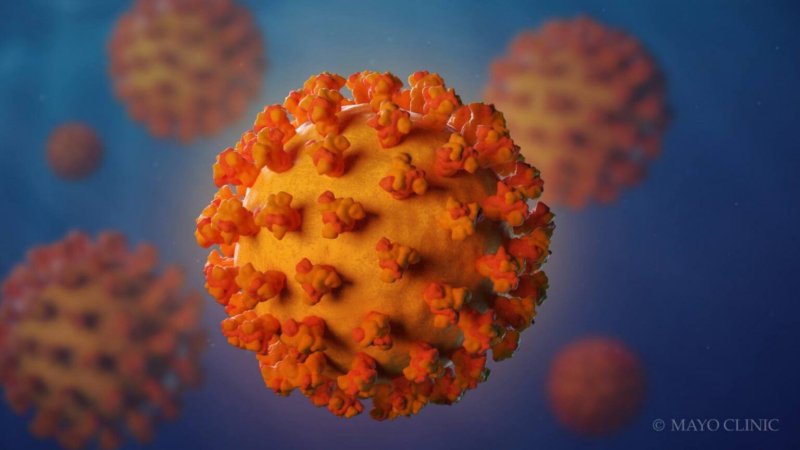
‘A lot of secrets’ in coronavirus genomes: Why are some strains so deadly, while others remain more mild?

coronovirus v fotor x x
Credit: Mayo Clinic
[In 1965, a] group of researchers in England, led by Dr. David Tyrrell, was learning more about the common cold. They, too, isolated what appeared to be a new type of virus in tissue culture. When Tyrrell’s team examined it under an electron microscope, they found that it resembled a virus that had been isolated in the 1930s from chickens with bronchitis. It was a coronavirus—the first proven to infect humans.

[I]t’s still not altogether clear why three coronaviruses—SARS-CoV-1, MERS-CoV and SARS-CoV-2 (the source of the COVID-19 pandemic)—have led to far more severe symptoms and a higher mortality rate, while the other four known human coronaviruses remain much milder.

Dr. [Ken] McIntosh suspects that coronaviruses will continue to perplex researchers. First, because coronaviruses are large and complex, and second because they can change relatively easily on a genetic level. He notes that these viruses can also recombine fairly easily within the same cell, and that such mutations are likely what led to both the coronavirus that causes SARS and the novel coronavirus that has caused the current pandemic.

“Coronaviruses have the largest RNA genome of any of the animal viruses,” Dr. McIntosh says. “And it has a lot of secrets.”


Read the original post

{{ reviewsTotal }}{{ options.labels.singularReviewCountLabel }}
{{ reviewsTotal }}{{ options.labels.pluralReviewCountLabel }}
{{ options.labels.newReviewButton }}
{{ userData.canReview.message }}

Related Articles

Infographic: Global regulatory and health research agencies on whether glyphosate causes cancer

Infographic: Global regulatory and health research agencies on whether glyphosate causes cancer

Does glyphosate—the world's most heavily-used herbicide—pose serious harm to humans? Is it carcinogenic? Those issues are of both legal and ...

Most Popular

Screenshot-PM-24
Viewpoint: The herbicide glyphosate isn’t perfect. Banning it would be far worse.
79d03212-2508-45d0-b427-8e9743ff6432
Viewpoint: The Casey Means hustle—Wellness woo opportunism dressed up as medical wisdom
d-b
Blocked arteries, kidney stones, nausea, constipation, fatigue: Long list of health problems caused by too much vitamin D 
ChatGPT-Image-Mar-10-2026-01_39_01-PM
Viewpoint—“Miracle molecule” debunked: Why acemannan supplements don’t work
ChatGPT-Image-Apr-30-2026-05_00_48-PM
Wellness grifter physician turned wellness influencer out as surgeon general nominee
Screenshot-2026-04-30-at-11.33.46-AM
Anti-seed-oil to anti-vax pipeline: MAHA movement spreads to teen influencers
lab grown meat research kelly schultz lehighuniversity main
Profiles of the 10 top global cultured meat companies
ChatGPT-Image-Mar-27-2026-11_27_05-AM
The myths of “process”: What science says about the “dangers’ of synthetic products and ultra-processed foods
glp menu logo outlined

Get news on human & agricultural genetics and biotechnology delivered to your inbox.