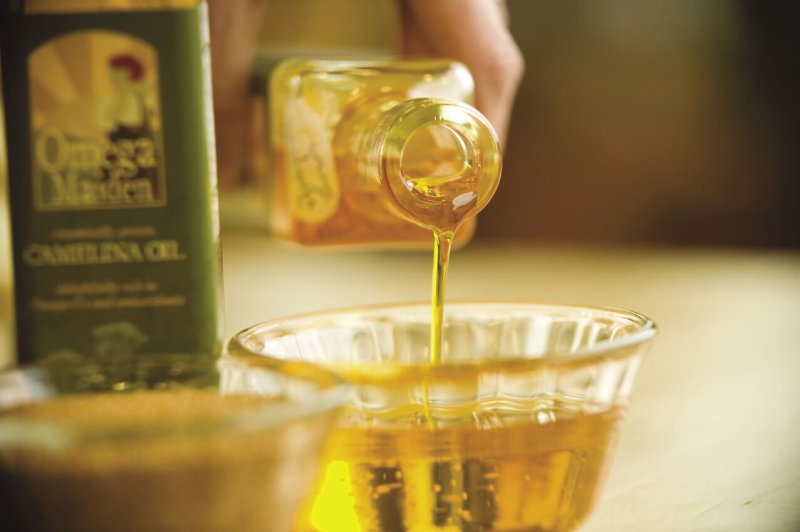
Camelina vs. canola: Which GMO crop offers more sustainable source of omega-3 fish oils?

cam

Field trials of a plant genetically modified to produce omega-3 normally sourced from fish oil have shown that it can be successfully grown in the UK, Canada and the United States.

The GM strain of Camelina sativa, a relative of oil seed rape, was developed at the Rothamsted Institute in Hertfordshire by adding biosynthetic genes that enable it to produce the non‐native omega‐3 long chain polyunsaturated fatty acids (LC-PUFAs) eicosapentaenoic acid (EPA) and docosahexaenoic acid (DHA).

…

[R]esearchers from Rothamsted and the Swedish University of Agricultural Sciences wrote that two companies had recently developed GM strains of another oil-seed plant, canola, but these differed from the Rothamsted camelina because they predominantly accumulate either EPA or DHA.

The GM camelina accumulates both EPA and DHA, which was “an important consideration in the commercial viability of GM camelina, compared with the above-mentioned Canola products, since it is well-established that the overall seed oil yield of camelina is lower (at ~800Kg/ha) than that observed for canola (~1000Kg/ha)”.

The authors added that if the amount of omega-3 LC-PUFAs (EPA, DPA and DHA) is calculated as a percentage of oil yield, then camelina (at 23.3% of total fatty acids) is superior to canola (11.1%).


Read the original post

Related Articles

Infographic: Global regulatory and health research agencies on whether glyphosate causes cancer

Infographic: Global regulatory and health research agencies on whether glyphosate causes cancer

Does glyphosate—the world's most heavily-used herbicide—pose serious harm to humans? Is it carcinogenic? Those issues are of both legal and ...

Most Popular

Cancer mRNA Vaccine Concept
'A new frontier': Though scorned by RFK Jr., personalized mRNA vaccine offers hope for many suffering from melanoma skin cancer
Screenshot-2026-10-22-at-12.45.14-PM
Pennsylvania tells doctors to prepare for a surge in newborn measles cases—a complication unseen in decades
Crimson Drips Over the White House
In Trump administration redirect, U.S. steers NIH sharply away from biodefense and pandemic preparedness
Healthy Food Sensitivity Test Collection
Viewpoint: That’ll be $300: The wellness industry’s junk science scam to ‘fix’ your immune system that isn’t broken
West-Virginia-SNAP-Water-Bottle-Sticker
A ‘shining success’ or 'empty promises’: Two years along, West Virginians assess MAHA’s food promises
Diet Soda with Measuring Tape 2
Science challenges anti-soda activists: No, sodas won’t make you fat
Screenshot 2026-10-23 at 2.28
Climate disruption alert: Global emissions hold steady while Trump’s America fuels more warming
Rustic Skillet of Raw Brains
‘Weird food’? Testicle- and brain-eating, supplement-gulping MAHA health food enthusiasts defend their ‘natural’ diets
ChatGPT-Image-Mar-10-2026-01_39_01-PM
Viewpoint—“Miracle molecule” debunked: Why acemannan supplements don’t work
Screenshot 2026-10-16 at 5.38
PFAS in Agriculture: Science, Uncertainty, and Risk Communication
Strawberry Clamshell with Warning Sticker
Viewpoint: Activists hype ‘dangerous level’ of pesticide residues in Driscoll berries: Separating health concerns from fear-mongering
Vibrant Social Media Confetti Explosion
Health misinformation minefield: Countering online deluge by copying its style
Screenshot-2026-10-19-at-12.04.51-PM
Victims of their own success: As memories of killer diseases fade, vaccine rejectionism soars
Author-Presenting-Good-Energy
'Disillusioned': Controversial RFK Jr. ally and MAHA leader Calley Means quits Trump advisory role
glp menu logo outlined

Get news on human & agricultural genetics and biotechnology delivered to your inbox.