Viewpoint: EU opposition to CRISPR crops threatens sustainable farming in developing world

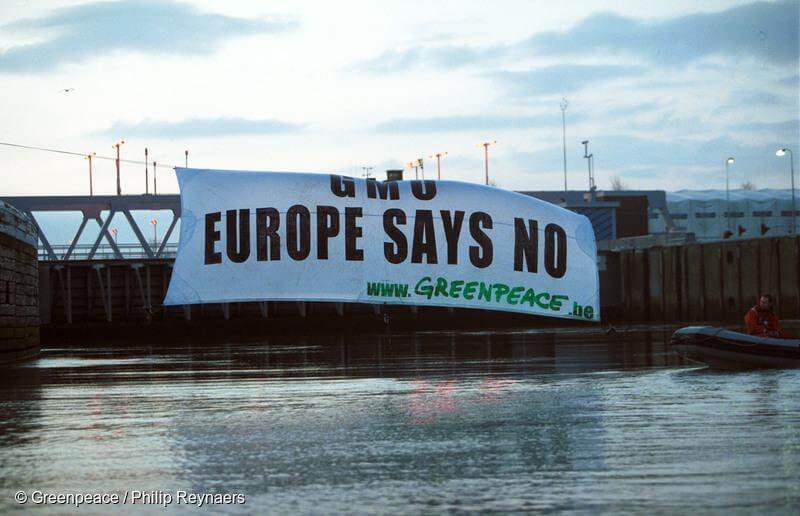
greenpeace europe
Credit: Greenpeace

Agricultural economist Dr. Matin Qaim of the University of Göttingen in Germany recommends that regulatory reforms and a more science-based public debate towards new plant breeding technologies are necessary to maximize the potential of this new science that can greatly contribute to sustainable agricultural development and food security, especially in developing countries.

Through [New plant breeding technologies] NPBT, a plant’s desirable traits can be selected and enhanced to develop crops that are biofortified and high-yielding, and yet will require less fertilizer and pesticides as these plants are resistant to pest, diseases, and abiotic stress factors.

[NPBTs] have remained controversial especially in Europe. Qaim notes that the problem is that regulatory authorities treat plants developed through gene editing in the same way as genetically modified (GM) plants. He also emphasizes that there is a difference between NBPT-derived plants and GM plants, in which the latter has foreign genes from a different species transferred to it while the former has none since the targeted changes occur naturally in principle.

When these two different technologies are treated the same by regulators, it causes low public acceptance and …. leads to the slow development of the NBPTs which not only affects Europe but other developing countries as well who base their perception of NBPTs on Europe’s findings.


Read the original post

{{ reviewsTotal }}{{ options.labels.singularReviewCountLabel }}
{{ reviewsTotal }}{{ options.labels.pluralReviewCountLabel }}
{{ options.labels.newReviewButton }}
{{ userData.canReview.message }}

Related Articles

Infographic: Global regulatory and health research agencies on whether glyphosate causes cancer

Infographic: Global regulatory and health research agencies on whether glyphosate causes cancer

Does glyphosate—the world's most heavily-used herbicide—pose serious harm to humans? Is it carcinogenic? Those issues are of both legal and ...

Most Popular

d-b
Blocked arteries, kidney stones, nausea, constipation, fatigue: Long list of health problems caused by too much vitamin D 
Screenshot-PM-24
Viewpoint: The herbicide glyphosate isn’t perfect. Banning it would be far worse.
79d03212-2508-45d0-b427-8e9743ff6432
Viewpoint: The Casey Means hustle—Wellness woo opportunism dressed up as medical wisdom
ChatGPT-Image-Mar-10-2026-01_39_01-PM
Viewpoint—“Miracle molecule” debunked: Why acemannan supplements don’t work
ChatGPT-Image-Mar-27-2026-11_27_05-AM
The myths of “process”: What science says about the “dangers’ of synthetic products and ultra-processed foods
ChatGPT-Image-Apr-30-2026-12_21_05-PM-2
The tech billionaires behind the immortality movement
ChatGPT-Image-Apr-30-2026-05_00_48-PM
Wellness grifter physician turned wellness influencer out as surgeon general nominee

Sorry. No data so far.

glp menu logo outlined

Get news on human & agricultural genetics and biotechnology delivered to your inbox.