Unanswered COVID-19 questions multiply: Why some people get really sick and others not? Does social distancing really matter? Are models right?

c de f e a c cd c a
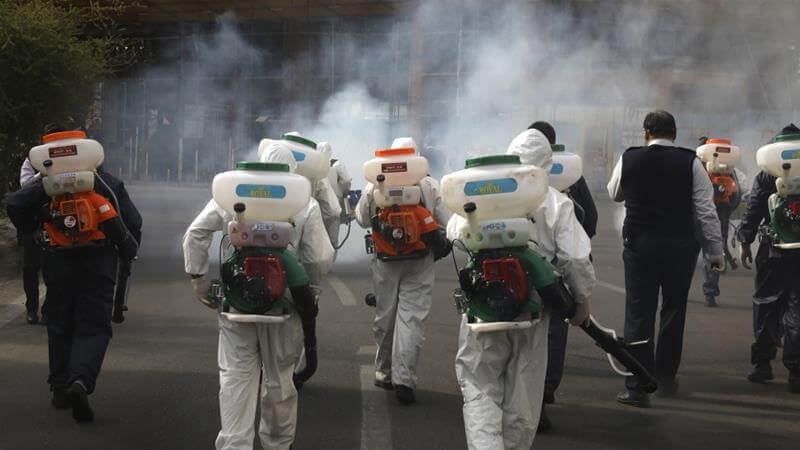
Credit: Vahid Salemi / Associated Press

In a pandemic characterized by extreme uncertainty, one of the few things experts know for sure is the identity of the pathogen responsible: a virus called SARS-CoV-2 that is closely related to the original SARS virus. Both are members of the coronavirus family, which is entirely distinct from the family that includes influenza viruses. Scientists know the shape of proteins on the new coronavirus’s surface down to the position of individual atoms. …

But much else about the pandemic is still maddeningly unclear. Why do some people get really sick, but others do not? Are the models too optimistic or too pessimistic? Exactly how transmissible and deadly is the virus? How many people have actually been infected? How long must social restrictions go on for? Why are so many questions still unanswered?

The confusion partly arises from the pandemic’s scale and pace. Worldwide, at least 3.1 million people have been infected in less than four months. Economies have nose-dived. Societies have paused. In most people’s living memory, no crisis has caused so much upheaval so broadly and so quickly. …

But beyond its vast scope and sui generis nature, there are other reasons the pandemic continues to be so befuddling—a slew of forces scientific and societal, epidemiological and epistemological.


Read the original post

{{ reviewsTotal }}{{ options.labels.singularReviewCountLabel }}
{{ reviewsTotal }}{{ options.labels.pluralReviewCountLabel }}
{{ options.labels.newReviewButton }}
{{ userData.canReview.message }}

Related Articles

Infographic: Global regulatory and health research agencies on whether glyphosate causes cancer

Infographic: Global regulatory and health research agencies on whether glyphosate causes cancer

Does glyphosate—the world's most heavily-used herbicide—pose serious harm to humans? Is it carcinogenic? Those issues are of both legal and ...

Most Popular

ChatGPT-Image-May-7-2026-12_16_37-PM-2
Viewpoint: Are cancer rates ‘skyrocketing’ as RFK, Jr. and MAHA claim? The evidence says mostly the opposite
Screenshot-2026-04-22-at-10.46.29-AM
Viewpoint: How to counter science disinformation? Science journalist offers 12 practical tips
Screenshot-2026-04-13-at-1.39.26-PM
Viewpoint: ‘Safer for children?’ Stonyfield yogurt under fire for deceptive organic marketing
Picture1-14
When superbugs threaten vulnerable children: Can AI help solve antibiotic resistance?
Screenshot-2026-04-23-at-11.00.36-AM
Regulators' dilemma: Thalidomide, Metformin, and the cost of getting drug approvals wrong
Picture1-1
Cooling the planet with balloons: Could a geoengineering gamble slow global warming?
ChatGPT-Image-May-12-2026-08_39_41-PM
GLP podcast: Big Pharma, Big Ag, Big Food—health harming industries or life-saving innovators?
bigstock opioids on chalkboard with rol
GLP podcast: 'Safe injection sites': enabling drug addiction or saving lives?

Sorry. No data so far.

glp menu logo outlined

Get news on human & agricultural genetics and biotechnology delivered to your inbox.