CRISPR provides ‘functional cure’ for patients with beta thalassemia, sickle cell disease, preliminary study shows

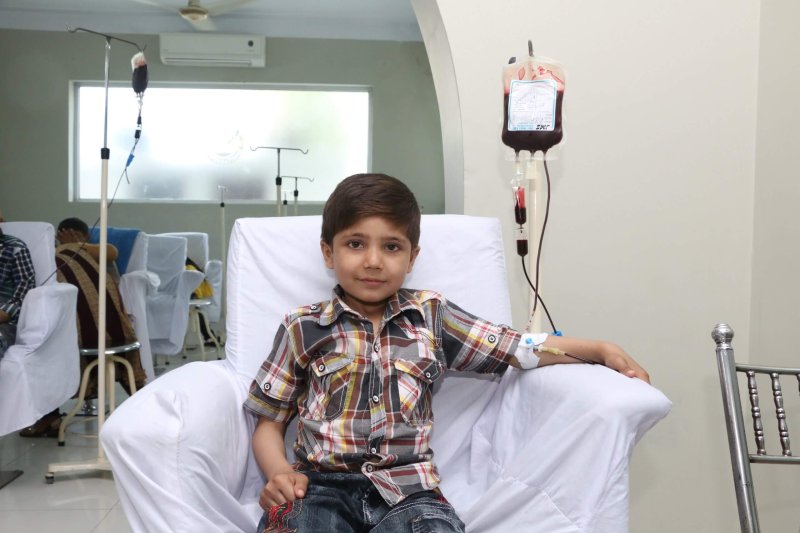
patient image
Child with beta thalassemia. Credit: Muhammadi Blood Bank

Result of this ongoing trial, which is the first to use CRISPR to treat inherited genetic disorders, were announced [June 12] at a virtual meeting of the European Hematology Association.

[Editor’s note: CRISPR gene editing was used to cure two patients – one with beta thalassaemia and one with sickle cell disease.]

“The preliminary results… demonstrate, in essence, a functional cure for patients with beta thalassaemia and sickle cell disease,” team member Haydar Frangoul at Sarah Cannon Research Institute in Nashville, Tennessee, said in a statement.

Beta thalassaemia and sickle cell disease are conditions caused by mutations that affect haemoglobin, the protein that carries oxygen in red blood cells. 

In this trial, run by collaborating companies CRISPR Therapeutics and Vertex, bone marrow stem cells are removed from people and the gene that turns off fetal haemoglobin production is disabled with CRISPR.

The remaining bone marrow cells are killed by chemotherapy, then replaced by edited cells. This is done to ensure that new blood cells are produced by the edited stem cells.

Although the three patients did experience some adverse effects due to the chemotherapy, the CRISPR gene editing appears safe. However, the patients may need to be monitored for the rest of their lives to be sure it has no adverse effects, says [researcher Marina] Cavazzana.


Read the original post

{{ reviewsTotal }}{{ options.labels.singularReviewCountLabel }}
{{ reviewsTotal }}{{ options.labels.pluralReviewCountLabel }}
{{ options.labels.newReviewButton }}
{{ userData.canReview.message }}

Related Articles

Infographic: Global regulatory and health research agencies on whether glyphosate causes cancer

Infographic: Global regulatory and health research agencies on whether glyphosate causes cancer

Does glyphosate—the world's most heavily-used herbicide—pose serious harm to humans? Is it carcinogenic? Those issues are of both legal and ...

Most Popular

ChatGPT-Image-Jul-8-2026-12_32_48-PM
Viewpoint: SCOTUS strikes a blow against junk science in Bayer glyphosate case. Will it deter mass tort litigators?
ChatGPT-Image-Mar-10-2026-01_39_01-PM
Viewpoint—“Miracle molecule” debunked: Why acemannan supplements don’t work
Screenshot-2026-07-08-at-9.36.03-AM
Viewpoint: Long-contained diseases are on the rise in the U.S. Are Trump cuts to blame?
afb-a-b
As the EU loosens restrictions on agricultural gene editing, it remains years behind the rest of the world on equally-safe GMO foods
Viewpoint: Consensus as truth? How ‘misinformation police’ control policy narratives
Which among war, weather and cyber attacks is the biggest world threat? None of the above. It’s misinformation, and here’s why.
c9f0a584-46e9-4dd8-9a77-f5f5a7a51a84
Across Eastern Europe, science disinformation has spread far beyond COVID and vaccine denialism. Here’s the grim list.
Screenshot 2026-07-11 100209
Viewpoint: Supplements to clean your liver? Not a good idea.
ChatGPT-Image-Jul-7-2026-01_57_55-PM
Viewpoint: Europe’s rejection of air conditioning is the poster child for misunderstanding how to mitigate the impact of climate change
Gemini_Generated_Image_gabo48gabo48gabo
Viewpoint: A plastic surgeon on why banning gender-transition surgery without further research is wrong and harmful
ChatGPT-Image-Jun-25-2026-12_23_17-PM
No, Bill Gates did not secretly engineer ticks to promote veganism
ChatGPT-Image-Jul-1-2026-03_33_49-PM
‘Alternative’ cancer treatments that could kill you
ChatGPT-Image-Jul-1-2026-12_37_08-PM
Viewpoint: Trump poised to politicize all U.S.-supported science research
Screenshot-2026-07-10-at-3.10.50-PM
Snake-oil cures throughout history
glp menu logo outlined

Get news on human & agricultural genetics and biotechnology delivered to your inbox.