COVID-19 exposes Ukraine’s booming baby-for-sale business

unnamed file
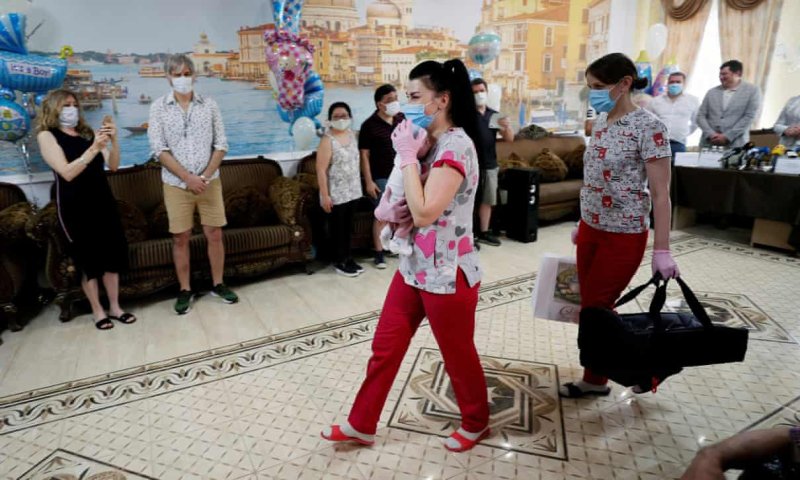
A nurse carries a newborn to meet its parents as foreign couples wait to collect their babies at Hotel Venice. Credit: Gleb Garanich/Reuters

They are the children of foreign couples born to Ukrainian surrogate mothers at the Kyiv-based BioTexCom Centre for Human Reproduction, the largest surrogacy clinic in the world. They’re stranded in the hotel because their biological parents have not been able to travel in or out of Ukraine since borders closed in March because of the Covid-19 pandemic.

The babies’ plight made headlines around the world, but a month on, some 50 babies remain in the hotel and the saga is casting a harsh spotlight on the ethics and scale of the booming commercial child-bearing industry in Ukraine.

Mykola Kuleba, Ukraine’s ombudsman for children, has now said reforming a system he described as a violation of children’s rights was not enough and that surrogacy services for foreign couples in Ukraine should be banned.

In a cash-strapped economy however, where the average wage is £300 a month and the war with Russia and its proxies continues, many impoverished women, especially in small towns and rural areas, are still lining up to carry babies for money, even if they are paying a heavy health and psychological price, as campaigners believe.

“I didn’t want to give her away, I was crying,” [surrogate mother] Liudmyla recalls. She says that after two days of caring for the infant in the maternity ward, letting her go was a wrench. “But I knew what it was all about.” 

Read the original post

{{ reviewsTotal }}{{ options.labels.singularReviewCountLabel }}
{{ reviewsTotal }}{{ options.labels.pluralReviewCountLabel }}
{{ options.labels.newReviewButton }}
{{ userData.canReview.message }}

Related Articles

Infographic: Global regulatory and health research agencies on whether glyphosate causes cancer

Infographic: Global regulatory and health research agencies on whether glyphosate causes cancer

Does glyphosate—the world's most heavily-used herbicide—pose serious harm to humans? Is it carcinogenic? Those issues are of both legal and ...

Most Popular

Screenshot-2026-04-20-at-2.26.27-PM
Viewpoint — Food-fear world: The latest activist scientists campaign: Cancer-causing additives
Screenshot-2026-05-01-at-11.56.24-AM
‘Science moves forward when people are willing to think differently’: Memories of DNA maverick Craig Venter
Screenshot-2026-03-13-at-12.14.04-PM
The FDA wants to make many popular prescription drugs OTC—a great idea. Here’s why it’s unlikely to happen
Screenshot-2026-04-03-at-11.15.51-AM
Paraben panic: How a flawed study, media hype, and chemophobia convinced the public of the danger of one of the safest classes of preservatives
ChatGPT-Image-May-1-2026-02_20_13-PM
How RFK, Jr.’s false vaccine claims are holding up $600 million to fight diseases in poor countries
viva-la-vida-watermelons
Misinformation and climate change are endangering summer watermelons
Screenshot-2026-04-30-at-2.19.37-PM
5 myths about summer dehydration that could damage your health — or even kill you
ChatGPT-Image-Mar-27-2026-11_27_05-AM
The myths of “process”: What science says about the “dangers’ of synthetic products and ultra-processed foods
Drinking lots of water can help reduce the effects of aging
Nanoplastics in drinking water: MAHA activists forge science-based bipartisan coalition 
ChatGPT-Image-Mar-10-2026-01_39_01-PM
Viewpoint—“Miracle molecule” debunked: Why acemannan supplements don’t work
79d03212-2508-45d0-b427-8e9743ff6432
Viewpoint: The Casey Means hustle—Wellness woo opportunism dressed up as medical wisdom
Screenshot-2026-05-04-at-12.54.32-PM
How Utah became the country’s supplement capital  — and a haven for unregulated, ineffective and fake products
ChatGPT-Image-Apr-30-2026-12_21_05-PM-2
The tech billionaires behind the immortality movement
glp menu logo outlined

Get news on human & agricultural genetics and biotechnology delivered to your inbox.