Kenya close to eradicating locust infestations, but resurgence possible before end of 2020, UN warns

screen shot at
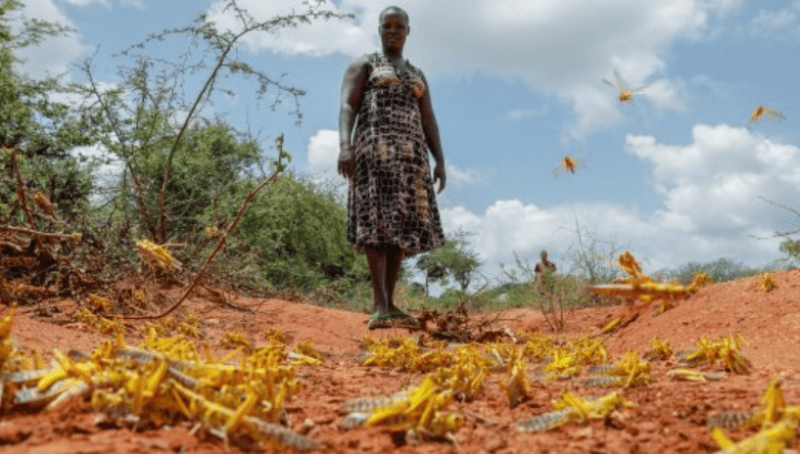
A Kenyan farmer from the Kyuso region inspects her devastated field after a swarm of locusts passes through. Credit: Reuters/Baz Ratner

Kenya is likely to become free from desert locusts in the near future thanks to roll-out of robust containment measures, a senior official from the Food and Agricultural Organization of the United Nations (FAO) said on [July 28].

Cyril Ferrand, FAO’s resilience team leader for East Africa, said that Kenya and other Horn of Africa nations have made significant progress towards eradication of the voracious pests.

[Editor’s note: Read the FAO’s Q&A with Cyril Ferrand to learn more.]

He said that only two out of the 29 counties in Kenya that were infested by desert locusts in February are yet to contain them.

Follow the latest news and policy debates on sustainable agriculture, biomedicine, and other ‘disruptive’ innovations. Subscribe to our newsletter.

“In the coming days, that will drop to one county, and within three weeks Kenya should be free of large-scale infestations altogether,” Ferrand said in a statement issued in Nairobi.

He said that FAO is fighting the second generation of desert locusts that have been successful but the threat of possible re-infestation towards the end of the year calls for enhanced surveillance.


Read the original post

{{ reviewsTotal }}{{ options.labels.singularReviewCountLabel }}
{{ reviewsTotal }}{{ options.labels.pluralReviewCountLabel }}
{{ options.labels.newReviewButton }}
{{ userData.canReview.message }}

Related Articles

Infographic: Global regulatory and health research agencies on whether glyphosate causes cancer

Infographic: Global regulatory and health research agencies on whether glyphosate causes cancer

Does glyphosate—the world's most heavily-used herbicide—pose serious harm to humans? Is it carcinogenic? Those issues are of both legal and ...

Most Popular

Screenshot-2026-04-13-at-1.39.26-PM
Viewpoint: ‘Safer for children?’ Stonyfield yogurt under fire for deceptive organic marketing
Screenshot-2026-04-22-at-10.46.29-AM
Viewpoint: How to counter science disinformation? Science journalist offers 12 practical tips
ChatGPT-Image-May-7-2026-12_16_37-PM-2
Viewpoint: Are cancer rates ‘skyrocketing’ as RFK, Jr. and MAHA claim? The evidence says mostly the opposite
Picture1-14
When superbugs threaten vulnerable children: Can AI help solve antibiotic resistance?
ChatGPT-Image-May-12-2026-08_39_41-PM
GLP podcast: Big Pharma, Big Ag, Big Food—health harming industries or life-saving innovators?
Screenshot-2026-04-23-at-11.00.36-AM
Regulators' dilemma: Thalidomide, Metformin, and the cost of getting drug approvals wrong
Picture1-1
Cooling the planet with balloons: Could a geoengineering gamble slow global warming?
png-pill-omega-Supp-fish-oil
Millions take omega-3 fish oil for brain health. New research suggests it may do the opposite.
bigstock opioids on chalkboard with rol
GLP podcast: 'Safe injection sites': enabling drug addiction or saving lives?
glp menu logo outlined

Get news on human & agricultural genetics and biotechnology delivered to your inbox.