A Study Finds Sex Differences in the Brain. Does It Matter?

brain featured
Credit: Pixologics Studio/Science Photo Library
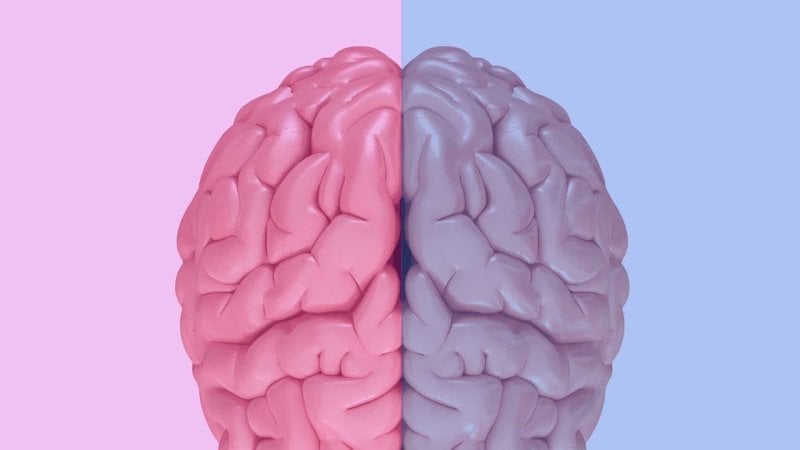
[July 20, Armin Raznahan] and his team published a study in Proceedings of the National Academy of Sciences that not only reported reliable sex differences in the volumes of certain parts of men’s and women’s brains but also tied those differences to the direct influence of sex chromosomes. “What we were seeking to do in this study is ask some relatively simple questions that hadn’t quite ever been directly addressed,” Raznahan says. “How reproducible are anatomical sex differences in the human brain? And what sorts of functional systems, if any, do they seem to be co-localized with?”

Mis- and disinformation are distorting science and public policy. Subscribe to our Daily and Weekly Digests for incisive coverage of ‘disruptive’ innovations in AI, agricultural biotechnology, food, chemicals, nuclear energy, vaccines, and other disruptive innovations.

After analyzing this data and correcting for total brain volume (just like men’s bodies are, on average, larger than women’s bodies, so too are their brains), they discovered a number of apparent differences.

Among them was a relative size advantage for men in parts of the occipital lobe (which is associated with vision) and in the amygdala and hippocampus (regions that play important roles in emotion and memory). Women, on the other hand, had more gray matter in parts of the prefrontal cortex (which is associated with decisionmaking and self-control) and the insula (which has been connected with numerous functions, including emotion and the sense of taste). These results might seem to suggest that women have an edge over men in decisionmaking and that men have better memories, but it’s impossible to extrapolate such broad conclusions from Raznahan’s results.


Read the original post

Related Articles

Infographic: Global regulatory and health research agencies on whether glyphosate causes cancer

Infographic: Global regulatory and health research agencies on whether glyphosate causes cancer

Does glyphosate—the world's most heavily-used herbicide—pose serious harm to humans? Is it carcinogenic? Those issues are of both legal and ...

Most Popular

ChatGPT-Image-Mar-10-2026-01_39_01-PM
Viewpoint—“Miracle molecule” debunked: Why acemannan supplements don’t work
ChatGPT-Image-Sep-30-2026-01_11_07-PM
How U.S. teamed with Russia to block global human AI weapons oversight
ChatGPT-Image-Sep-21-2026-03_15_09-PM
Viewpoint: Chipotle-inspired lesson: 10,000 sick customers suggest that processed foods can be safer than fresh ones
ChatGPT-Image-Sep-29-2026-12_16_42-PM
Social media influencers are driving food misinformation across Europe
generated-1790707585414
Facts & Fallacies podcast: America's health care system is broken. A doctor explains how to fix it
Screenshot-2026-09-29-at-11.06.43-AM
Astrology, homeopathy, vaccine rejectionism, creationism: Why pseudoscience thrives as science advances
ChatGPT-Image-Sep-23-2026-02_36_39-PM
Viewpoint: After firing the entire National Science Board, Trump reshapes funding initiatives. Here’s the good and the bad.
Screenshot-2026-09-28-at-1.16.38-PM
Defying public perceptions, U.S. cancer deaths plunged 35% since 1991
ChatGPT-Image-Jun-18-2026-04_15_29-PM
Viewpoint: Kennedy’s ‘bad science’: MAGA embrace bolsters HHS secretary’s influence and popularity
ChatGPT-Image-Sep-2-2026-02_03_32-PM
How much of a problem is AI’s water use?
glp menu logo outlined

Get news on human & agricultural genetics and biotechnology delivered to your inbox.