Designer babies? CRISPR cucumbers? Time for a global citizens’ ethics assembly

ma art page image
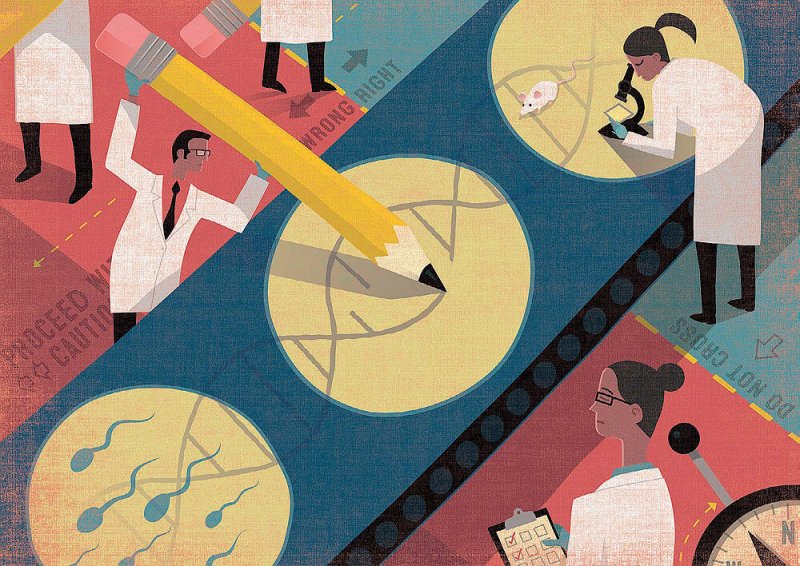
Credit: Rocco Baviera
[The] implications [of gene editing] are so profound that a growing group of experts believe it is too important a matter to be left only to scientists, doctors and politicians.

Writing in the journal Science, 25 leading researchers from across the globe call for the creation of national and global “citizens’ assemblies”, made up of lay-people, tasked with considering the ethical and social impacts of this emerging science.

Gene editing potentially offers a way to change mosquitoes and wipe out malaria, to boost crop resilience and reduce starvation, or to produce pigs full of organs easily transplanted into humans.

[Professor John] Dryzek and colleagues believe that citizens’ assemblies – groups of lay-people tasked with diving deep into the ethical and moral issues thrown up by genome editing – will provide a valuable guide for scientists, doctors and politicians around the world.

Follow the latest news and policy debates on sustainable agriculture, biomedicine, and other ‘disruptive’ innovations. Subscribe to our newsletter.

“The fact that they are made up of citizens with no history of activism on an issue means they are good at reflecting upon the relative weight of different values and principles,” Professor Dryzek said.

“Think of how we trust juries in court cases to reach good judgements. Deliberation is a particularly good way to harness the wisdom of crowds, as it enables participants to piece together the different bits of information that they hold in constructive and considered fashion.”


Read the original post

{{ reviewsTotal }}{{ options.labels.singularReviewCountLabel }}
{{ reviewsTotal }}{{ options.labels.pluralReviewCountLabel }}
{{ options.labels.newReviewButton }}
{{ userData.canReview.message }}

Related Articles

Infographic: Global regulatory and health research agencies on whether glyphosate causes cancer

Infographic: Global regulatory and health research agencies on whether glyphosate causes cancer

Does glyphosate—the world's most heavily-used herbicide—pose serious harm to humans? Is it carcinogenic? Those issues are of both legal and ...

Most Popular

Screenshot-PM-24
Viewpoint: The herbicide glyphosate isn’t perfect. Banning it would be far worse.
d-b
Blocked arteries, kidney stones, nausea, constipation, fatigue: Long list of health problems caused by too much vitamin D 
79d03212-2508-45d0-b427-8e9743ff6432
Viewpoint: The Casey Means hustle—Wellness woo opportunism dressed up as medical wisdom
ChatGPT-Image-Mar-10-2026-01_39_01-PM
Viewpoint—“Miracle molecule” debunked: Why acemannan supplements don’t work
ChatGPT-Image-Apr-30-2026-12_21_05-PM-2
The tech billionaires behind the immortality movement
ChatGPT-Image-Mar-27-2026-11_27_05-AM
The myths of “process”: What science says about the “dangers’ of synthetic products and ultra-processed foods
ChatGPT-Image-Apr-30-2026-05_00_48-PM
Wellness grifter physician turned wellness influencer out as surgeon general nominee

Sorry. No data so far.

glp menu logo outlined

Get news on human & agricultural genetics and biotechnology delivered to your inbox.