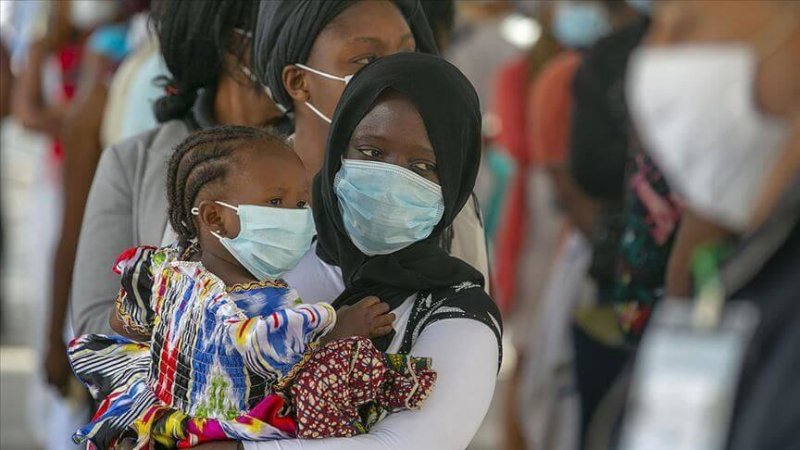
Africa was expected to be a coronavirus graveyard. Could COVID be rapidly receding instead?

thumbs b c d a d bc e ff a a

Prof Francesco Checchi, a specialist in epidemiology at the London School of Hygiene and Tropical Medicine, told MPs it was “broadly” true that coronavirus had not behaved in expected ways in African countries, including Kenya, Tanzania, Sudan and Somalia.

“We are certainly observing a pattern that confounds us a little,” he told the international development committee’s inquiry into the impact of Covid on humanitarian crises.

“In a few important case studies – Kenya, for example – what seems to be happening is the epidemic may be peaking earlier than our naive models predicted.”

He said a similar pattern has emerged in Yemen, which is in the middle of the worst humanitarian crisis in the world.

“Yemen is one of the few countries where to my knowledge there is almost no prevention of Covid transmission,” Checchi said.

“The anecdotal reports we’re getting inside Yemen are pretty consistent that the epidemic has, quote unquote, passed.”

Follow the latest news and policy debates on sustainable agriculture, biomedicine, and other ‘disruptive’ innovations. Subscribe to our newsletter.

While that was “very good news”, Checchi said he was unable to say whether it had been less lethal or less severe on a per capita basis. In many developing countries, where testing is poor and deaths are not notified to the authorities, the rate of reported deaths is very low.

A study published on [September 15] from Imperial College London estimated that in Damascus, Syria, reported deaths from coronavirus were as low as 1.25% of the true figure.


Read the original post

{{ reviewsTotal }}{{ options.labels.singularReviewCountLabel }}
{{ reviewsTotal }}{{ options.labels.pluralReviewCountLabel }}
{{ options.labels.newReviewButton }}
{{ userData.canReview.message }}

Related Articles

Infographic: Global regulatory and health research agencies on whether glyphosate causes cancer

Infographic: Global regulatory and health research agencies on whether glyphosate causes cancer

Does glyphosate—the world's most heavily-used herbicide—pose serious harm to humans? Is it carcinogenic? Those issues are of both legal and ...

Most Popular

ChatGPT-Image-Mar-27-2026-11_27_05-AM
The myths of “process”: What science says about the “dangers’ of synthetic products and ultra-processed foods
Screenshot-PM-24
Viewpoint: The herbicide glyphosate isn’t perfect. Banning it would be far worse.
Screenshot-2026-04-29-at-11.31.42-AM
Dad brains: Only women undergo bodily changes during and after childbirth? Think again.
ChatGPT-Image-Mar-3-2026-01_17_14-PM
MAHA wellness influencers deride proven anxiety medications, tout lifestyle fixes
d-b
Blocked arteries, kidney stones, nausea, constipation, fatigue: Long list of health problems caused by too much vitamin D 
circular-bioeconomy-should-focus-on-sustainable-wellbeing
GLP podcast: What's wrong with 'doomsday' environmentalism? It's false.
png-pill-omega-Supp-fish-oil
Fish oil supplements for brain injuries probably don’t work 
ChatGPT-Image-Apr-28-2026-12_46_14-PM-2
Kennedy has quietly stopped touting problematic raw milk. Health concerns aren’t why
ChatGPT-Image-Apr-29-2026-11_04_44-AM-2
Anti-vaccine activists are now the majority in RFK, Jr.’s CDC Vaccine Panel
ChatGPT-Image-Apr-22-2026-11_06_18-AM
Wellness influencer nonsense: No, nicotine does not boost cognition and productivity, but it can damage your health 
ChatGPT-Image-Feb-16-2026-01_57_31-PM
Viewpoint: ‘Science-as-Satan’ unites the MAHA—MAGA movements. Is a breakup in the works?
glp menu logo outlined

Get news on human & agricultural genetics and biotechnology delivered to your inbox.