Trump’s treatments primer: Regeneron antibodies and Gilead’s Remdesivir

donald trump walter reed jm c de a bd fit w
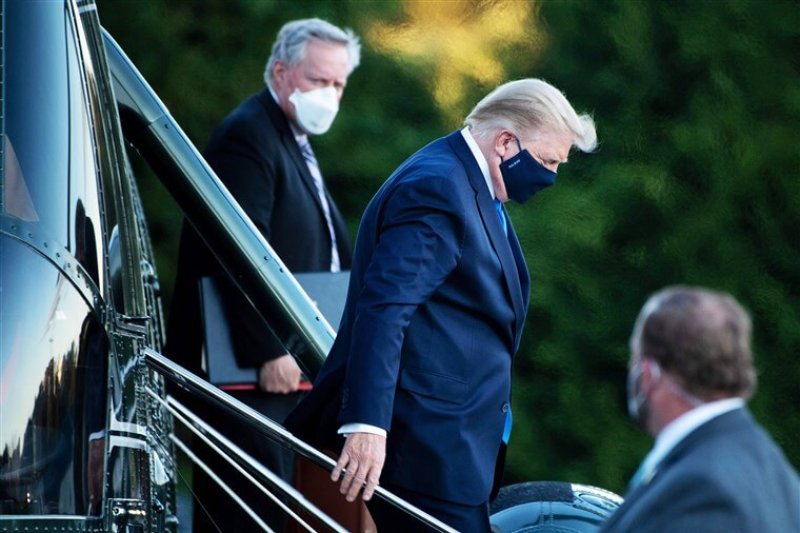
Credit: Brendan Smialowski/AFP
[After Trump’s COVID diagnosis,] his treatment began with a leading drug candidate, Regeneron Pharmaceuticals’ two-antibody combination or “cocktail,” REGN-COV2. Within days, his medical team announced that the antiviral remdesivir, from Gilead Sciences, was added to the interventions given to the president. The treatment regimen, which incorporated dexamethasone on Sunday [October 4] —a steroid typically reserved for serious or more advanced COVID-19 cases—has been rolled out both aggressively and quickly.

Whether these treatments will diminish the president’s battle with COVID-19 remains unknown and a source of unending speculation.

Despite the questions that remain regarding this situation, these two treatments have been making their way through the required safety and regulatory hurdles.

Neither drug is [FDA] approved. Remdesivir received emergency use authorization (EUA) from the FDA on May 1.

Follow the latest news and policy debates on sustainable agriculture, biomedicine, and other ‘disruptive’ innovations. Subscribe to our newsletter.

REGN-COV2 has not received EUA. The FDA allows “expanded access” (also called “compassionate use”) allowing patients with an “immediately life-threatening condition or serious disease or condition” to access investigational drugs, biologics, or medical devices for use outside of clinical trials when no comparable or satisfactory alternative therapy options are available.

Regeneron said it gave Trump REGN-COV2 under a compassionate use: “All we can say is that they asked to be able to use it, and we were happy to oblige,” Regeneron founder, president, and CEO Leonard S. Schleifer, MD, PhD, told The New York Times.

Read the original post

{{ reviewsTotal }}{{ options.labels.singularReviewCountLabel }}
{{ reviewsTotal }}{{ options.labels.pluralReviewCountLabel }}
{{ options.labels.newReviewButton }}
{{ userData.canReview.message }}

Related Articles

Infographic: Global regulatory and health research agencies on whether glyphosate causes cancer

Infographic: Global regulatory and health research agencies on whether glyphosate causes cancer

Does glyphosate—the world's most heavily-used herbicide—pose serious harm to humans? Is it carcinogenic? Those issues are of both legal and ...

Most Popular

ChatGPT-Image-Apr-16-2026-02_56_53-PM
Financial incentives, over diagnosis, and weak oversight: Autism claims are driving up Medicare costs
Screenshot-2026-05-08-at-11.55.47-AM
Anti-vax activists falsely blame COVID vaccines for the rising U.S. cancer rate among younger people.
Picture1
The FDA couldn’t find a vaccine safety crisis, so it buried its own research
vax-misinformation-main
GLP podcast: Limit free speech to blunt social media misinfo?
ChatGPT-Image-May-7-2026-12_32_36-PM
Viewpoint: The state of U.S. vaccine policy? Dismal nationally, but some states are stepping up.
Screenshot-2026-04-22-at-12.21.32-PM
Viewpoint: Why the retracted Monsanto glyphosate study doesn’t change the science—the world’s most popular herbicide is safe 
ChatGPT-Image-May-12-2026-11_27_01-AM-2
AI likely to improve health care, research shows—but not for blacks and ethnic minorities
modi visit sikkim
Viewpoint: Indian PM wants farmers to switch to 50% organic. It would take at least 10 years, likely won’t work, and isn’t more sustainable
Screenshot-2026-05-19-at-11.23.34-AM
West-originated vaccine disinformation sparks murders of health care workers across Africa
placebo
Viewpoint — Alternative medicine and the placebo effect: Selling a reassuring illusion of health
glp menu logo outlined

Get news on human & agricultural genetics and biotechnology delivered to your inbox.