France poised to suspend neonics pesticide ban to help farmers, over objections from Greenpeace

sugarbeetpellets
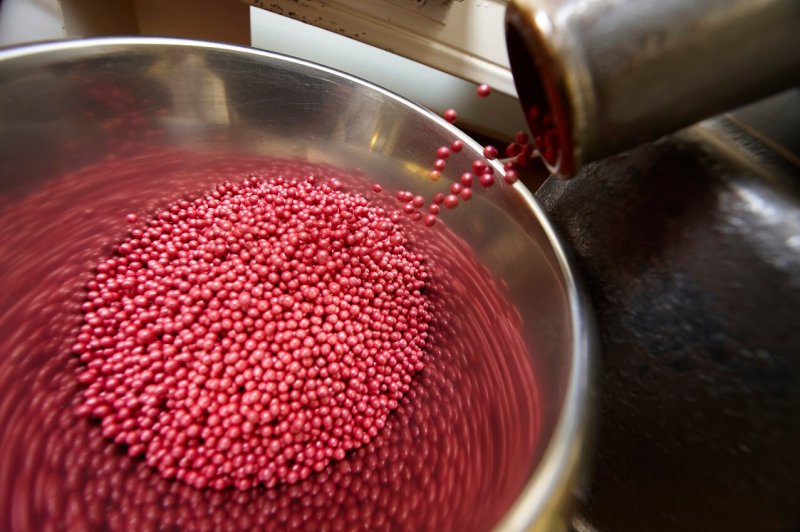
Seeds coated with a neonicotinoid insecticide. Credit: Germains

French lawmakers on Tuesday (6 October) approved a draft bill allowing sugar beet growers to use pesticides that are banned to protect honeybees, a move welcomed by farmers hit by crop disease but condemned by green groups as more backsliding by the government.

To avoid seeing farmers, who experienced an average 15% fall in output [in 2020], turn away from the crop, the government proposed that they would be allowed to use neonicotinoids on sugar beet seeds until July 1, 2023, easing a ban in place since 2018.

“History will remember that, despite scientific evidence and pressure from public opinion, this government continues to encourage the poisoning of soil, animals and our food,” Clement Senechal, campaigner for Greenpeace France, said in a statement.

[Editor’s note: To learn more, read Are we facing an ‘Insect Apocalypse’ caused by ‘intensive, industrial’ farming and agricultural chemicals? The media say yes; Science says ‘no’]

In France, the European Union’s top sugar producer …. [a]verage yields are seen down 11%, but growers said they fell 30%-50% in fields hit by jaundice.

The bill goes to the Senate before a second vote in the lower chamber.

Read the original post

{{ reviewsTotal }}{{ options.labels.singularReviewCountLabel }}
{{ reviewsTotal }}{{ options.labels.pluralReviewCountLabel }}
{{ options.labels.newReviewButton }}
{{ userData.canReview.message }}

Related Articles

Infographic: Global regulatory and health research agencies on whether glyphosate causes cancer

Infographic: Global regulatory and health research agencies on whether glyphosate causes cancer

Does glyphosate—the world's most heavily-used herbicide—pose serious harm to humans? Is it carcinogenic? Those issues are of both legal and ...

Most Popular

ChatGPT-Image-Mar-10-2026-01_39_01-PM
Viewpoint—“Miracle molecule” debunked: Why acemannan supplements don’t work
Screenshot 2025-07-30 at 10.48
Can gene editing eliminate Down syndrome? Scientists have done it in lab-grown cells
Screenshot 2026-05-26 at 10.15
Viewpoint: Double standard—Why does the wellness industry get a free pass while Big Healthcare is treated as morally suspect?
downsyndrome_compilation_MID_1
CRISPR breakthrough that can remove the chromosome responsible for Down syndrome raises ethical questions
ChatGPT-Image-Jun-4-2026-01_27_58-PM
Viewpoint—N.A.D.+: Why Gwenyth Paltrow’s heralded anti-aging supplement doesn’t work
ChatGPT-Image-May-26-2026-07_51_21-AM-2
Viewpoint: There are more than 1,000 chemicals in a cup of coffee—including many substances that can cause cancer. Why isn’t it banned?
tick-DNA
GLP podcast: Spread meat allergy with gene-edited ticks? Bioethicists pose vile ‘thought experiment’
Screenshot-2026-06-03-at-1.24.46-PM
Challenging anti-GMO disinformation: Why genetically-tweaked crops offer bushels of benefits
ChatGPT-Image-Jun-4-2026-11_49_36-AM-2
‘You don’t understand Tolkien’: Skeptic Pope trolls tech giants about the exaggerated, risk-less benefits of AI

Sorry. No data so far.

glp menu logo outlined

Get news on human & agricultural genetics and biotechnology delivered to your inbox.