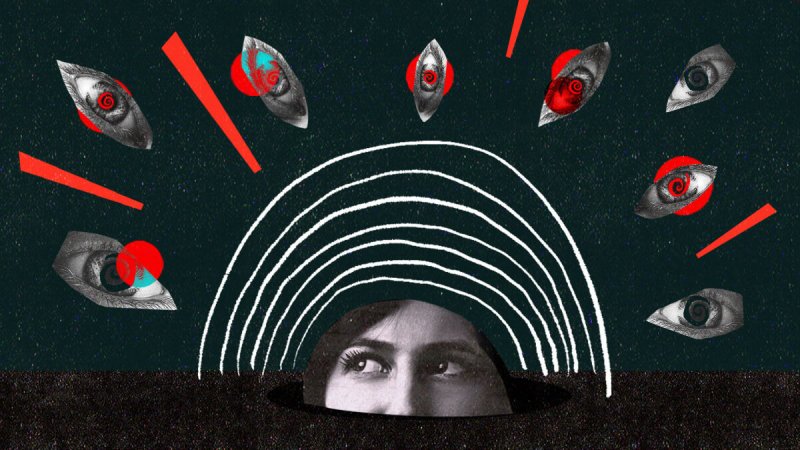
These kinds of personality types are most likely to embrace conspiracy theories

jul fraziskabarczyk
Credit: Faziska Barczyk
[P]eople who are self-important, narcissistic, anxious, depressed, or impulsive are slightly more likely to cling to a conspiracy theory than people who don’t exhibit these traits, researchers from Emory University found.

The study, published on September 10 in The Journal of Personality, looked at 1,927 people, a mixture of Emory student and random virtual participants. The majority of participants were college-educated, white, and identified as Democrats, but a small sample of Asian, African American, and Hispanic participants also participated.

First, the researchers determined how likely it was for each participant to believe in a conspiracy theory. To do this, they asked each person to rate conspiracy statements, some based on specific events and other more general theories, on a scale of 1 (completely false) to 6 (completely true).

They found 60% of participants weren’t likely to believe these conspiracies, but 40% were.

The researchers then ran another test to analyze subjects’ individual personality traits.

Follow the latest news and policy debates on sustainable agriculture, biomedicine, and other ‘disruptive’ innovations. Subscribe to our newsletter.

The correlations between certain personality traits and a tendency to believe conspiracies was small, lead researcher Shauna Bowes told Insider, but still offer insights into how personhood influences behavior.

“Those things might not necessarily hang together in the same individual, but they’re traits across individuals that might make it more likely to not question your beliefs because you’re certain of them, or find comfort in them because nothing else seems to make sense, and you’re alone and scared,” Bowes told Insider.


Read the original post

{{ reviewsTotal }}{{ options.labels.singularReviewCountLabel }}
{{ reviewsTotal }}{{ options.labels.pluralReviewCountLabel }}
{{ options.labels.newReviewButton }}
{{ userData.canReview.message }}

Related Articles

Infographic: Global regulatory and health research agencies on whether glyphosate causes cancer

Infographic: Global regulatory and health research agencies on whether glyphosate causes cancer

Does glyphosate—the world's most heavily-used herbicide—pose serious harm to humans? Is it carcinogenic? Those issues are of both legal and ...

Most Popular

ChatGPT-Image-Jun-25-2026-12_23_17-PM
No, Bill Gates did not secretly engineer ticks to promote veganism
ChatGPT-Image-Jun-23-2026-03_12_23-PM
Is cellular reprogramming junk science? Nearly 20 patients are getting eye injections in the first FDA-cleared cellular trial
ChatGPT-Image-Mar-10-2026-01_39_01-PM
Viewpoint—“Miracle molecule” debunked: Why acemannan supplements don’t work
ChatGPT-Image-Jun-24-2026-11_36_47-AM
Why the human genome is less a script than a puzzle
ChatGPT-Image-Jun-17-2026-10_52_43-AM
Anguished parents, doctors in tears: Utah’s long measles outbreak takes a toll
Screenshot-2026-06-15-at-1.55.27-PM
America's trust in Trump-Kennedy's CDC health recommendations is plunging
Screenshot 2026-06-25 at 10.55
Leading OB-GYN group challenges RFK, Jr. gutting of maternal vaccine schedule
ChatGPT-Image-May-18-2026-12_06_18-PM-2
Defying death: The immortality movement goes mainstream

Sorry. No data so far.

glp menu logo outlined

Get news on human & agricultural genetics and biotechnology delivered to your inbox.