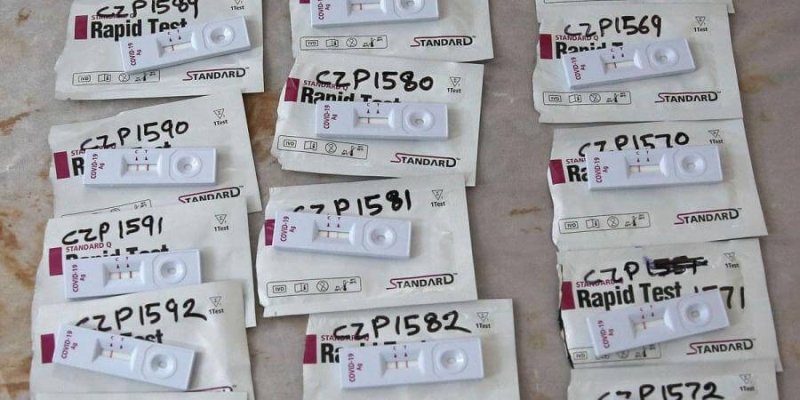
Facing a long wait till widespread COVID vaccine availability, Europe focuses on fast antigen tests largely absent in the US

testing
Credit: Shekhar Yadav/EPS

While highly accurate, PCR [COVID] tests are relatively expensive, can be carried out only by certified labs and take between several hours and a few days to deliver a result.

In the past, European authorities have been wary of alternatives to PCR testing because of their lower accuracy, but latest research shows that the benefits of fast, large-scale testing significantly outweigh this downside. The new methods, which have been growing in use in the U.S. and are now being unrolled or scaled up in Europe, can provide results in just 15 minutes without labs and with minimal manpower.

“This is a great step forward,” said Jonas Schmidt-Chanasit, who leads the virology center of Germany’s Bernhard Nocht Institute for Tropical Medicine, the largest of its kind in the country. Such testing would help investigate clusters, preventively survey vulnerable groups and might even allow the return of mass events such as concerts and public sporting events, he added.

Follow the latest news and policy debates on sustainable agriculture, biomedicine, and other ‘disruptive’ innovations. Subscribe to our newsletter.

Germany, one of the global leaders in Covid-19 testing, is approaching its full testing capacity, at 1.3 million PCR tests a week. To avoid rationing tests, the government is now launching an antigen-testing strategy on Oct. 15. Testing will begin in nursing homes and hospitals, including for visitors, Health Minister Jens Spahn told The Wall Street Journal.

“Testing is the decisive tool to identify and cut infection chains,” Mr. Spahn said.


Read the original post

{{ reviewsTotal }}{{ options.labels.singularReviewCountLabel }}
{{ reviewsTotal }}{{ options.labels.pluralReviewCountLabel }}
{{ options.labels.newReviewButton }}
{{ userData.canReview.message }}

Related Articles

Infographic: Global regulatory and health research agencies on whether glyphosate causes cancer

Infographic: Global regulatory and health research agencies on whether glyphosate causes cancer

Does glyphosate—the world's most heavily-used herbicide—pose serious harm to humans? Is it carcinogenic? Those issues are of both legal and ...

Most Popular

wuhan institute of virology main entrance
​​COVID lab leak? Making a case that the Wuhan market origins theory is wrong
ChatGPT-Image-Mar-10-2026-01_39_01-PM
Viewpoint—“Miracle molecule” debunked: Why acemannan supplements don’t work
Screenshot-2026-06-05-at-2.12.30-PM
Some plants can poison you. So how did humans figure out what is safe to eat?
ChatGPT-Image-May-18-2026-12_06_18-PM-2
Defying death: The immortality movement goes mainstream
ChatGPT Image May 28, 2026, 08_16_38 PM
Viewpoint: Why the EPA mismeasures cancer risk of chemicals and what should be done to fix it

Sorry. No data so far.

glp menu logo outlined

Get news on human & agricultural genetics and biotechnology delivered to your inbox.