CRISPR-based diagnostic tools will be able to rapidly diagnose future pandemics

Credit: Freepik
Credit: Freepik

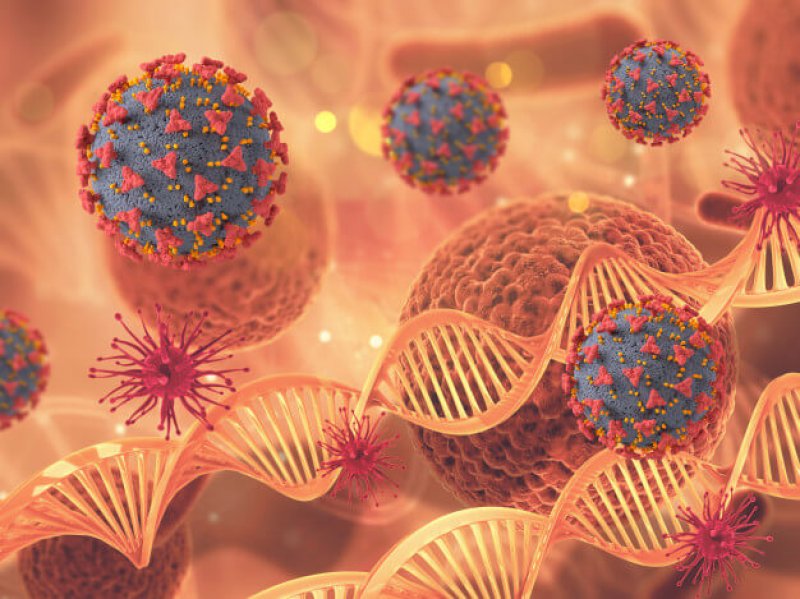
Although [CRISPR] gene-editing technology [COVID] tests are still being developed and won’t be ready in the United States this year as the weather cools and demand surges, research groups recently published papers describing them as an appealing alternative as testing shortages persist amid the COVID-19 pandemic.

Dr. Jennifer Doudna, a University of California-Berkeley researcher whose pioneering work in CRISPR earned a share of this year’s Nobel Prize in chemistry, said the test can be done quickly and doesn’t require a lab.

In an Oct. 12 publication, researchers reported the test yielded results in five minutes and correctly identified five samples from patients with the coronavirus. When used with a mobile phone to detect signals generated by the test, the technology could provide a fast, low-cost test outside a laboratory.

Follow the latest news and policy debates on sustainable agriculture, biomedicine, and other ‘disruptive’ innovations. Subscribe to our newsletter.

Gigi Gronvall, a senior scholar at the Johns Hopkins Center for Health Security, said she expects more labs will explore tests using this technology. She called it “extremely promising” because people can use the tests outside the lab.

“That has been a big challenge with testing generally,” Gronvall said. “People need to have their results pretty quickly otherwise they keep going about their day and they might be infectious and not stop having contact with other people.”


Read the original post

{{ reviewsTotal }}{{ options.labels.singularReviewCountLabel }}
{{ reviewsTotal }}{{ options.labels.pluralReviewCountLabel }}
{{ options.labels.newReviewButton }}
{{ userData.canReview.message }}

Related Articles

Infographic: Global regulatory and health research agencies on whether glyphosate causes cancer

Infographic: Global regulatory and health research agencies on whether glyphosate causes cancer

Does glyphosate—the world's most heavily-used herbicide—pose serious harm to humans? Is it carcinogenic? Those issues are of both legal and ...

Most Popular

S
As vaccine rejectionism spreads, measles may be taking a more dangerous turn
Screenshot-2026-05-01-at-1.29.41-PM
Viewpoint: What happens when whole grains meet modern food manufacturing? Labels don’t tell the whole story.
Screenshot 2026-05-06 at 2.56
Singularity crisis ahead? Can super babies save us from rogue AI geniuses?
Screenshot-2026-03-13-at-12.14.04-PM
The FDA wants to make many popular prescription drugs OTC—a great idea. Here’s why it’s unlikely to happen
Screenshot-2026-05-06-at-2.07.43-PM
Manufacturing a conspiracy: The timeline of how  the White House embraced the fringe claim that scientists are being mysteriously murdered
Screenshot-2026-04-20-at-2.26.27-PM
Viewpoint — Food-fear world: The latest activist scientists campaign: Cancer-causing additives
Screenshot-2026-05-01-at-11.56.24-AM
‘Science moves forward when people are willing to think differently’: Memories of DNA maverick Craig Venter
Screenshot-2026-04-03-at-11.15.51-AM
Paraben panic: How a flawed study, media hype, and chemophobia convinced the public of the danger of one of the safest classes of preservatives
Screenshot-2026-04-30-at-2.19.37-PM
5 myths about summer dehydration that could damage your health — or even kill you
images
The never-ending GMO debate: Pros and cons
Screenshot-2026-04-12-135256
Bixonimania: The fake disease scam that AI swallowed whole
glp menu logo outlined

Get news on human & agricultural genetics and biotechnology delivered to your inbox.