In a recent article of mine published in the journal, Global Food Security, I highlight the EU’s reluctance to move away from its precaution-based regulatory system. Their reluctance to accept science is affecting not only in terms of the development of innovative crop varieties that will be better equipped to adapt to changing climates but also their ability to develop Covid-19 vaccines and have them approved.
Process-based regulatory systems are so 20th century
In recognition of just how significant an innovation gene editing is, the two women that first discovered CRISPR/cas9, Jennifer Doudna and Emmanuelle Charpentier, won the 2020 Nobel Prize in Chemistry. Gene editing holds tremendous promise in the development of new crop varieties that can be more nutritious, higher yielding and better able to adapt to climatic changes. A recent survey of regulators and plant breeders found that only 6% believed that process-based regulatory systems are effective. In various parts of the world, gene editing is being applied to crops to improve yield, increase disease resistance, provide herbicide tolerance and improved oil and nutrient composition, including soybeans (drought tolerance, salt tolerance, high oleic acid, low trans-fatty acids), corn (increased starch), potatoes (lower acrylamide) and wheat (mildew resistance, higher fiber). Gene editing is a new breeding technique that changes specific genes by a precise level and doesn’t involve inserting DNA from another plant or species. Yet, the EU has decided to regulate gene editing as equivalent to breeding technologies that do insert DNA from other plants and species. Scientists have been frustrated by this decision, resulting in 117 research institutions within the EU signing a petition for modern regulations for gene editing technology. The current EU regulatory system for GM crops has only approved one variety for planting in the past 15 years, which was never commercialized due to the length of time it took to be approved, resulting in scientists being rightly concerned about the inability to get a new crop, fruit and vegetable varieties approved for production and consumption, given the existing failures.
By determining that gene-edited plants must be regulated as equivalent to GM plants and the broken regulatory system, this has set a precedent that all gene edited products will need to be considered within the GM regulation framework. This is where the EU has a real problem, in April The Economist reported that virtually all of the Covid-19 vaccines being developed in the EU are based on technologies that will make them GM products. It presently takes the EU regulatory system nearly 5 years to make an approval decision just to allow a GM variety to be imported for use as animal feed. The EU systems take far longer to assess risk, due to the precautionary basis, compared to other countries. For example, in Canada, a GM crop can be approved in 1-2 years of risk assessment. Science-based risk assessments assess the risk of a new GM product and if the risk of the GM product is comparable to the risk of an equivalent non-GM product, then it is approved. The EU lacks the ability to use this same equivalence as a rationale for approving GM products as safe. If the EU applies its process-based GMO regulatory framework to the risk assessment of GM-derived vaccines and drugs, it would be expected to have similar time requirements as GM crops to complete the process-based risk assessments. It is very doubtful the EU public would be willing to wait until 2025 to have access to a Covid-19 vaccine. In an admission that the EU regulatory system is a failure, the European Parliament announced it would ‘derogate’ some of the regulatory requirements that would be required of gene-edited developed Covid-19 vaccines to speed their development.

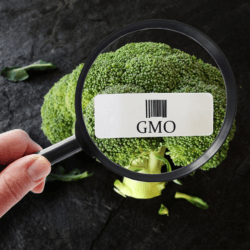



One technology – two regulatory systems
The EU is facing a situation where it may soon have two regulatory systems for gene editing. One that is science-based for the development of drugs and vaccines and one that is politically-based for plants. Should the EU move in this direction, it will demonstrate that if gene editing technology is applied to vaccines and drugs, the science is safe and the products can be approved. Yet if gene editing is applied to plants, the technology is unsafe and products should not be approved. Not only is this inefficient, but it also exposes the EU regulatory system to political manipulation from activist organizations. Scientists, graduate students and investment capital has been fleeing Europe for the past 20 years and the pace has increased in the past 2 years following the decision on the regulation of gene editing as equivalent to GMO regulations. The EU has been provided with a rare and unique opportunity to establish a product-based regulatory system that uses science, not politics, to make approval decisions. If the EU fails to take the appropriate actions and fix their broken regulatory system, the best and brightest of Europe’s scientists will continue to leave, agricultural innovation will be reduced and ultimately, food prices will increase.
Stuart J. Smyth is a professor in the Department of Agricultural and Resource Economics and holds the Industry Funded Research Chair in Agri-Food Innovation at the University of Saskatchewan. Follow him on Twitter @stuartsmyth66
A version of this article was originally posted at the Sustainable Agricultural Innovation & Food website and has been reposted here with permission. SAIFood can be found on Twitter @SAIFood_blog