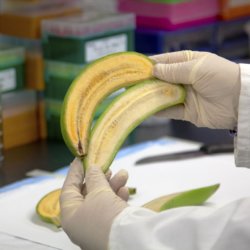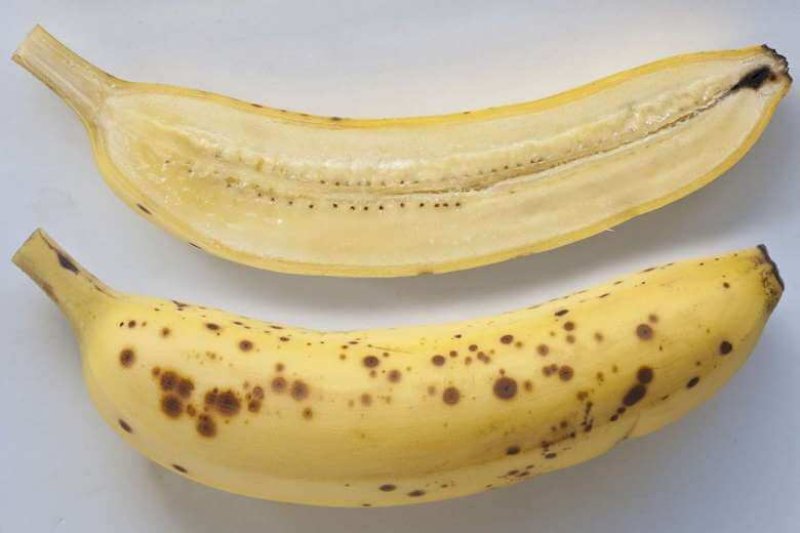
CRISPR-edited bananas immune to killer pathogens advance toward commercialization in Africa

Credit: Chris Tan
Credit: Chris Tan

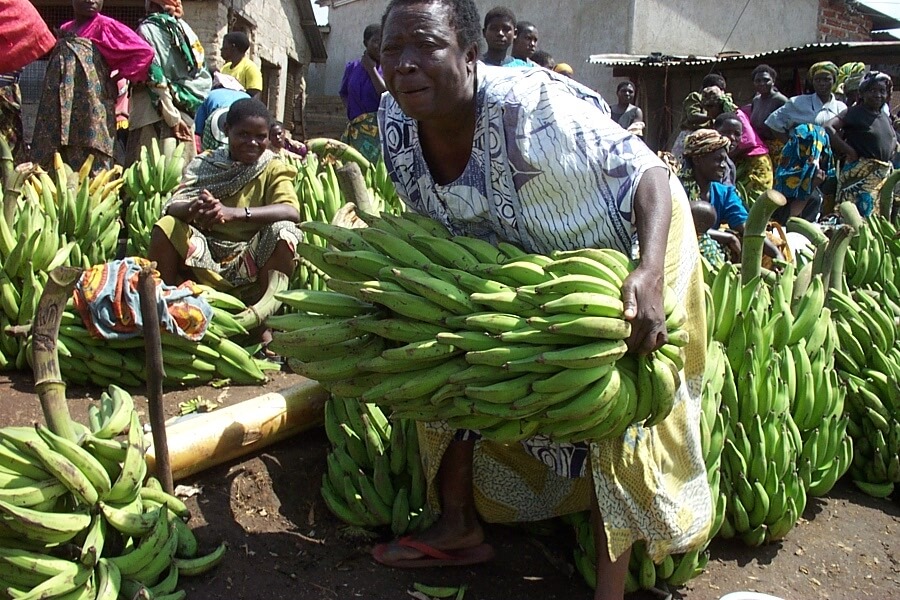
For more than two decades, I have been working to improve several staple food crops in Africa, including bananas, plantains, cassavas and yams. As principal scientist and a plant biotechnologist at the International Institute for Tropical Agriculture in Nairobi, I aim to develop varieties that are resistant to pests and diseases such as bacterial wilt, Fusarium wilt (caused by the fungusย F. oxysporum) and banana streak virus.

[Editorโ€™s note: Abdullahi Tsanni is a freelance science journalist based in Abuja, Nigeria.]

In 2011, my team and I created a set of tools, the only one of its kind in Africa, for changing DNA sequences so that we could develop genetically modified and genome-edited products in sub-Saharan Africa. In 2018, we pioneered the first application of CRISPR gene-editing technology to deactivate banana streak virus in plantains. This technology overcame a major hurdle in banana breeding on the continent, and is the first reported successful use of genome editing to improve bananas.

Follow the latest news and policy debates on sustainable agriculture, biomedicine, and other ‘disruptive’ innovations. Subscribe to our newsletter.

Kenya imposed a partial lockdown on 7 April, but I was allowed to continue some crucial laboratory work, and our research is not affected. Since mid-May, my team has been working in shifts. These plants are like our โ€˜babiesโ€™ in the lab โ€” I canโ€™t leave them.

I am excited to see the resultant performance of the bananas in our greenhouse. By next year, we should have some plants ready for trials in the field.


Read the original post

{{ reviewsTotal }}{{ options.labels.singularReviewCountLabel }}
{{ reviewsTotal }}{{ options.labels.pluralReviewCountLabel }}
{{ options.labels.newReviewButton }}
{{ userData.canReview.message }}

Related Articles

Infographic: Global regulatory and health research agencies on whether glyphosate causes cancer

Infographic: Global regulatory and health research agencies on whether glyphosate causes cancer

Does glyphosateโ€”the world's most heavily-used herbicideโ€”pose serious harm to humans? Is it carcinogenic? Those issues are of both legal and ...

Most Popular

Screenshot-2026-04-13-at-1.39.26-PM
Viewpoint: โ€˜Safer for children?โ€™ Stonyfield yogurt under fire for deceptive organic marketing
Screenshot-2026-04-22-at-10.46.29-AM
Viewpoint: How to counter science disinformation? Science journalist offers 12 practical tips
ChatGPT-Image-May-7-2026-12_16_37-PM-2
Viewpoint: Are cancer rates โ€˜skyrocketingโ€™ as RFK, Jr. and MAHA claim? The evidence says mostly the opposite
Picture1-14
When superbugs threaten vulnerable children: Can AI help solve antibiotic resistance?
Screenshot-2026-04-23-at-11.00.36-AM
Regulators' dilemma: Thalidomide, Metformin, and the cost of getting drug approvals wrong
ChatGPT-Image-May-12-2026-08_39_41-PM
GLP podcast: Big Pharma, Big Ag, Big Foodโ€”health harming industries or life-saving innovators?
Picture1-1
Cooling the planet with balloons: Could a geoengineering gamble slow global warming?
ChatGPT-Image-May-7-2026-12_32_36-PM
Viewpoint: The state of U.S. vaccine policy? Dismal nationally, but some states are stepping up.
png-pill-omega-Supp-fish-oil
Millions take omega-3 fish oil for brain health. New research suggests it may do the opposite.
glp menu logo outlined

Get news on human & agricultural genetics and biotechnology delivered to your inbox.