‘Already facing extinction’: Recently discovered leaf-eating Popa langur species down to 200 monkeys

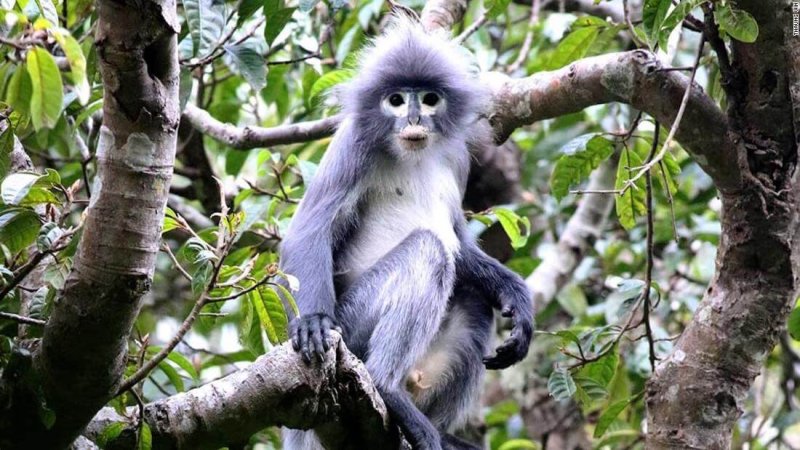
Popa langur. Credit: Thaung Win

Langurs are a group of leaf-eating monkeys that are found across south east Asia.

The newly described animal is known for its distinctive spectacle-like eye patches and greyish-coloured fur.

Early explorers to Burma collected the monkey specimens, which had never been examined in detail.

The researchers extracted DNA and measured physical features such as tail and ear length, which they compared with those of wild populations.

This revealed a new species, the Popa langur, which is found only in patches of forest in the centre of the country. Most live in a wildlife sanctuary park on the slopes of the sacred pilgrimage site of Mount Popa.

Describing the species scientifically will help in its conservation, said Frank Momberg of the conservation group Fauna & Flora International.

Follow the latest news and policy debates on sustainable agriculture, biomedicine, and other ‘disruptive’ innovations. Subscribe to our newsletter.

He told BBC News: “The Popa langur, just newly described, is already critically endangered and facing extinction so it’s absolutely critical to protect the remaining population and to engage with local communities as well as private sector stakeholders to safeguard its future.”

There are only 200 to 250 animals of the new species, which live in four isolated populations.

In the last decade or so, Myanmar has opened up to international collaborations with scientists, which has led to the discovery of species new to science.


Read the original post

{{ reviewsTotal }}{{ options.labels.singularReviewCountLabel }}
{{ reviewsTotal }}{{ options.labels.pluralReviewCountLabel }}
{{ options.labels.newReviewButton }}
{{ userData.canReview.message }}

Related Articles

Infographic: Global regulatory and health research agencies on whether glyphosate causes cancer

Infographic: Global regulatory and health research agencies on whether glyphosate causes cancer

Does glyphosate—the world's most heavily-used herbicide—pose serious harm to humans? Is it carcinogenic? Those issues are of both legal and ...

Most Popular

Screenshot-2026-03-13-at-12.14.04-PM
The FDA wants to make many popular prescription drugs OTC—a great idea. Here’s why it’s unlikely to happen
Screenshot-2026-04-20-at-2.26.27-PM
Viewpoint — Food-fear world: The latest activist scientists campaign: Cancer-causing additives
Screenshot-2026-05-04-at-12.54.32-PM
How Utah became the country’s supplement capital  — and a haven for unregulated, ineffective and fake products
Screenshot-PM-24
Viewpoint: The herbicide glyphosate isn’t perfect. Banning it would be far worse.

Screenshot 2026-05-06 at 2.56
Singularity crisis ahead? Can super babies save us from rogue AI geniuses?
images
The never-ending GMO debate: Pros and cons
Screenshot-2026-05-01-at-11.56.24-AM
‘Science moves forward when people are willing to think differently’: Memories of DNA maverick Craig Venter
Screenshot-2026-04-03-at-11.15.51-AM
Paraben panic: How a flawed study, media hype, and chemophobia convinced the public of the danger of one of the safest classes of preservatives
Screenshot-2026-04-30-at-2.19.37-PM
5 myths about summer dehydration that could damage your health — or even kill you
79d03212-2508-45d0-b427-8e9743ff6432
Viewpoint: The Casey Means hustle—Wellness woo opportunism dressed up as medical wisdom
bigstock opioids on chalkboard with rol
GLP podcast: 'Safe injection sites': enabling drug addiction or saving lives?
ChatGPT-Image-May-1-2026-02_20_13-PM
How RFK, Jr.’s false vaccine claims are holding up $600 million to fight diseases in poor countries
glp menu logo outlined

Get news on human & agricultural genetics and biotechnology delivered to your inbox.