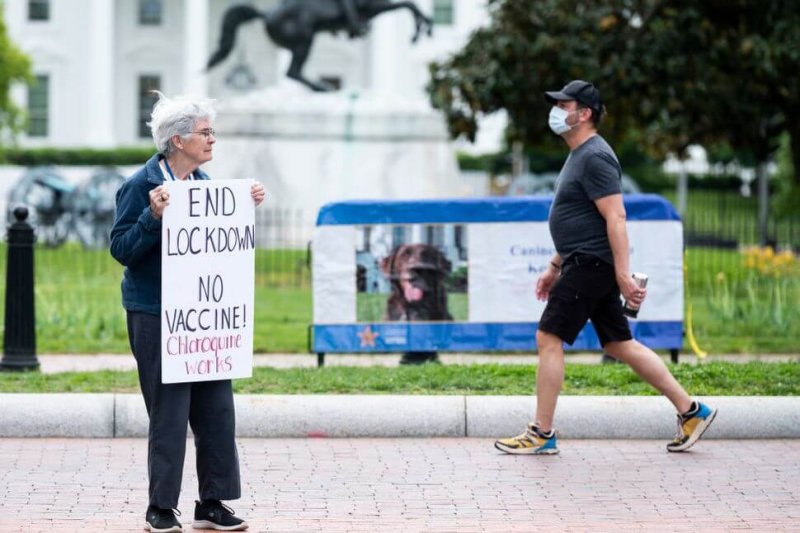
37%-to-60% of Americans say they are not sure they will get a vaccine. If that resistance holds, we won’t reach ‘herd immunity’ and COVID will not go away

Credit: Bill Clark/CQ-Roll Call/Getty Images

The World Health Organization estimates that 65 to 70 percent of a given population must be vaccinated to halt the spread of disease. Once that threshold is crossed, the Covid-19 virus will have too few human hosts to choose from, driving down transmission rates dramatically.

Until then, the onus is on adults [to take a COVID vaccine]—some of whom have their own reasons for abstaining. Whether their skepticism is fueled by fear-mongering from the anti-vax movement or, in the case of minority groups and in particular black Americans, a long history of malpractice in the name of medicine, the fact remains that 37 percent of adults in the United States would refuse to get vaccinated if the option were immediately available to them.

Follow the latest news and policy debates on sustainable agriculture, biomedicine, and other ‘disruptive’ innovations. Subscribe to our newsletter.

Taking these factors into consideration, it becomes clear that vaccination-induced herd immunity isn’t a given. Whether it’s feasible, we probably won’t know for another couple of months. We do know that containing Covid-19 without a vaccine is. Countries like Australia, New Zealand, Thailand, and Taiwan, where strict lockdowns and basic prevention measures were rigorously enforced, have barely a handful of new cases to report daily, if any at all. Vaccines are just one tool among many, and to end the pandemic by this time next year, we need to give it all we got.


Read the original post

{{ reviewsTotal }}{{ options.labels.singularReviewCountLabel }}
{{ reviewsTotal }}{{ options.labels.pluralReviewCountLabel }}
{{ options.labels.newReviewButton }}
{{ userData.canReview.message }}

Related Articles

Infographic: Global regulatory and health research agencies on whether glyphosate causes cancer

Infographic: Global regulatory and health research agencies on whether glyphosate causes cancer

Does glyphosate—the world's most heavily-used herbicide—pose serious harm to humans? Is it carcinogenic? Those issues are of both legal and ...

Most Popular

ChatGPT-Image-May-7-2026-12_16_37-PM-2
Viewpoint: Are cancer rates ‘skyrocketing’ as RFK, Jr. and MAHA claims? The evidence says mostly the opposite
Screenshot-2026-04-22-at-10.46.29-AM
Viewpoint: How to counter science disinformation? Science journalist offers 12 practical tips
images
The never-ending GMO debate: Pros and cons
Picture1-5
Science Disinformation Gap: The transatlantic battle over social media and censorship

Sorry. No data so far.

glp menu logo outlined

Get news on human & agricultural genetics and biotechnology delivered to your inbox.