Nature’s mistake? Meet the ‘world’s ugliest orchid’

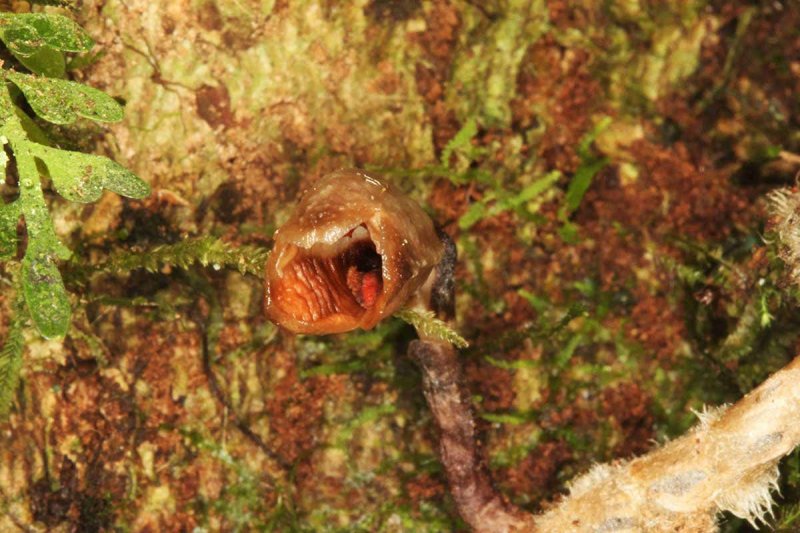
Gastrodia agnicellus has been called the ugliest orchid in the world by the Royal Botanic Gardens. Credit: Rick Burian
[A new species], Gastrodia agnicellus, was discovered earlier this year in the deep shade underneath leaves on the forest floor in Madagascar. This small, brown orchid spends most of its life underground and has no leaves, only surfacing to produce fruit and disperse its seeds.

“I’m sure its mother thinks it’s very lovely,” says Johan Hermans at the Royal Botanic Gardens, Kew in London, who discovered the species. Hermans says the name “agnicellus” comes from the Latin word for “little lamb” as it has a woolly, tuberous root. “With a bit of an imagination, you can almost see a lamb’s tongue in the flower.”

Like most orchids, this species is a perennial plant, meaning it could live for many years, and has a symbiotic relationship with a fungus. While other orchids only depend on their fungus symbiote for food at the start of their lives, Gastrodia agnicellus doesn’t have any cells for photosynthesis so relies on its fungus for its entire life.

Follow the latest news and policy debates on sustainable agriculture, biomedicine, and other ‘disruptive’ innovations. Subscribe to our newsletter.

This new species was discovered in a tiny region of Madagascar, and it is thought that the extent of its range is very small and is declining, probably due to increased agriculture and fires in the area. As such, Gastrodia agnicellus has been classed as a threatened species.

Read the original post

{{ reviewsTotal }}{{ options.labels.singularReviewCountLabel }}
{{ reviewsTotal }}{{ options.labels.pluralReviewCountLabel }}
{{ options.labels.newReviewButton }}
{{ userData.canReview.message }}

Related Articles

Infographic: Global regulatory and health research agencies on whether glyphosate causes cancer

Infographic: Global regulatory and health research agencies on whether glyphosate causes cancer

Does glyphosate—the world's most heavily-used herbicide—pose serious harm to humans? Is it carcinogenic? Those issues are of both legal and ...

Most Popular

wuhan institute of virology main entrance
​​COVID lab leak? Making a case that the Wuhan market origins theory is wrong
ChatGPT-Image-Mar-10-2026-01_39_01-PM
Viewpoint—“Miracle molecule” debunked: Why acemannan supplements don’t work
Screenshot-2026-06-17-at-9.44.03-AM
Viewpoint: Embryos are becoming the newest battleground of love, loss, and legal uncertainty
Screenshot-2026-06-18-at-11.41.51-AM
Viewpoint—Protecting baloney science: Far right senators move to protect the phony homeopathy industry
ChatGPT-Image-Jun-9-2026-01_11_37-PM
Turmeric supplements: More risks than benefits

Sorry. No data so far.

glp menu logo outlined

Get news on human & agricultural genetics and biotechnology delivered to your inbox.