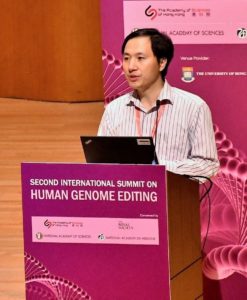
Surreal artwork in the hotel lobby—a gorilla peeking out of a peeled orange, smoking a cigarette; an astronaut riding a cyborg giraffe—was the backdrop for bombshell news rocking the world. In November 2018, Hong Kong’s Le Méridien Cyberport hotel became the epicenter of controversy about Jiankui He, a Chinese researcher who was staying there when a journalist revealed he had created the world’s first “edited” babies. Select experts were gathering in the hotel for the Second International Summit on Human Genome Editing—a meeting that had been called to deliberate about the future of the human species. As CNN called the experiment “monstrous,” as heated discussions took place in labs and living rooms around the globe, He sat uncomfortably on a couch in the lobby.
He was trying to explain himself to Jennifer Doudna, the chemist at UC Berkeley, who is one of the pioneers behind CRISPR, a new genetic-engineering tool. Doudna had predicted that CRISPR would be used to direct the evolution of our species,* writing, “We possess the ability to edit not only the DNA of every living human but also the DNA of future generations.” As He went through his laboratory protocol, describing how he had manipulated the genes of freshly fertilized human eggs with CRISPR, Doudna shook her head. She knew that this moment might be coming someday, but she imagined that it would be in the far future. Amid the bustle of hotel guests, science fiction began to settle into the realm of established fact.
I was checking in to Le Méridien as the story broke and first heard rumors about He’s babies while chatting in the elevator with other summit delegates. We had come to Hong Kong to discuss the science, ethics, and governance of CRISPR and an assortment of lesser-known tools for tinkering with DNA. Struggling to overcome intense jet lag—fresh off planes from Europe, the United States, and other parts of Asia—we listened to speculation in the hotel’s hallways while swimming through reality, caught between waking and dreaming.
Opening the door to my hotel room, a luxury suite courtesy of the U.S. National Academy of Sciences, I hunted for reliable sources of information online. I had been invited to speak on the research ethics panel, after Jiankui He, so I needed to play catch-up, fast. I found YouTube videos posted by He’s lab just hours before, offering details of the experiment. Posing in front of his laboratory equipment, with a broad smile on his face, He announced to the world: “Two beautiful little Chinese girls, named Lulu and Nana, came crying into this world as healthy as any other babies a few weeks ago.” The experiment aimed to delete a single gene with CRISPR. This new technique of genetic surgery, He claimed, could produce children who were resistant to the HIV virus.
Hunched over the glowing screen of my laptop, I perused the opinions that were just starting to form. Chinese media pundits suggested that a Nobel Prize might be in the making, saying that He was following in the footsteps of scientists who produced the first controversial “test-tube baby” in 1978. A raucous debate was taking place on Weibo—China’s prominent social media platform—as 1.9 billion people viewed the hashtag #首例免疫艾滋病基因 编辑婴儿(#FirstGeneEditedHIVImmuneBabies). Some Chinese influencers were praising Jiankui He as a national scientific hero. Others condemned him, saying that it was shameful to treat children like guinea pigs. Journalists were starting to discover Dr. He’s ties to biotechnology companies—one reportedly worth US$312 million—and alleged that there were serious financial conflicts of interest.
Anyone who follows the news knows the basic story. Over the next few days, Jiankui He experienced a meteoric rise to fame, followed by a dramatic fall from grace. Eventually, he lost his university job and was thrown in jail. A district court in China sentenced him to three years in prison for practicing medicine without a license, denouncing his pursuit of “personal fame and profit.”
Dr. He’s story is a gateway into a much bigger enterprise: the tale of CRISPR and the emergence of genetic medicine. The gala was quietly abuzz with news of other efforts to genetically modify humans. Experiments were already underway in England, the United States, and many other labs in mainland China. As billionaires and Wall Street investors were getting in on the action, as scientists and doctors were making careers out of CRISPR, I wondered: Who counts as a visionary, and who becomes a pariah?
He was not alone in the pursuit of fame and fortune. It seemed like none of the scientists at the gala were innocent of financial conflicts of interest. Collectively, these enterprising biologists had already raised hundreds of millions—from venture capitalists, big pharma companies, and the stock market—for genetic engineering experiments in human patients. I overheard excited chatter about new investment opportunities. The first gene therapy, a cancer treatment, had recently been approved in the United States—with a US$475,000 price tag. While the scientists gushed about the CRISPR revolution, I was quietly thinking about how genetic medicine is producing other upheavals in society. Profit-driven ventures in research and medicine were producing a new era of dramatic medical inequality.
As market forces propelled CRISPR into the clinic, I set out to answer basic questions about science and justice: Who is gaining access to cutting-edge genetic medicine? Are there creative ways to democratize the field? Panning out, I also explored questions that could have profound implications for the future of our species: Should parents be allowed to choose the genetic makeup of their children? How much can we actually change about the human condition by tinkering with DNA?
As a cultural anthropologist, I have often found myself opposing biologists in debates about human nature. Ever since Margaret Mead wrote her 1928 classic Coming of Age in Samoa, anthropologists have argued that a person’s life is shaped “by the social environment in which each is born and raised” rather than genetic heredity alone. Anthropologists have recently joined other progressive thinkers to imagine how science has enabled new experimental possibilities for human beings. Now we are studying how the human social environment has been shaped by synthetic chemistry, smartphones, the internet, and biotechnology.
My goal has been to map how genetic engineering will transform humanity. Rather than limit my research to a single culture, I followed CRISPR around the globe. I tracked the impact of this gene-editing tool as it traveled from media reports to laboratories, through artificial intelligence algorithms, and into the cells of embryos and the bodies of living people. Using an anthropological lens, I examined new forms of power as scientists, corporate lobbyists, medical doctors, and biotechnology entrepreneurs worked to redesign life itself.
I will offer you a mosaic portrait. This is a story of people and concerns on either side of the dynamics of power that has emerged with CRISPR. I moved among the powerful in their native habitats: conferences, fancy hotels, restaurants, corporate offices, and cluttered labs. To understand how social inequality is changing in this brave new world, I also interviewed chronically ill patients, disabled scholars, and hackers. From the power centers to the margins, I went where I could find answers. Very old conflicts were playing out even as new technologies transformed science and medicine.
When I set out to meet some of the first genetically modified people, I found activists who were battling insurance agents and biotechnology companies for potentially lifesaving treatments. Nearly a decade before Dr. He stirred up controversy in China, a small group of HIV-positive gay men in the United States quietly participated in a clinical trial dubbed the “first-in-man” gene-editing experiment. Researchers aimed to delete a gene from these men—the same DNA sequence later targeted by He—in hopes of engineering resistance to the virus and repairing damage to their immune systems from AIDS. One veteran HIV activist who participated in this study, Matt Sharp, convinced me that having his DNA altered wasn’t a big deal and that genetic engineering does indeed have real medical promise. Sharp also confirmed my suspicions: Biotech companies are putting profits ahead of human health as they search for lucrative applications of gene editing in the clinic.

Gene “editing” is not a particularly good metaphor for explaining the science of CRISPR. With a computer, I can easily cut and paste text from one application to another, or make clean deletions—letter by letter, line by line. But CRISPR does not have these precise editorial functions. CRISPR is more like a tiny Reaper drone that can produce targeted damage to DNA. Sometimes it makes a precision missile strike, destroying the target. It can also produce serious collateral damage, like a drone attack that accidentally takes out a wedding party instead of the intended target. Scientists often accidentally blast away big chunks of DNA as they try to improve the code of life. CRISPR can also go astray when the preprogrammed coordinates are ambiguous, like a rogue drone that automatically strikes the friends, neighbors, and relatives of suspected terrorists. CRISPR can persist in cells for weeks, bouncing around the chromosomes, producing damage to DNA over and over again every time it finds a near match to the intended target.
It is important to signal a sense of risk or a need for caution in using CRISPR. Other metaphors—like genetic “surgery” or DNA “hacking”—have been proposed to replace the idea of “editing.” The idea of genetic surgery suggests that there can be a slip of the surgeon’s knife, creating an unintended injury. Each of these images—the targeted missile, the surgeon’s scalpel, the hacker’s code—offers a perspective on how CRISPR works, even while concealing messy cellular dynamics. In the absence of a perfect metaphor, ultimately, I think that technical language describes it best: CRISPR is an enzyme that produces targeted mutagenesis.
In other words, CRISPR generates mutants.
Strictly speaking, we are all mutants. At a molecular level, each of us is unique. Each of us starts life with 40–80 new mutations that were not found in our parents. From birth, each of us has around 20 inactive genes from loss-of-function mutations. During the course of a normal human life, we also accumulate mutations in our bodies, even in our brains. By the time we reach age 60, a single skin cell will contain between 4,000 and 40,000 mutations, according to a study in the Proceedings of the National Academy of Sciences. These genetic changes are the result of mistakes made each time our DNA is copied during cell division or when cells are damaged by radiation, ultraviolet rays, or toxic chemicals. Generally, mutations aren’t good or bad, just different.
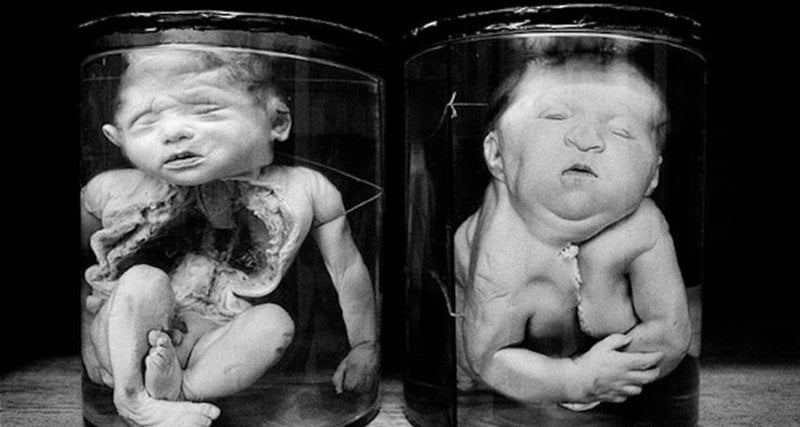
Mutants in popular culture play important roles in our high-tech myths. Some cartoons simply celebrate mutation as whimsical possibility. The pizza-eating Teenage Mutant Ninja Turtles are known for fighting crime in support of established law and order. Darker speculative fiction uses mutants to illustrate the hypocrisy and inhumanity of the scientific establishment. Violent experiments on children who were born with special abilities feature in recent Netflix series like Stranger Things. Horror flicks and video games featuring mindless zombies and flesh-eating mutants have a common theme: Science could create monsters that cannot be controlled.
Reporters who sounded the alarm about Lulu and Nana’s birth—calling them freaky CRISPR “Frankenbabies”—clearly had not done their literary homework. Frankenstein’s monster is now popularly imagined as a dimwitted giant with electrodes in his neck—following imagery from the first black-and-white film, put out by Universal Pictures in 1931. The original Frankenstein, Mary Shelley’s gothic novel from 1818, described a superhuman creature that was driven by the desire to be loved. The highly intelligent, articulate, and high-minded creature only turned violent when he was shunned by human society. Amid the controversy about Dr. He’s experiment, a political theorist and literary scholar named Eileen Hunt Botting defended the rights of genetically modified children “to live, love, and flourish.” Flipping the mainstream script, she wrote an essay for The Washington Post suggesting that Frankenstein is an apt cautionary tale about the possibility of “devastating discrimination against a bioengineered child.”

During my international adventures in the world of CRISPR research, I kept science fiction classics close at hand. The rich archive of speculative fiction has helped me understand the perils and potential of experiments that are remaking the human species.
Scientists have identified some genes—like those associated with eye and skin color—that would be relatively easy to manipulate. One Russian American gene-editing expert, Fyodor Urnov, intimated that it should be biologically possible to engineer soldiers or athletes with enhanced endurance, speed, and muscle mass. Genetic “enhancements” come with serious health risks, but military leaders have a long history of ignoring the health and well-being of their soldiers. Fertility clinics also have a bad track record as profit-driven enterprises, ready to sell couples expensive and scientifically unproven treatments. The New Hope Fertility Center in Manhattan is already advertising a new technique: Couples could soon have the opportunity to create designer babies with CRISPR.
As scientists speculate about post-racial futures and nightmare military scenarios, as market forces bring new genetic technologies into the clinic at a dizzying speed, it is time to slow down and establish some clear rules for the road. Misguided attempts to improve the human species have already produced atrocities—like the Nazi death camps that systematically eliminated homosexuals and Jews from the population. In the wrong hands, CRISPR could have devastating consequences for humanity.
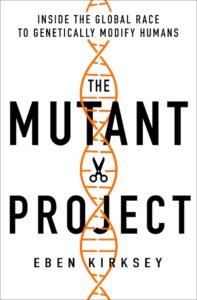
[su_panel color=”#3A3A3A” border=”1px solid #3A3A3A” radius=”2″ text_align=”left”]Editor’s note: This is an excerpt from the book “The Mutant Project: Inside the Global Race to Genetically Modify Humans” by Eben Kirksey. Find the book here.[/su_panel]
Eben Kirksey is an associate professor of anthropology at the Alfred Deakin Institute in Melbourne, Australia. He is the author of three books: Freedom in Entangled Worlds, Emergent Ecologies, and The Mutant Project. His writing has appeared in The Guardian, The Sunday Times, The Atlantic, and Wired. Follow him on Twitter @eben_kirksey
A version of this article was originally posted at SAPIENS and has been reposted here with permission. SAPIENS can be found on Twitter @SAPIENS_org