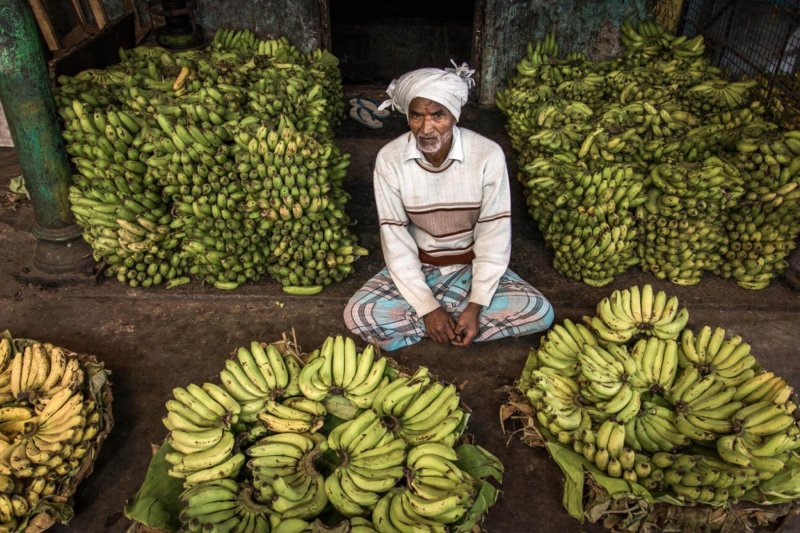
Cavendish banana could ‘disappear’ in the 2020s. Can CRISPR gene editing save it from a deadly fungus?

Credit: Tashi Delek Nakata/National Geographic

[T]hat the Cavendish banana will disappear sometime in the 2020’s is extremely likely. It is being threatened by a fungus called Tropical Race 4 (TR4), which a century ago wiped out the previous commercial dessert banana, the Gros Michel (it’s not extinct, but cannot be grown commercially anymore).

TR4 is now on every continent that grows bananas. It is literally just a matter of time before the entire commercial Cavendish market is wiped out.

Follow the latest news and policy debates on sustainable agriculture, biomedicine, and other ‘disruptive’ innovations. Subscribe to our newsletter.

[One] solution is to breed or genetically engineer the Cavendish (or the Gros Michel, for that matter) to be highly resistant to TR4. Then we could at least get another century out of the banana, hopefully. A research group in Australia is working on a CRISPR edited version of the Cavendish that is resistant to TR4.

Fortunately, nature already has a partial solution – some wild type bananas have a gene, RGA2, that provides resistance to TR4. In fact, the RGA2 gene is already present in the Cavendish, it is just expressed 10% of that of the resistant varieties. So all the scientists have to do is activate the expression of the already present RGA2 genes in the Cavendish. They have done this and are already in field trials, which are showing enhanced resistance.


Read the original post

{{ reviewsTotal }}{{ options.labels.singularReviewCountLabel }}
{{ reviewsTotal }}{{ options.labels.pluralReviewCountLabel }}
{{ options.labels.newReviewButton }}
{{ userData.canReview.message }}

Related Articles

Infographic: Global regulatory and health research agencies on whether glyphosate causes cancer

Infographic: Global regulatory and health research agencies on whether glyphosate causes cancer

Does glyphosate—the world's most heavily-used herbicide—pose serious harm to humans? Is it carcinogenic? Those issues are of both legal and ...

Most Popular

Screenshot 2025-07-30 at 10.48
Can gene editing eliminate Down syndrome? Scientists have done it in lab-grown cells
ChatGPT-Image-Mar-10-2026-01_39_01-PM
Viewpoint—“Miracle molecule” debunked: Why acemannan supplements don’t work
ChatGPT-Image-May-26-2026-07_51_21-AM-2
Viewpoint: There are more than 1,000 chemicals in a cup of coffee—including many substances that can cause cancer. Why isn’t it banned?
Screenshot-2026-06-04-at-12.05.08-PM
Cases of brain inflammation surge as U.S. measles pandemic approaches 2000
Screenshot 2026-05-26 at 10.15
Viewpoint: Double standard—Why does the wellness industry get a free pass while Big Healthcare is treated as morally suspect?
Picture1
Sounds we can’t hear — the hidden planetary signals behind science, fear, and misinformation
Screenshot-2026-05-28-at-1.36.28-PM
Viewpoint: Can mRNA research survive the Trump administration?
ChatGPT Image May 26, 2026, 08_42_17 AM (1)
Viewpoint: Greenpeace and poison: How environmental advocacy groups rely on compliant (and often ignorant) journalists to spread disinformation and spark litigation

Sorry. No data so far.

glp menu logo outlined

Get news on human & agricultural genetics and biotechnology delivered to your inbox.