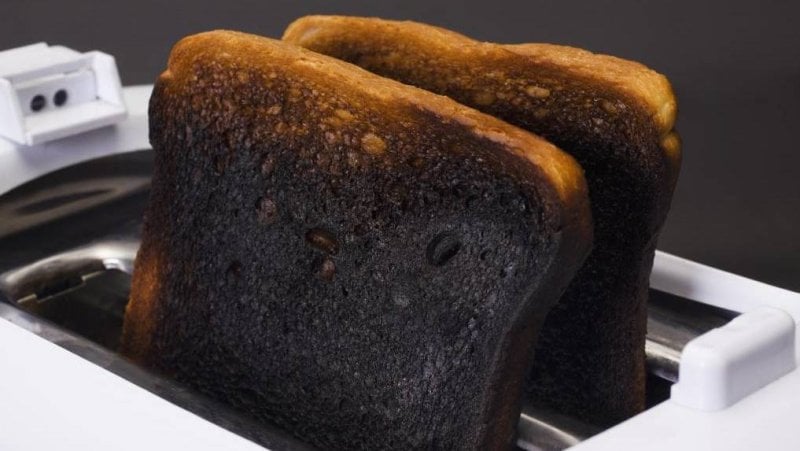
Foods made from gene-edited wheat may contain lower levels of potentially carcinogenic chemical acrylamide

Credit: 123rf
Credit: 123rf

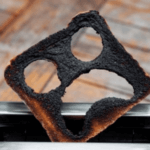
Burnt bread contains a compound known as acrylamide, a chemical that can cause cancer.  The darker the toast, the more acrylamide in the bread.

While most people toss black toast in the trash, some do like dark brown toast. However, plant scientists in England have found a way to reduce the cancer risk from toasted bread. The scientists used gene editing to design a type of wheat that produces less acrylamide when bread made with it is toasted.

Gene editing, also known as genome editing, is a plant breeding technique where scientists can delete genes from the DNA of a plant or insert a genetic code from the same family of plants.

Follow the latest news and policy debates on sustainable agriculture, biomedicine, and other ‘disruptive’ innovations. Subscribe to our newsletter.

The cancer risk from brown toast or Ritz crackers is probably very low, but the Rothamsted scientists used genome editing to “knock out” the gene that produces asparagine in wheat.

In one type of wheat, they were able to reduce the amount of asparagine by 90 percent.

That’s potentially good news for bakers and food companies, which monitor acrylamide in their products and have developed processing methods to reduce the amount of the chemical in crackers, chips and other products.

Read the original post

Related Articles

Infographic: Global regulatory and health research agencies on whether glyphosate causes cancer

Infographic: Global regulatory and health research agencies on whether glyphosate causes cancer

Does glyphosate—the world's most heavily-used herbicide—pose serious harm to humans? Is it carcinogenic? Those issues are of both legal and ...

Most Popular

ChatGPT-Image-Sep-2-2026-10_30_14-PM
Zero: That is the official American measles death toll for 2026. Here is what RFK Jr.’s CDC leaves out.
Screenshot-2026-09-10-at-12.20.19-PM
'Jet fuel didn't melt the steel': 9/11 conspiracy theories debunked
ChatGPT-Image-Sep-14-2026-11_36_25-AM
How the reckless AI race among Anthropic, OpenAI and China spawned today’s safety crisis
ChatGPT-Image-Aug-28-2026-03_33_46-PM
Viewpoint: Bad science—Five bogus Trump administration claims about vaccines and autism
ChatGPT-Image-Sep-13-2026-10_24_17-AM
Bayer urges court to approve $7.25 billion Monsanto Roundup settlement that could limit its future liabilities
ChatGPT-Image-Mar-10-2026-01_39_01-PM
Viewpoint—“Miracle molecule” debunked: Why acemannan supplements don’t work
screenshot at  am
‘Glyphosate is not carcinogenic’: Independent EU chemical oversight agency reaffirms—for the 3rd time in 9 years—that the herbicide is safe-as-used
Screenshot-2026-09-14-at-10.52.30-AM
AI is being used in dangerous bioscience experiments
Screenshot-2026-09-14-at-3.07.56-PM
Trump EPA rolls back power-plant climate rules—and moves to block future carbon limits
ChatGPT-Image-Sep-14-2026-02_57_24-PM
Viewpoint: 6 Atlantic Council expert opinions on the U.S., China and the AI safety crisis
Screenshot-2026-08-04-at-11.36.16-AM
Viewpoint: Emotion-driven stories of doctors allegedly ignoring patient concerns are driving vaccine hesitancy
ChatGPT-Image-Sep-13-2026-10_46_11-AM
“Hit the brakes”: Anthropic warns the race to superintelligence could spawn internet-seizing AI swarms—and empower authoritarians. Here’s how to stop it.
ChatGPT-Image-Sep-14-2026-01_57_57-PM
Anthropic claims to thwart AI-based cyberattacks, surveillance, and biological weapons research
glp menu logo outlined

Get news on human & agricultural genetics and biotechnology delivered to your inbox.