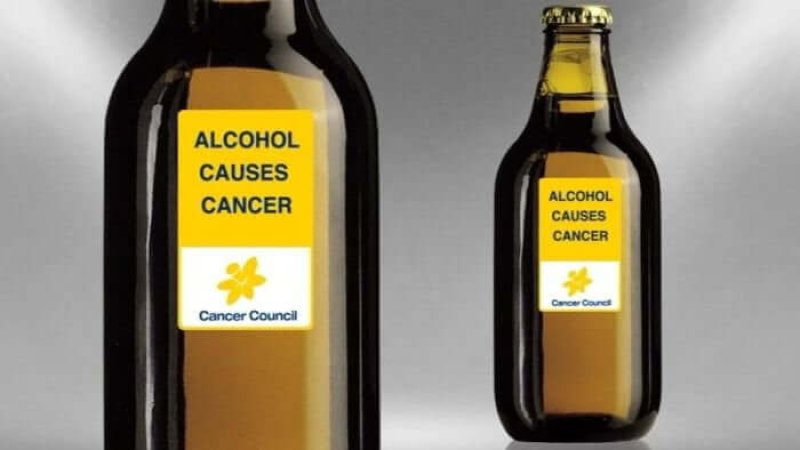
Cancer and cocktails? Physician groups urge that alcohol should carry a warning label

Credit: ABC News
Credit: ABC News

In recent years, a growing number of medical and public health groups have introduced public awareness campaigns warning people to drink with caution, noting that alcohol is the third leading preventable cause of cancer, behind tobacco and obesity.

In October [2020], the American Society for Clinical Oncology (ASCO), which represents many of the nation’s top cancer doctors, along with the American Institute for Cancer Research, the American Public Health Association and five other groups called on the federal government to add a cancer warning to alcohol labels, saying there was strong scientific consensus that alcohol can cause several types of cancer, including breast and colon cancers.

The ongoing pandemic underscores the urgency of these efforts, as stress, lockdowns and economic uncertainty continue to take a toll. In the past year, hospitals across the United States have reported an increase in admissions for hepatitis, liver failure and other alcohol-related diseases. A study in the journal Psychiatry Research found that in the first six months of lockdowns, alcohol abuse rose most sharply among people who lost their jobs or who were confined to their homes because of shelter-in-place restrictions. 

Follow the latest news and policy debates on sustainable agriculture, biomedicine, and other ‘disruptive’ innovations. Subscribe to our newsletter.

“There are grave concerns over the long-term health implications of the rising level of alcohol dependence,” [the authors said.]


Read the original post

{{ reviewsTotal }}{{ options.labels.singularReviewCountLabel }}
{{ reviewsTotal }}{{ options.labels.pluralReviewCountLabel }}
{{ options.labels.newReviewButton }}
{{ userData.canReview.message }}

Related Articles

Infographic: Global regulatory and health research agencies on whether glyphosate causes cancer

Infographic: Global regulatory and health research agencies on whether glyphosate causes cancer

Does glyphosate—the world's most heavily-used herbicide—pose serious harm to humans? Is it carcinogenic? Those issues are of both legal and ...

Most Popular

Screenshot-2026-04-22-at-12.21.32-PM
Viewpoint: Why the retracted Monsanto glyphosate study doesn’t change the science—the world’s most popular herbicide is safe 
Picture1
The FDA couldn’t find a vaccine safety crisis, so it buried its own research
ChatGPT-Image-May-1-2026-11_42_59-AM-2
Viewpoint: NAD is the wellness grifters latest evidence-lite longevity fad. At least the mice are impressed.
global warming
‘Implausible’: Top climate scientists reject worst-case scenario—soaring temperatures and fast-rising sea levels
Screenshot-2026-05-21-at-12.15.17-PM
UK gene-editing milestone: Livestock barley that increases ruminant value and reduces methane emissions is first-approved CRISPR crop
ChatGPT-Image-Apr-16-2026-02_56_53-PM
Financial incentives, over diagnosis, and weak oversight: Autism claims are driving up Medicare costs
vax-misinformation-main
Facts & Fallacies Podcast: Limit free speech to blunt social media misinfo?
Screenshot-2026-05-21-at-3.15.53-PM
Chiropractors may no longer be modern-day snake oil salesmen, but the benefits of their therapy are limited–at best
ChatGPT-Image-May-12-2026-11_27_01-AM-2
AI likely to improve health care, research shows—but not for blacks and ethnic minorities
Screenshot-2026-05-20-at-5.11.17-PM
Viewpoint: No, sugar doesn’t ‘feed’ cancer — common cancer myths, debunked

Sorry. No data so far.

glp menu logo outlined

Get news on human & agricultural genetics and biotechnology delivered to your inbox.