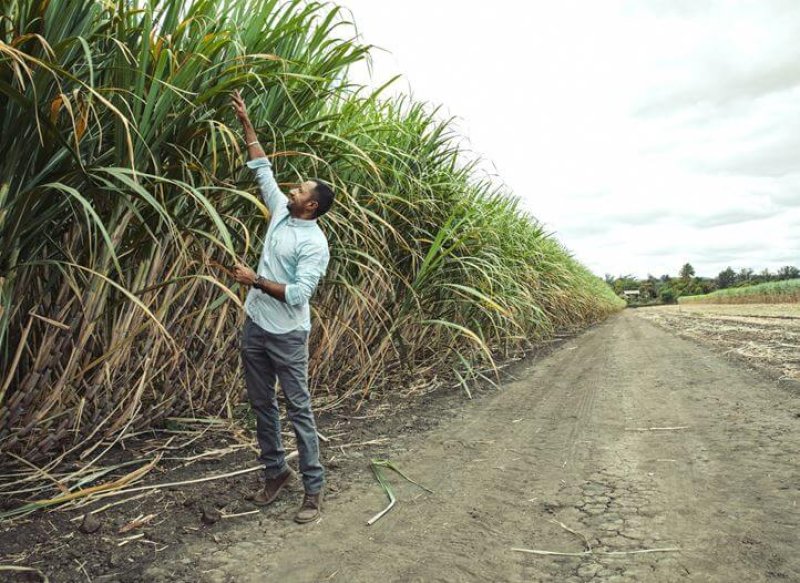
Bolivia will repeal rules expediting GM crop approvals, inciting pushback from farmers who want access to new technologies

It’s official. The [Bolivian] Central Government will seek to annul the supreme decrees that paved the way for the use of biotechnology in the country and that were promulgated during the government of Jeanine Áñez.

Through a statement released on the official Facebook page of the Ministry of Environment and Water, the agency reported that, “through the Vice Ministry of Environment, Biodiversity, Climate Change and Forest Management and Development,” it supported “…the technical and legal relevance for the repeal of Supreme Decrees 4232, 4238 and 4348, related to genetically modified organisms.”

On May 7, 2020, the Government of Jeanine Áñez approved Supreme Decree 4232 that, “…authorizes the National Biosafety Committee to establish abbreviated procedures for the evaluation of corn, sugar cane, cotton, wheat and soybeans, genetically modified in its different events, destined to supply internal consumption and external commercialization.”

Follow the latest news and policy debates on sustainable agriculture, biomedicine, and other ‘disruptive’ innovations. Subscribe to our newsletter.

Fidel Flores, president of the Association of Oilseed and Wheat Producers (Anapo) pointed out that it would be a setback to annul the regulations, because it would prevent the sector from using tools that are being used in the main food-producing countries.

[su_panel color=”#3A3A3A” border=”1px solid #3A3A3A” radius=”2″ text_align=”left”]Editor’s note: This article was originally published in Spanish and has been translated and edited for clarity.[/su_panel]


Read the original post

{{ reviewsTotal }}{{ options.labels.singularReviewCountLabel }}
{{ reviewsTotal }}{{ options.labels.pluralReviewCountLabel }}
{{ options.labels.newReviewButton }}
{{ userData.canReview.message }}

Related Articles

Infographic: Global regulatory and health research agencies on whether glyphosate causes cancer

Infographic: Global regulatory and health research agencies on whether glyphosate causes cancer

Does glyphosate—the world's most heavily-used herbicide—pose serious harm to humans? Is it carcinogenic? Those issues are of both legal and ...

Most Popular

Screenshot-2026-04-22-at-12.21.32-PM
Viewpoint: Why the retracted Monsanto glyphosate study doesn’t change the science—the world’s most popular herbicide is safe 
ChatGPT-Image-Apr-16-2026-02_56_53-PM
Financial incentives, over diagnosis, and weak oversight: Autism claims are driving up Medicare costs
Picture1
The FDA couldn’t find a vaccine safety crisis, so it buried its own research
ChatGPT-Image-May-1-2026-11_42_59-AM-2
Viewpoint: NAD is the wellness grifters latest evidence-lite longevity fad. At least the mice are impressed.
Screenshot-2026-05-21-at-12.15.17-PM
UK gene-editing milestone: Livestock barley that increases ruminant value and reduces methane emissions is first-approved CRISPR crop
global warming
‘Implausible’: Top climate scientists reject worst-case scenario—soaring temperatures and fast-rising sea levels
Screenshot-2026-05-21-at-3.15.53-PM
Chiropractors may no longer be modern-day snake oil salesmen, but the benefits of their therapy are limited–at best

Sorry. No data so far.

glp menu logo outlined

Get news on human & agricultural genetics and biotechnology delivered to your inbox.