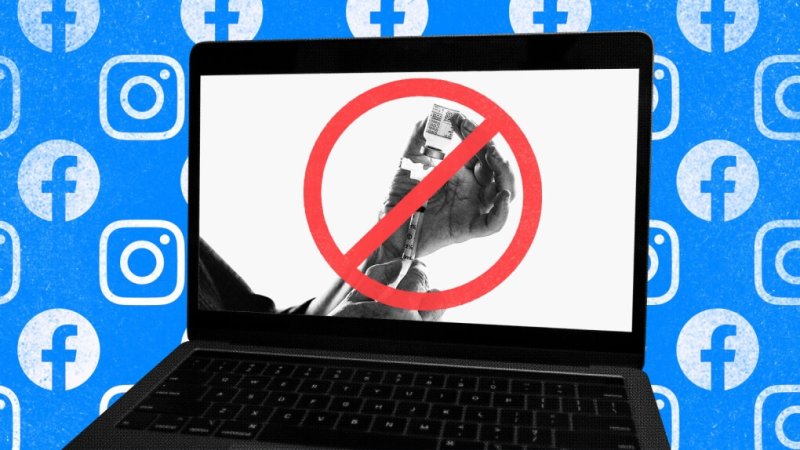
Facebook says it has banned vaccine disinformation — but it’s still far too easy to find

Credit: CNN/Getty Images/Facebook

Facebook issued a broad prohibition in January 2020 on false claims or conspiracy theories about the coronavirus “that could cause harm to people who believe them.”

But Americans who logged on to Facebook and Instagram, its sister platform, over the past few months may still have seen posts that appear to violate those terms. The posts include:

  • The COVID-19 vaccine could lead to prion diseases, Alzheimer’s, ALS and other neurodegenerative diseases. (Pants on Fire)
  • “If you take the vaccine, you’ll be enrolled in a pharmacovigilance tracking system.” (False)
  • There are nanoparticles in the COVID-19 vaccine that will help people “locate you” via 5G networks. (Pants on Fire)

Follow the latest news and policy debates on sustainable agriculture, biomedicine, and other ‘disruptive’ innovations. Subscribe to our newsletter.

An analysis from First Draft, a nonprofit that studies online misinformation, found that at least 3,200 posts containing claims explicitly banned by Facebook were published on the platform between February and March, amassing thousands of likes, shares and comments.

“The approach Facebook really should take is looking at the history of these sources and these pages — and using that in order to inform their policies, rather than the kind of whack-a-mole approach later on,” [NewsGuard’s John] Gregory said. “If the pandemic has proven anything, it’s that people who promoted misinformation before are going to promote misinformation about this.”


Read the original post

{{ reviewsTotal }}{{ options.labels.singularReviewCountLabel }}
{{ reviewsTotal }}{{ options.labels.pluralReviewCountLabel }}
{{ options.labels.newReviewButton }}
{{ userData.canReview.message }}

Related Articles

Infographic: Global regulatory and health research agencies on whether glyphosate causes cancer

Infographic: Global regulatory and health research agencies on whether glyphosate causes cancer

Does glyphosate—the world's most heavily-used herbicide—pose serious harm to humans? Is it carcinogenic? Those issues are of both legal and ...

Most Popular

Screenshot-PM-24
Viewpoint: The herbicide glyphosate isn’t perfect. Banning it would be far worse.
d-b
Blocked arteries, kidney stones, nausea, constipation, fatigue: Long list of health problems caused by too much vitamin D 
79d03212-2508-45d0-b427-8e9743ff6432
Viewpoint: The Casey Means hustle—Wellness woo opportunism dressed up as medical wisdom
lab grown meat research kelly schultz lehighuniversity main
Profiles of the 10 top global cultured meat companies
ChatGPT-Image-Mar-10-2026-01_39_01-PM
Viewpoint—“Miracle molecule” debunked: Why acemannan supplements don’t work
ChatGPT-Image-Apr-30-2026-05_00_48-PM
Wellness grifter physician turned wellness influencer out as surgeon general nominee
ChatGPT-Image-Mar-27-2026-11_27_05-AM
The myths of “process”: What science says about the “dangers’ of synthetic products and ultra-processed foods
Screenshot-2026-04-30-at-11.33.46-AM
Anti-seed-oil to anti-vax pipeline: MAHA movement spreads to teen influencers
ChatGPT-Image-Apr-30-2026-12_21_05-PM-2
The tech billionaires behind the immortality movement
Screenshot-2026-04-28-at-1.21.37-PM
How America’s medical system encourages psychiatric overdiagnosis

Sorry. No data so far.

glp menu logo outlined

Get news on human & agricultural genetics and biotechnology delivered to your inbox.