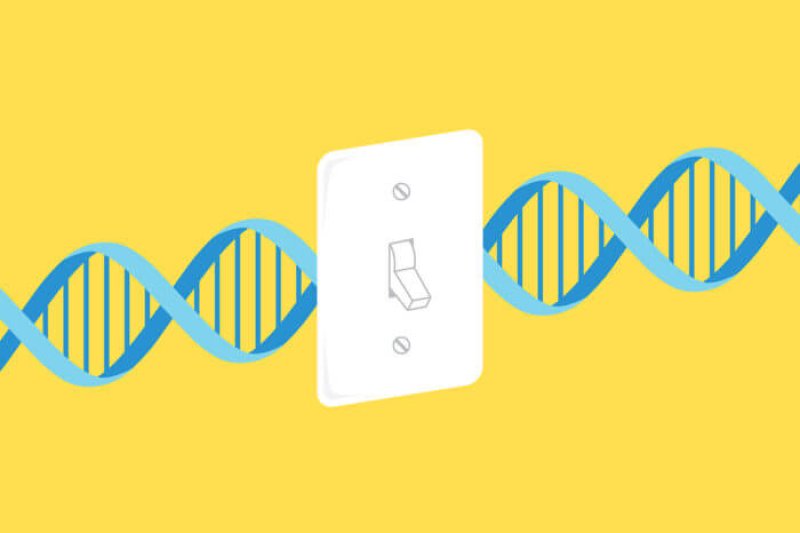
How does CRISPR’s ‘on-off switch’ work? How will it revolutionize genetic research and the development of therapies?

Credit: Michael Worful

[R]esearchers have published perhaps the greatest advance since 2013 – a way to use CRISPR as an on-off switch for genes. At the very least this will revolutionize genetic research. But it also has incredibly therapeutic potential.

…

This system targets a specific gene as usual but then, instead of cutting the DNA, it methylates the gene – adding methyl groups to some of the base pairs. This typically makes it impossible for the transcriptase enzyme to work on the DNA at that location, so the gene cannot be transcribed and turned into protein. The gene is effectively off, even though its sequence has been preserved.

…

Anytime turning off a gene in a particular cell population could have a beneficial effects this technology could work. The one example brought up so far is Alzheimer’s disease. Part of the progression of this disease is caused by the build of of tau protein in neurons. If tau expression could be significantly turned down in brain cells, this might slow or even halt the progression of dementia.
Mis- and disinformation are distorting science and public policy. Subscribe to our Daily and Weekly Digests for incisive coverage of ‘disruptive’ innovations in AI, agricultural biotechnology, food, chemicals, nuclear energy, vaccines, and other disruptive innovations.

The CRISPR technology itself has advanced far more than therapeutic applications, partly because research on living people is more difficult and far more slow. The therapeutic potential for CRISPR remains to be seen, and may turn out to be more limited than we hope. But we’ll see.


Read the original post

Related Articles

Infographic: Global regulatory and health research agencies on whether glyphosate causes cancer

Infographic: Global regulatory and health research agencies on whether glyphosate causes cancer

Does glyphosate—the world's most heavily-used herbicide—pose serious harm to humans? Is it carcinogenic? Those issues are of both legal and ...

Most Popular

ChatGPT-Image-Mar-10-2026-01_39_01-PM
Viewpoint—“Miracle molecule” debunked: Why acemannan supplements don’t work
Screenshot-2026-09-28-at-2.41.21-PM
Viewpoint: 7-OH controversy: An opioid is available over-the-counter–even at gas stations. Should we be concerned?
Screenshot-2026-09-24-at-3.25.18-PM
No, organic eggs are not more nutritious or necessarily healthier than regular eggs. They are far more expensive.
Screenshot-2026-09-17-at-1.07.08-PM
'We are dangerously addicted to antidepressants': Should we heed RFK Jr.’s sobering warning?
ChatGPT-Image-Sep-25-2026-11_36_56-AM
Now AI almost started a war with China
ChatGPT-Image-Sep-2-2026-02_03_32-PM
How much of a problem is AI’s water use?
ChatGPT-Image-Sep-25-2026-10_36_43-AM
New federal autism committee head has financial ties to leucovorin
ChatGPT-Image-Sep-25-2026-11_57_15-AM
RFK, Jr. likely violated federal ethics guidelines in accepting more than $4,275,000 in gifts and book advances from MAHA allies
ChatGPT-Image-Sep-22-2026-11_17_31-AM
The exploding controversy over AI’s built-in survival drive
Screenshot-2026-09-16-at-10.27.33-AM
Viewpoint: SCOTUS poised to address First Amendment tension between mandatory vaccines, children’s health and religious freedom 
ChatGPT-Image-Sep-27-2026-10_00_17-AM
Current and future RFK Jr. aides criticize his science-rejectionist vaccine views
glp menu logo outlined

Get news on human & agricultural genetics and biotechnology delivered to your inbox.