Meet Tom, Dick and Wilma: These precision farming robots can ‘maximize yields at the individual plant level’

tom robot
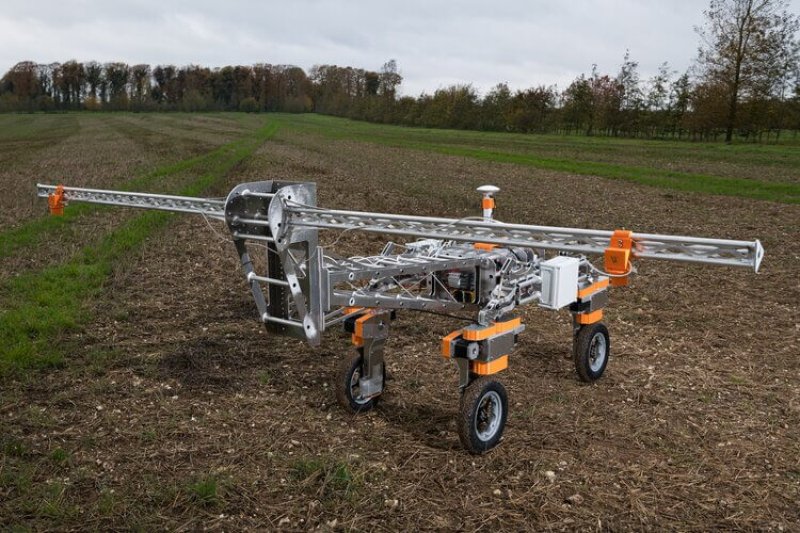
The robot "Tom" can scan up to 50 acres a day. Credit: Small Robot Company
[A] UK startup called the Small Robot Company is about to change how farming is done. SRC uses two autonomous electric platforms — Tom and Dick — powered by Tesla batteries to gather detailed data about every field, including precisely where weeds are located. Both are controlled by Wilma, an online platform that analyzes the data collected and recommends ways to maximize yields at the individual plant level.

The first robot is Tom, a 4-wheeled device that can scan up to 20 hectares (50 acres) of farmland a day, creating up to 6 terabytes of data in the process. That data includes information about each individual plant. It also plots the location of weeds that threaten the harvest.

Follow the latest news and policy debates on sustainable agriculture, biomedicine, and other ‘disruptive’ innovations. Subscribe to our newsletter.

The data collected by Tom is transmitted to Wilma, an AI platform that recognizes which weeds are in the field, analyzes the health of each individual plant, and creates an integrated farm management plan for the farmer.

Then there is Dick, the weed assassin which takes instructions from Wilma and sets out to find harmful weeds. Then it zaps them with 8,000 volts of electricity that boils them from the inside out.

The new technology is still rather expensive, although [Ben Scott-Robinson, CEO of the Small Robot Company] expects prices to fall once it gains a wider acceptance among farmers.


Read the original post

{{ reviewsTotal }}{{ options.labels.singularReviewCountLabel }}
{{ reviewsTotal }}{{ options.labels.pluralReviewCountLabel }}
{{ options.labels.newReviewButton }}
{{ userData.canReview.message }}

Related Articles

Infographic: Global regulatory and health research agencies on whether glyphosate causes cancer

Infographic: Global regulatory and health research agencies on whether glyphosate causes cancer

Does glyphosate—the world's most heavily-used herbicide—pose serious harm to humans? Is it carcinogenic? Those issues are of both legal and ...

Most Popular

ChatGPT-Image-Jun-16-2026-10_29_11-AM
What’s behind Anthropic’s warning about the accelerating development of AI
Screenshot-2026-06-16-at-10.02.22-PM
Viewpoint: ‘Industrial food’ primer—Challenging the dangerous delusions of the alternative food movement
ChatGPT-Image-Jun-9-2026-01_11_37-PM
Turmeric supplements: More risks than benefits
newborn infant baby mother
Facts & Fallacies Podcast: The truth about vitamin K shots
ChatGPT-Image-Jun-16-2026-10_01_45-AM-2
Viewpoint—Recursive self-improvement: AI leader Anthropic calls for AI slowdown
Screenshot-2026-06-17-at-11.57.12-AM
Viewpoint: Raw milk and the myth of safety—ProPublica exposes the growing anti-homogenization movement
Screenshot-2026-06-16-at-11.23.32-AM
In a rebuke to RFK, Jr.’s anti-vax crusade, journal retracts study claiming hepatitis B vaccine–autism link
ChatGPT-Image-Jun-15-2026-02_31_28-PM-2
Trump-appointed cancer panel head backed by supplement and anti-vaccine companies promotes discredited support for ivermectin as a potential cure
ChatGPT Image Jun 16, 2026, 12_03_37 PM
Kennedy accused of trying to ‘bully’ science journal that retracted study linking vaccines to infant deaths
ChatGPT-Image-Jun-4-2026-03_07_27-PM
AAP v. Kennedy: While a court challenge grinds on, RFK Jr. quietly advances his anti-vaccine conspiracy agenda
ChatGPT-Image-Mar-10-2026-01_39_01-PM
Viewpoint—“Miracle molecule” debunked: Why acemannan supplements don’t work
ChatGPT-Image-Jun-3-2026-04_29_13-PM
Viewpoint: While unvaccinated children are dying overseas, Congress challenges Trump and Kennedy’s block on aid
Screenshot-2026-06-14-at-9.53.54-AM
Is the World Cup a perfect storm for the spread of infectious diseases?
glp menu logo outlined

Get news on human & agricultural genetics and biotechnology delivered to your inbox.