Viewpoint: Reassessing the reassessments of COVID’s origins — The Wuhan lab leak theory is still the less likely scenario but we may never know for sure

Credit: Getty Images

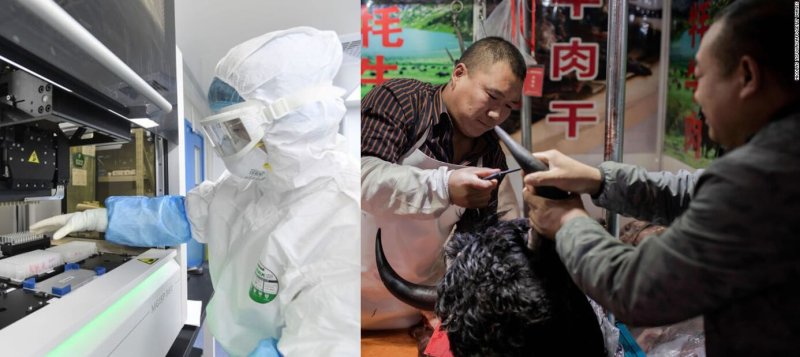
How did the pandemic start? From the early days, experts have considered two possibilities. Either the virus somehow escaped from a laboratory, perhaps the Wuhan Institute of Virology, or, like countless viruses throughout history, it arrived through zoonotic spillover, jumping from animals to humans.

More than a year later, we still don’t know exactly what happened. Though governments and news organizations have focused more attention recently on the notion that the virus leaked from a lab, it’s unclear that we’ll ever identify a theory that satisfies everyone as to how SARS-CoV-2 emerged. Ironically, given the recent prominence of the lab escape theory, the questions the world wants answered about the virus — and the astonishingly fast development of the vaccines that can quash the pandemic — depend entirely on research conducted in labs like the Wuhan Institute of Virology and across the world over the past several decades.

Follow the latest news and policy debates on sustainable agriculture, biomedicine, and other ‘disruptive’ innovations. Subscribe to our newsletter.

Preparing for pandemics, global crises by definition, demands a global response. We must approach this collaboratively — and objectively recognize what the data shows. This virus is more likely to be a product of nature than a product of a laboratory. Letting politics lead us toward other conclusions won’t help keep anyone safer.


Read the original post

{{ reviewsTotal }}{{ options.labels.singularReviewCountLabel }}
{{ reviewsTotal }}{{ options.labels.pluralReviewCountLabel }}
{{ options.labels.newReviewButton }}
{{ userData.canReview.message }}

Related Articles

Infographic: Global regulatory and health research agencies on whether glyphosate causes cancer

Infographic: Global regulatory and health research agencies on whether glyphosate causes cancer

Does glyphosate—the world's most heavily-used herbicide—pose serious harm to humans? Is it carcinogenic? Those issues are of both legal and ...

Most Popular

Screenshot-2026-04-13-at-1.39.26-PM
Viewpoint: ‘Safer for children?’ Stonyfield yogurt under fire for deceptive organic marketing
Screenshot-2026-04-22-at-10.46.29-AM
Viewpoint: How to counter science disinformation? Science journalist offers 12 practical tips
ChatGPT-Image-May-7-2026-12_32_36-PM
Viewpoint: The state of U.S. vaccine policy? Dismal nationally, but some states are stepping up.
ChatGPT-Image-May-7-2026-12_16_37-PM-2
Viewpoint: Are cancer rates ‘skyrocketing’ as RFK, Jr. and MAHA claim? The evidence says mostly the opposite
ChatGPT-Image-May-12-2026-08_39_41-PM
GLP podcast: Big Pharma, Big Ag, Big Food—health harming industries or life-saving innovators?
Screenshot-2026-04-23-at-11.00.36-AM
Regulators' dilemma: Thalidomide, Metformin, and the cost of getting drug approvals wrong
Picture1-14
When superbugs threaten vulnerable children: Can AI help solve antibiotic resistance?
Picture1-1
Cooling the planet with balloons: Could a geoengineering gamble slow global warming?
ChatGPT-Image-May-7-2026-01_23_27-PM-2
Viewpoint: Will AI democratize personalized cancer treatment or fuel medical misinformation?
bigstock opioids on chalkboard with rol
GLP podcast: 'Safe injection sites': enabling drug addiction or saving lives?
Defense_Secretary_Ash_Carter_tours_the_Microsoft_Cybercrime_Center_in_Seattle_March_3_2016
How criminals are using AI to target social media users and steal their money and confidential data
the magic of mRNA
Viewpoint: Anti-vax fake ‘turbo cancer’ claims threaten cancer treatment breakthroughs
glp menu logo outlined

Get news on human & agricultural genetics and biotechnology delivered to your inbox.