Viewpoint: Evolution is more than a Darwinian ‘selfish gene’ battle to the death

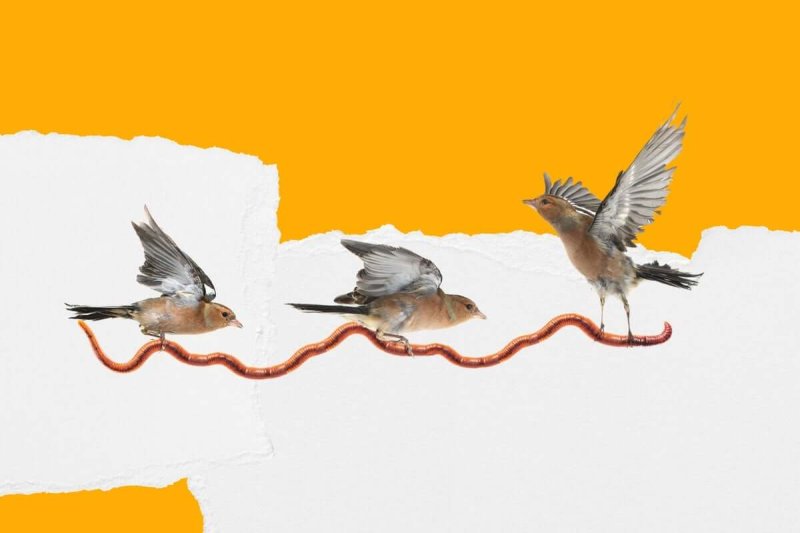
Credit: Slate/Getty Images

The idea that selfishness and greed are drivers of evolution, and therefore possess underlying virtue, has been around for over a century, ever since Charles Darwin’s theory of evolution became widely accepted. The archetypal robber barons, Andrew Carnegie and John D. Rockefeller, both argued that the “survival of the fittest” principle justified their cutthroat tactics. 

In recent decades, researchers in evolutionary biology have overturned virtually every significant assumption in the selfish gene account. In its place, they have developed a far more sophisticated conception of how evolution works, revealing the rich tapestry of nature’s dynamic interconnectedness. Rather than evolution being driven by competition, it turns out that cooperation has played a far more important role.

Follow the latest news and policy debates on sustainable agriculture, biomedicine, and other ‘disruptive’ innovations. Subscribe to our newsletter.

In the early years of life on Earth, it’s likely that gene sharing (known officially as horizontal gene transfer) was the predominant way evolution worked. In fact, researchers now believe that the eukaryote genome was itself the result of a fusion of two prokaryotic genomes.

Instead of a Darwinian “tree of life,” biologists are offering alternative metaphors such as a “bush” or “net” of life to better describe how we are all intricately connected. In the memorable words of [biologist] Lynn Margulis: “Life did not take over the world by combat but by networking.”


Read the original post

{{ reviewsTotal }}{{ options.labels.singularReviewCountLabel }}
{{ reviewsTotal }}{{ options.labels.pluralReviewCountLabel }}
{{ options.labels.newReviewButton }}
{{ userData.canReview.message }}

Related Articles

Infographic: Global regulatory and health research agencies on whether glyphosate causes cancer

Infographic: Global regulatory and health research agencies on whether glyphosate causes cancer

Does glyphosate—the world's most heavily-used herbicide—pose serious harm to humans? Is it carcinogenic? Those issues are of both legal and ...

Most Popular

ChatGPT-Image-May-7-2026-12_16_37-PM-2
Viewpoint: Are cancer rates ‘skyrocketing’ as RFK, Jr. and MAHA claim? The evidence says mostly the opposite
Screenshot-2026-04-13-at-1.39.26-PM
Viewpoint: ‘Safer for children?’ Stonyfield yogurt under fire for deceptive organic marketing
Screenshot-2026-04-22-at-10.46.29-AM
Viewpoint: How to counter science disinformation? Science journalist offers 12 practical tips
Picture1-14
When superbugs threaten vulnerable children: Can AI help solve antibiotic resistance?
Screenshot-2026-04-23-at-11.00.36-AM
Regulators' dilemma: Thalidomide, Metformin, and the cost of getting drug approvals wrong
Picture1-1
Cooling the planet with balloons: Could a geoengineering gamble slow global warming?
bigstock opioids on chalkboard with rol
GLP podcast: 'Safe injection sites': enabling drug addiction or saving lives?
ChatGPT-Image-May-12-2026-08_39_41-PM
GLP podcast: Big Pharma, Big Ag, Big Food—health harming industries or life-saving innovators?

Sorry. No data so far.

glp menu logo outlined

Get news on human & agricultural genetics and biotechnology delivered to your inbox.