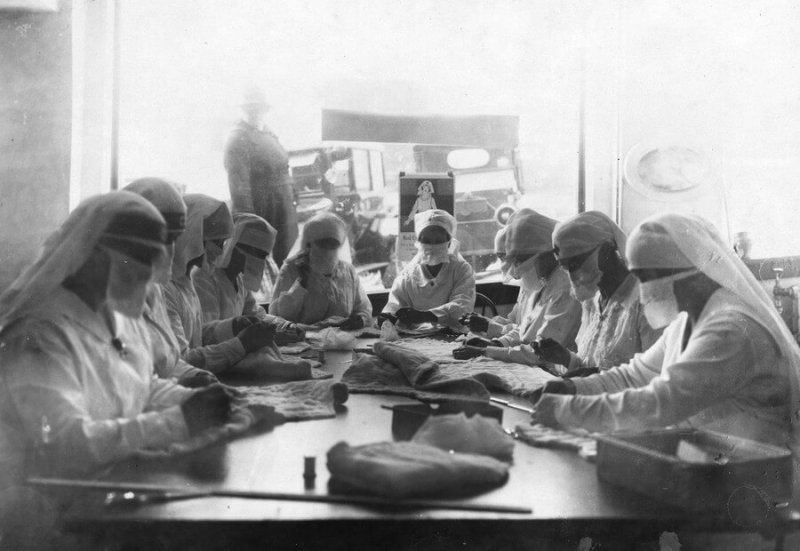
Deadly COVID mutation wild card: Frightening lessons from the 1918 Spanish flu recovery

Credit: The Atlantic

The influenza virus that caused the 1918 pandemic mutated into variants, much like the novel coronavirus has done in the current pandemic, century-old virus samples reveal.

The discovery could help explain why later waves of the 1918 flu pandemic were worse than the first.

“Those [viral infections] in the second wave look like they were better adapted to humans,” said study lead author [evolutionary biologist] Sébastien Calvignac-Spencer… “Just like today, we wonder whether the new variations behaved differently or not than the original.”

To answer that question, Calvignac-Spencer and his colleagues found six human lungs that dated to the pandemic years of 1918 and 1919 and had been preserved in formalin in pathology archives in Germany and Austria.

Follow the latest news and policy debates on sustainable agriculture, biomedicine, and other ‘disruptive’ innovations. Subscribe to our newsletter.

[F]indings suggest that the virus mutated to become more effective between the first and later waves, by evolving to better overcome cellular defenses against infection, Calvignac-Spencer said.

The genetic mutations that popped up between the first and second waves may have made the virus better adapted to spreading among humans, rather than between birds, its natural hosts. Another mutation may have changed how the virus interacts with a human protein known as MxA, which helps orchestrate the body’s immune response to new pathogens.


Read the original post

{{ reviewsTotal }}{{ options.labels.singularReviewCountLabel }}
{{ reviewsTotal }}{{ options.labels.pluralReviewCountLabel }}
{{ options.labels.newReviewButton }}
{{ userData.canReview.message }}

Related Articles

Infographic: Global regulatory and health research agencies on whether glyphosate causes cancer

Infographic: Global regulatory and health research agencies on whether glyphosate causes cancer

Does glyphosate—the world's most heavily-used herbicide—pose serious harm to humans? Is it carcinogenic? Those issues are of both legal and ...

Most Popular

vax-misinformation-main
Facts & Fallacies Podcast: Limit free speech to blunt social media misinfo?
Picture1
The FDA couldn’t find a vaccine safety crisis, so it buried its own research
ChatGPT-Image-May-7-2026-01_23_27-PM-2
Viewpoint: Will AI democratize personalized cancer treatment or fuel medical misinformation?
ChatGPT-Image-Apr-16-2026-02_56_53-PM
Financial incentives, over diagnosis, and weak oversight: Autism claims are driving up Medicare costs
ChatGPT-Image-May-12-2026-11_27_01-AM-2
AI likely to improve health care, research shows—but not for blacks and ethnic minorities
Screenshot-2026-04-22-at-12.21.32-PM
Viewpoint: Why the retracted Monsanto glyphosate study doesn’t change the science—the world’s most popular herbicide is safe 
modi visit sikkim
Viewpoint: Indian PM wants farmers to switch to 50% organic. It would take at least 10 years, likely won’t work, and isn’t more sustainable
newborn infant baby mother
Sharp rise in number of parents refusing newborn vitamin K shots, putting babies at 81-fold higher risk of severe bleeding
ChatGPT-Image-May-20-2026-04_53_21-PM-2
Viewpoint: Doctors can fight health misinformation — if hospitals let them
ChatGPT-Image-May-7-2026-12_32_36-PM
Viewpoint: The state of U.S. vaccine policy? Dismal nationally, but some states are stepping up.
Screenshot-2026-04-13-at-1.39.26-PM
Viewpoint: ‘Safer for children?’ Stonyfield yogurt under fire for deceptive organic marketing
Screenshot-2026-05-18-at-3.04.37-PM-2
Social media’s health advice red flags
Screenshot-2026-05-19-at-11.23.34-AM
West-originated vaccine disinformation sparks murders of health care workers across Africa
glp menu logo outlined

Get news on human & agricultural genetics and biotechnology delivered to your inbox.