‘We create mosquito sex parties’: How an eco-friendly, AI-guided release of sterile mosquito females might control the scourge of disease-carrying insects

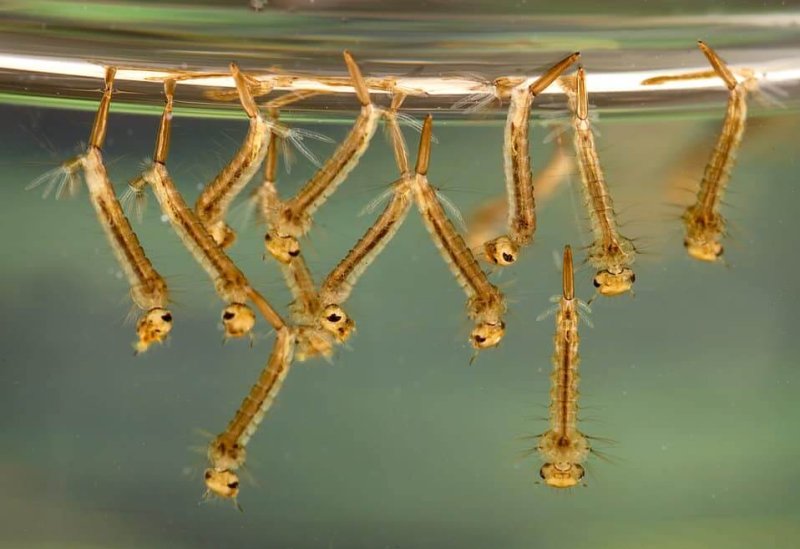
Mosquito larvae. Credit: Unhappy Hipsters

Jerusalem-based Diptera.ai has figured out a way to use AI to fight the growing threat of mosquitoes, which are spreading malaria and viruses like Zika, dengue, and yellow fever. While the method for fighting mosquitoes has been around for decades, AI can take it to a new level and democratize what was otherwise a very costly and localized abatement effort.

[Diptera.ai CEO Vic] Levitin believes his company can stop mosquitoes by the billions, mainly by releasing sterile males to mate with females. “We create mosquito sex parties,” he said.

Follow the latest news and policy debates on sustainable agriculture, biomedicine, and other ‘disruptive’ innovations. Subscribe to our newsletter.

The sterile insect technique (SIT) is a biological pest control method in which mostly government-run entities release overwhelming numbers of sterile male insects into the wild. These sterile males mate with female mosquitoes, which are the only mosquitoes that bite humans and animals. The female mosquitoes only mate once in their lifetimes, but they each lay hundreds of eggs. If they can be tricked into mating with sterile males, then they won’t create offspring.

“The sterile insect technique is the most effective,” Levitin said. “Mosquitoes mate once as females in their lives. If they mate with sterile males, then it suppresses the population.”


Read the original post

{{ reviewsTotal }}{{ options.labels.singularReviewCountLabel }}
{{ reviewsTotal }}{{ options.labels.pluralReviewCountLabel }}
{{ options.labels.newReviewButton }}
{{ userData.canReview.message }}

Related Articles

Infographic: Global regulatory and health research agencies on whether glyphosate causes cancer

Infographic: Global regulatory and health research agencies on whether glyphosate causes cancer

Does glyphosate—the world's most heavily-used herbicide—pose serious harm to humans? Is it carcinogenic? Those issues are of both legal and ...

Most Popular

ChatGPT-Image-May-7-2026-12_16_37-PM-2
Viewpoint: Are cancer rates ‘skyrocketing’ as RFK, Jr. and MAHA claims? The evidence says mostly the opposite
ChatGPT-Image-May-13-2026-11_56_08-AM
After slashing global health aid by $19 Billion, Trump moves to tap $2.1 billion more—to cover shutdown costs
Screenshot-2026-04-22-at-10.46.29-AM
Viewpoint: How to counter science disinformation? Science journalist offers 12 practical tips
Screenshot-2026-04-23-at-11.00.36-AM
Regulators' dilemma: Thalidomide, Metformin, and the cost of getting drug approvals wrong
ChatGPT-Image-May-12-2026-08_39_41-PM
GLP podcast: Big Pharma, Big Ag, Big Food—health harming industries or life-saving innovators?
png-pill-omega-Supp-fish-oil
Millions take omega-3 fish oil for brain health. New research suggests it may do the opposite.
Picture1-5
Science Disinformation Gap: The transatlantic battle over social media and censorship
Screenshot-2026-02-20-at-10.48.04-AM
Deepfakes raise profound ethical questions in science
Picture1-1
Cooling the planet with balloons: Could a geoengineering gamble slow global warming?
Screenshot-2026-05-08-at-3.40.33-PM
Seeds of power: China turns to genetic engineering to become global superpower
ChatGPT-Image-May-12-2026-01_41_42-PM
Viewpoint: ‘Measles is a canary in the healthcare coal mine’: Challenging RFK, Jr.’s scare campaign
donut-decorated-with-e-food-additives-tablets
RFK, Jr. is targeting chemical food additives. What does science tell us?
glp menu logo outlined

Get news on human & agricultural genetics and biotechnology delivered to your inbox.