Lab grown technology extends far beyond meat — to diamonds, trees and even human bones

Credit: Getty Images

Yes, most ‘lab-grown’ tech companies are working to produce animal-derived agricultural products (‘meat’, ‘leather’, ‘milk’, ‘eggs’ etc.). But, there’s a whole world of innovation in other areas. 

That is good news for animals and the plant-based community. It helps make ‘lab-grown’ an acceptable idea. 

Earlier this year, Pandora, the world’s largest jewelry company, announced that, going forward, it would only use lab-created diamonds, and not mined diamonds.

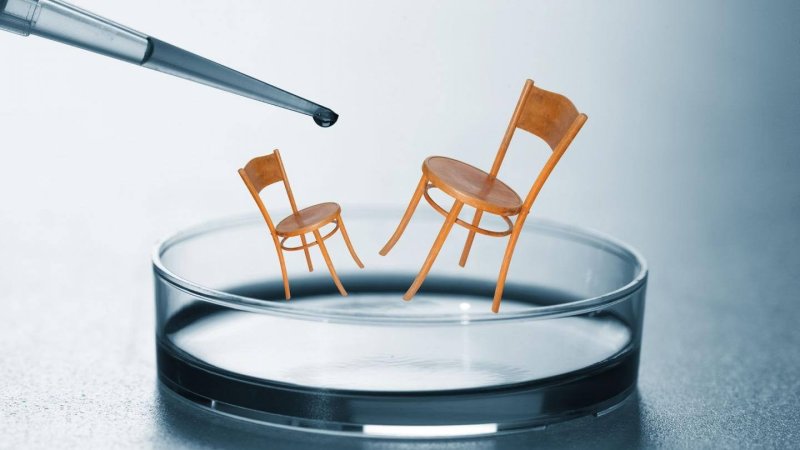
Researchers at MIT in America have grown structures of wood-like plants in their laboratories—’growing a table’ as the future of forestry and construction materials.

That’s a long way off yet, but the research is heading that way. And it may end the massive environmental impact of forestry.

Follow the latest news and policy debates on sustainable agriculture, biomedicine, and other ‘disruptive’ innovations. Subscribe to our newsletter.

Lab-grown technologies also have the potential to achieve the 3Rs, the holy grail of medical research campaigning: improving human health at the same time as reducing or ending animal models of experimentation and vivisection.

For example, researchers at the University of Sheffield have developed a technology using lab-grown mini-scaffolding capable of growing human tissue and bone.

It could revolutionise testing by producing ‘bone on a chip’ resources, and so reduce the need for testing on animals—perhaps, we hope, altogether.


Read the original post

{{ reviewsTotal }}{{ options.labels.singularReviewCountLabel }}
{{ reviewsTotal }}{{ options.labels.pluralReviewCountLabel }}
{{ options.labels.newReviewButton }}
{{ userData.canReview.message }}

Related Articles

Infographic: Global regulatory and health research agencies on whether glyphosate causes cancer

Infographic: Global regulatory and health research agencies on whether glyphosate causes cancer

Does glyphosate—the world's most heavily-used herbicide—pose serious harm to humans? Is it carcinogenic? Those issues are of both legal and ...

Most Popular

ChatGPT Image May 10, 2026, 08_16_59 PM 2
Overmedicalization? RFK Jr.’s antidepressant crackdown raises conflict questions over his fee stake in Wisner Baum, the tort firm built on suing drug makers
Picture1-5
Science Disinformation Gap: The transatlantic battle over social media and censorship
Picture1-1
Cooling the planet with balloons: Could a geoengineering gamble slow global warming?
Picture1-14
When superbugs threaten vulnerable children: Can AI help solve antibiotic resistance?
Screenshot-2026-05-11-104424
Hantavirus outbreak research: Trump administration shut down study last year on rodent-to-human transmission
Screenshot 2026-05-11 at 11.30
Despite politicized disinformation, Midwest AI data centers are fueling a solar energy boom
ChatGPT-Image-Apr-13-2026-02_20_22-PM
Viewpoint: Misinformation infodemic? Why assessing evidence is so challenging 
S
As vaccine rejectionism spreads, measles may be taking a more dangerous turn
Screenshot-2026-05-08-at-11.55.47-AM
Anti-vax activists falsely blame COVID vaccines for the rising U.S. cancer rate among younger people.
Screenshot-2026-05-01-at-1.29.41-PM
Viewpoint: What happens when whole grains meet modern food manufacturing? Labels don’t tell the whole story.
Screenshot-2026-05-08-at-3.40.33-PM
Seeds of power: China turns to genetic engineering to become global superpower
Screenshot-2026-04-20-at-2.26.27-PM
Viewpoint — Food-fear world: The latest activist scientists campaign: Cancer-causing additives
glp menu logo outlined

Get news on human & agricultural genetics and biotechnology delivered to your inbox.