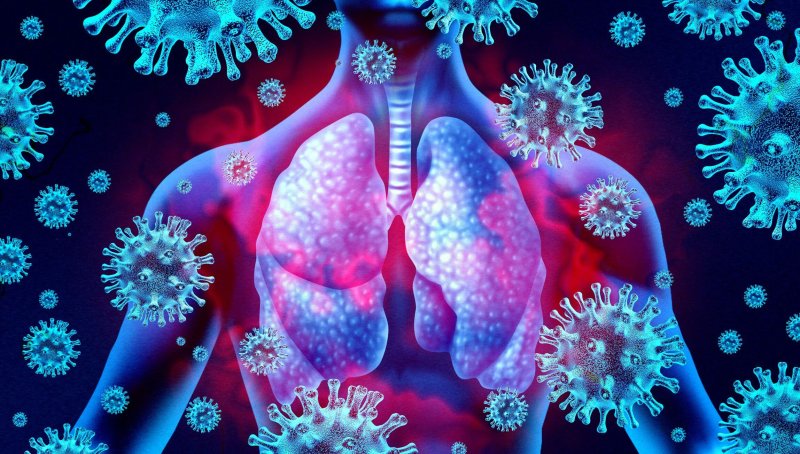
With treatments for COVID still elusive, CRISPR offers promise in preliminary tests

Credit: Getty Images

Scientists have harnessed CRISPR gene-editing technology to block the replication of the novel coronavirus in human cells — an approach that could one day serve as a new treatment for COVID-19.

The researchers designed CRISPR-Cas13b to target specific sites on the RNA of SARS-CoV-2; once the enzyme binds to the RNA, it destroys the part of the virus needed to replicate, according to a statement from the Peter MacCallum Cancer Centre in Victoria, Australia, which collaborated on the research. 

“Once the virus is recognized, the CRISPR enzyme is activated and chops up the virus,” study lead author Dr. Sharon Lewin, of the Peter Doherty Institute for Infection and Immunity at the University of Melbourne, told AFP.

The researchers also found that their method worked even when new mutations were introduced into the SARS-CoV-2 genome, including those seen in the alpha coronavirus variant, first discovered in the United Kingdom.

Follow the latest news and policy debates on sustainable agriculture, biomedicine, and other ‘disruptive’ innovations. Subscribe to our newsletter.

An ideal treatment would be an antiviral drug that patients take shortly after being diagnosed with COVID-19. “This approach — test and treat —  would only be feasible if we have a cheap, oral and non-toxic antiviral. That’s what we hope to achieve one day with this gene scissors approach,” Lewin told AFP.


Read the original post

{{ reviewsTotal }}{{ options.labels.singularReviewCountLabel }}
{{ reviewsTotal }}{{ options.labels.pluralReviewCountLabel }}
{{ options.labels.newReviewButton }}
{{ userData.canReview.message }}

Related Articles

Infographic: Global regulatory and health research agencies on whether glyphosate causes cancer

Infographic: Global regulatory and health research agencies on whether glyphosate causes cancer

Does glyphosate—the world's most heavily-used herbicide—pose serious harm to humans? Is it carcinogenic? Those issues are of both legal and ...

Most Popular

Screenshot-PM-24
Viewpoint: The herbicide glyphosate isn’t perfect. Banning it would be far worse.
d-b
Blocked arteries, kidney stones, nausea, constipation, fatigue: Long list of health problems caused by too much vitamin D 
79d03212-2508-45d0-b427-8e9743ff6432
Viewpoint: The Casey Means hustle—Wellness woo opportunism dressed up as medical wisdom
ChatGPT-Image-Mar-10-2026-01_39_01-PM
Viewpoint—“Miracle molecule” debunked: Why acemannan supplements don’t work
ChatGPT-Image-Apr-30-2026-12_21_05-PM-2
The tech billionaires behind the immortality movement
ChatGPT-Image-Mar-27-2026-11_27_05-AM
The myths of “process”: What science says about the “dangers’ of synthetic products and ultra-processed foods
ChatGPT-Image-Apr-30-2026-05_00_48-PM
Wellness grifter physician turned wellness influencer out as surgeon general nominee

Sorry. No data so far.

glp menu logo outlined

Get news on human & agricultural genetics and biotechnology delivered to your inbox.