Plastic into protein? It may seem far-fetched, but a ‘food generator’ is in the works

Credit: Getty Images

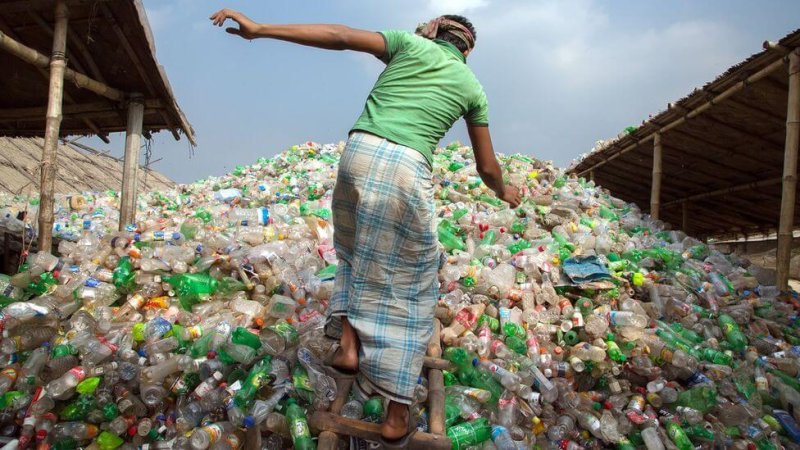
Two U.S. scientists have won a 1 million euro ($1.18 million) prize for creating a food generator concept that turns plastics into protein.

The 2021 Future Insight Prize went to Ting Lu, a professor of bioengineering at the University of Illinois Urbana-Champaign, and Stephen Techtmann, associate professor of biological sciences at Michigan Technological University, for their project. It uses microbes to degrade plastic waste and convert it into food.

The two scientists, who call their project a food “generator,” focused on finding an efficient, economical and versatile technology that finds a use for plastics that are at the end of their useful life and would otherwise end up in landfills or oceans.

The resulting foods “contain all the required nutrition, are nontoxic, provide health benefits and additionally allow for personalization needs,” according to Merck.

The scientists learned to exploit synthetically altered microbes, programming them genetically to convert waste into food.

Follow the latest news and policy debates on sustainable agriculture, biomedicine, and other ‘disruptive’ innovations. Subscribe to our newsletter.

The two scientists say their joint research will allow them “to take the plastic waste generated in the world and turn it into something valuable: food and fuel.”


Credit: Steve Techtmann/Michigan Tech

Read the original post

{{ reviewsTotal }}{{ options.labels.singularReviewCountLabel }}
{{ reviewsTotal }}{{ options.labels.pluralReviewCountLabel }}
{{ options.labels.newReviewButton }}
{{ userData.canReview.message }}

Related Articles

Infographic: Global regulatory and health research agencies on whether glyphosate causes cancer

Infographic: Global regulatory and health research agencies on whether glyphosate causes cancer

Does glyphosate—the world's most heavily-used herbicide—pose serious harm to humans? Is it carcinogenic? Those issues are of both legal and ...

Most Popular

ChatGPT-Image-Mar-10-2026-01_39_01-PM
Viewpoint—“Miracle molecule” debunked: Why acemannan supplements don’t work
afb-a-b
As the EU loosens restrictions on agricultural gene editing, it remains years behind the rest of the world on equally-safe GMO foods
ChatGPT-Image-Jul-8-2026-12_32_48-PM
Viewpoint: SCOTUS strikes a blow against junk science in Bayer glyphosate case. Will it deter mass tort litigators?
Screenshot-2026-07-10-at-2.02.54-PM
Viewpoint: In abortion-restricting Florida, misinformation abounds when Republican congresswoman faces an ectopic pregnancy
ChatGPT-Image-Jul-7-2026-01_57_55-PM
Viewpoint: Europe’s rejection of air conditioning is the poster child for misunderstanding how to mitigate the impact of climate change
ChatGPT-Image-Jun-25-2026-12_23_17-PM
No, Bill Gates did not secretly engineer ticks to promote veganism
Screenshot-2026-07-10-at-3.10.50-PM
Snake-oil cures throughout history
Screenshot-2026-07-10-at-3.25.10-PM
Using AI for health questions? Here are 4 tips for the most accurate answers.
Screen-Shot-at-PM-pe-vra-kipgaprbdo-vd-ms-jpule-n-jqqaxf-l-e
Viewpoint: Will new breeding techniques help make European agriculture more competitive?
Screenshot-2026-07-10-at-12.55.21-PM
Cancer health facts are particularly susceptible to online misinformation
ChatGPT-Image-Jul-1-2026-03_33_49-PM
‘Alternative’ cancer treatments that could kill you
d a ca e c c beb x
Facts & Fallacies podcast: The 'woke' crusade against anthropology? Dr. Elizabeth Weiss
Screenshot-2026-07-08-at-11.25.14-AM
AI being mobilized to target misinformation about vaccines–on AI
glp menu logo outlined

Get news on human & agricultural genetics and biotechnology delivered to your inbox.