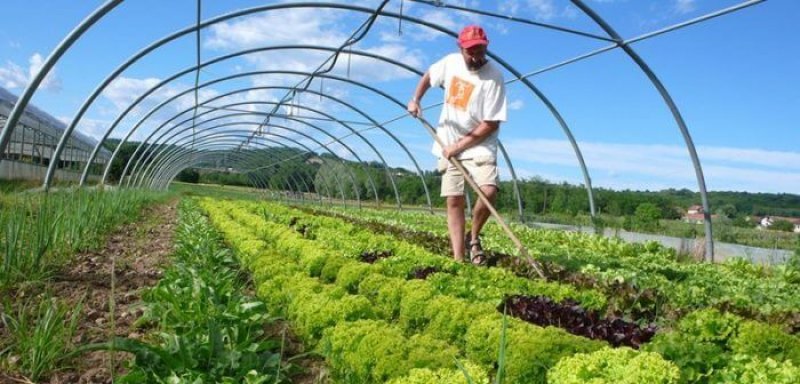
Academic study: ‘We challenge the widespread appraisal that organic farming is the fundamental alternative to conventional farming for harnessing biodiversity in agricultural landscapes’

Credit: Research Leap

Biodiversity continues to decline rapidly, despite decades of repeated national and international policy efforts. Agricultural intensification is a major driver of biodiversity losses, while conversion to organic farming has been suggested as a key technique to halt or reverse this trend.

Follow the latest news and policy debates on sustainable agriculture, biomedicine, and other ‘disruptive’ innovations. Subscribe to our newsletter.

We challenge the widespread appraisal that organic farming is the fundamental alternative to conventional farming for harnessing biodiversity in agricultural landscapes. Certification of organic production is largely restricted to banning synthetic agrochemicals, resulting in limited benefits for biodiversity but high yield losses despite ongoing intensification and specialisation. 

In contrast, successful agricultural measures to enhance biodiversity include diversifying cropland and reducing field size, which can multiply biodiversity while sustaining high yields in both conventional and organic systems. 

Achieving a landscape-level mosaic of natural habitat patches and fine-grained cropland diversification in both conventional and organic agriculture is key for promoting large-scale biodiversity. This needs to be urgently acknowledged by policy makers for an agricultural paradigm shift.


Read the original post (Behind paywall)

{{ reviewsTotal }}{{ options.labels.singularReviewCountLabel }}
{{ reviewsTotal }}{{ options.labels.pluralReviewCountLabel }}
{{ options.labels.newReviewButton }}
{{ userData.canReview.message }}

Related Articles

Infographic: Global regulatory and health research agencies on whether glyphosate causes cancer

Infographic: Global regulatory and health research agencies on whether glyphosate causes cancer

Does glyphosate—the world's most heavily-used herbicide—pose serious harm to humans? Is it carcinogenic? Those issues are of both legal and ...

Most Popular

ChatGPT-Image-Mar-10-2026-01_39_01-PM
Viewpoint—“Miracle molecule” debunked: Why acemannan supplements don’t work
ChatGPT-Image-Jun-25-2026-12_23_17-PM
No, Bill Gates did not secretly engineer ticks to promote veganism
ChatGPT-Image-Jul-1-2026-12_37_08-PM
Viewpoint: Trump poised to politicize all U.S.-supported science research
ChatGPT-Image-Jun-30-2026-10_27_31-AM
Viewpoint: Europe clears the way for gene-edited crops — but fear-driven restrictions still slow their full potential
ChatGPT-Image-Jul-1-2026-03_33_49-PM
‘Alternative’ cancer treatments that could kill you
ChatGPT-Image-Jul-7-2026-03_07_17-PM
Kennedy blocks preventive health care panel that reviews treatments for HIV, diabetes, and cancer from meeting — for fourth time
DtAieAIkCZy-uchn-oqg
Viewpoint: In the science misinformed grifter game plan, the organic-food-is-healthier myth might be the worst.
d a ca e c c beb x
Facts & Fallacies podcast: The 'woke' crusade against anthropology? Dr. Elizabeth Weiss
ChatGPT-Image-Jun-15-2026-01_04_14-PM
Viewpoint: How politicized science became a political religion 
ChatGPT-Image-Jul-7-2026-12_01_35-PM
Viewpoint: 21 worthless wellness trends inspired by RFK, Jr.’s ill-informed MAHA followers that can harm or even kill you.
ChatGPT-Image-Jun-15-2026-03_00_23-PM
World’s first AI-designed vaccine explained

Sorry. No data so far.

glp menu logo outlined

Get news on human & agricultural genetics and biotechnology delivered to your inbox.