How GMOs can help farmers tackle climate change

Credit: Civil Eats
Credit: Civil Eats

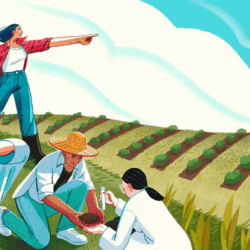
Going forward into the future, agricultural scientists using techniques such as gene editing can help make crop and livestock species more resistant to the impacts of climate change, and also potentially increase certain crops’ ability to mitigate climate change.

As a result of the Drought Tolerant Maize for Africa (DTMA) project… millions of African farmers now have access to seed to grow drought-tolerant maize (corn), helping them improve their yields by as much as 30 percent.

The success of the DTMA project has spurred similar research regarding drought tolerance on other major cash crops, including coffee in Uganda, soybeans and wheat in Argentina, rice grown in India, the Philippines, and Nepal, and canola in Canada.

More fundamental changes to the physiology of plants are being researched as well, such as the work under the Realizing Increases in Photosynthetic Efficiency (RIPE) project headquartered at the University of Illinois, where scientists are seeking to improve the capacity of plants to convert sunshine, water, and carbon dioxide into plant matter. 

Follow the latest news and policy debates on sustainable agriculture, biomedicine, and other ‘disruptive’ innovations. Subscribe to our newsletter.

With higher levels of carbon dioxide already present in the atmosphere as a result of greenhouse gas emissions, this work could help stave off the expected decline in crop yields due to higher temperatures and more variable precipitation.


Read the original post

{{ reviewsTotal }}{{ options.labels.singularReviewCountLabel }}
{{ reviewsTotal }}{{ options.labels.pluralReviewCountLabel }}
{{ options.labels.newReviewButton }}
{{ userData.canReview.message }}

Related Articles

Infographic: Global regulatory and health research agencies on whether glyphosate causes cancer

Infographic: Global regulatory and health research agencies on whether glyphosate causes cancer

Does glyphosate—the world's most heavily-used herbicide—pose serious harm to humans? Is it carcinogenic? Those issues are of both legal and ...

Most Popular

Screenshot-PM-24
Viewpoint: The herbicide glyphosate isn’t perfect. Banning it would be far worse.
79d03212-2508-45d0-b427-8e9743ff6432
Viewpoint: The Casey Means hustle—Wellness woo opportunism dressed up as medical wisdom
d-b
Blocked arteries, kidney stones, nausea, constipation, fatigue: Long list of health problems caused by too much vitamin D 
ChatGPT-Image-Mar-10-2026-01_39_01-PM
Viewpoint—“Miracle molecule” debunked: Why acemannan supplements don’t work
ChatGPT-Image-Apr-30-2026-05_00_48-PM
Wellness grifter physician turned wellness influencer out as surgeon general nominee
Screenshot-2026-04-30-at-11.33.46-AM
Anti-seed-oil to anti-vax pipeline: MAHA movement spreads to teen influencers
lab grown meat research kelly schultz lehighuniversity main
Profiles of the 10 top global cultured meat companies
ChatGPT-Image-Mar-27-2026-11_27_05-AM
The myths of “process”: What science says about the “dangers’ of synthetic products and ultra-processed foods
glp menu logo outlined

Get news on human & agricultural genetics and biotechnology delivered to your inbox.