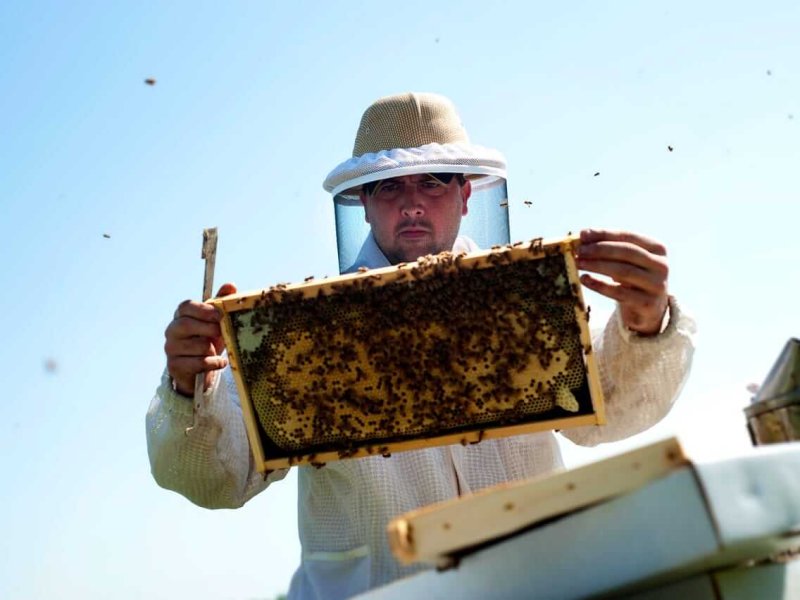
Scorching western drought weakens honeybees, threatening almond and fruit crops

Credit: AP
Credit: AP

A scorching drought is slashing honey production in North Dakota, the top producing state of the sweet syrup. That means fewer bees can thrive, which leads to even less honey.

The shortage of strong bee colonies, meanwhile, is putting West Coast cash crops like almonds, plums and apples at risk, according to more than a dozen interviews with farmers, bee experts, economists and farm industry groups.

[John] Miller and other Midwestern apiarists haul their drought-weakened insects by truck to California almond farms in the winter to pollinate orchards in the top global producer of the nuts increasingly in demand for milk substitutes. Then they move on to other fruits.

Follow the latest news and policy debates on sustainable agriculture, biomedicine, and other ‘disruptive’ innovations. Subscribe to our newsletter.

The dearth of strong bee colonies and the resulting higher costs to lease them for pollination services will add to the challenges of West Coast growers already dealing with drought and, in California, soaring water costs. It could also add to soaring costs consumers are facing at grocery stores.

Scientists have linked weather extremes from severe heat to floods and droughts to climate change. Such weather events are rippling through the food chain, raising food costs and heaping economic pain on small-scale farmer — and devastating bee colonies.


This is an excerpt. Read the original post here.

{{ reviewsTotal }}{{ options.labels.singularReviewCountLabel }}
{{ reviewsTotal }}{{ options.labels.pluralReviewCountLabel }}
{{ options.labels.newReviewButton }}
{{ userData.canReview.message }}

Related Articles

Infographic: Global regulatory and health research agencies on whether glyphosate causes cancer

Infographic: Global regulatory and health research agencies on whether glyphosate causes cancer

Does glyphosate—the world's most heavily-used herbicide—pose serious harm to humans? Is it carcinogenic? Those issues are of both legal and ...

Most Popular

ChatGPT-Image-Mar-10-2026-01_39_01-PM
Viewpoint—“Miracle molecule” debunked: Why acemannan supplements don’t work
afb-a-b
As the EU loosens restrictions on agricultural gene editing, it remains years behind the rest of the world on equally-safe GMO foods
ChatGPT-Image-Jul-8-2026-12_32_48-PM
Viewpoint: SCOTUS strikes a blow against junk science in Bayer glyphosate case. Will it deter mass tort litigators?
ChatGPT-Image-Jul-7-2026-01_57_55-PM
Viewpoint: Europe’s rejection of air conditioning is the poster child for misunderstanding how to mitigate the impact of climate change
Screenshot-2026-07-10-at-2.02.54-PM
Viewpoint: In abortion-restricting Florida, misinformation abounds when Republican congresswoman faces an ectopic pregnancy
ChatGPT-Image-Jun-25-2026-12_23_17-PM
No, Bill Gates did not secretly engineer ticks to promote veganism
Screenshot-2026-07-10-at-3.25.10-PM
Using AI for health questions? Here are 4 tips for the most accurate answers.
Screenshot-2026-07-10-at-3.10.50-PM
Snake-oil cures throughout history
Screen-Shot-at-PM-pe-vra-kipgaprbdo-vd-ms-jpule-n-jqqaxf-l-e
Viewpoint: Will new breeding techniques help make European agriculture more competitive?
Screenshot-2026-07-10-at-12.55.21-PM
Cancer health facts are particularly susceptible to online misinformation
Screenshot-2026-07-08-at-2.14.27-PM
Belief in unproven dietary regimes, vitamins, and crank therapies is putting patients’ health in danger and increasing the risk of getting cancer
ChatGPT-Image-Jul-1-2026-03_33_49-PM
‘Alternative’ cancer treatments that could kill you
glp menu logo outlined

Get news on human & agricultural genetics and biotechnology delivered to your inbox.