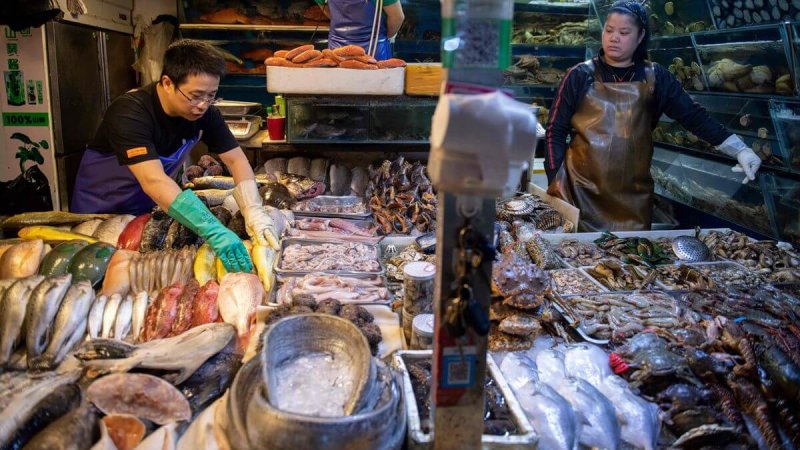
‘Window rapidly closing for scientists to evaluate COVID-19 origins’, says international Wuhan investigation team

Credit: CNN
Credit: CNN

The search for the origins of SARS-CoV-2 is at a critical juncture. There is willingness to move forward from both the WHO international team and the Chinese team.

Crucially, the window is rapidly closing on the biological feasibility of conducting the critical trace-back of people and animals inside and outside China. SARS-CoV-2 antibodies wane, so collecting further samples and testing people who might have been exposed before December 2019 will yield diminishing returns.

Chinese wildlife farms employ millions of people (14 million, according to a 2016 census) and supplied live mammals to cities across China, including Wuhan. In response to the SARS-CoV-2 pandemic, many of these farms are now closed and the animals have been culled, making any evidence of early coronavirus spillover increasingly difficult to find.

In July, four months after the full report and five months after our debriefing, the WHO informed member states of plans to create a committee that will oversee future origins studies. 

However, applying this new process to the continuing SARS-CoV-2 origins mission runs the risk of adding several months of delay.

Follow the latest news and policy debates on sustainable agriculture, biomedicine, and other ‘disruptive’ innovations. Subscribe to our newsletter.

Therefore, we call on the scientific community and country leaders to join forces to expedite the phase 2 studies detailed here, while there is still time.


This is an excerpt. Read the original post here.

{{ reviewsTotal }}{{ options.labels.singularReviewCountLabel }}
{{ reviewsTotal }}{{ options.labels.pluralReviewCountLabel }}
{{ options.labels.newReviewButton }}
{{ userData.canReview.message }}

Related Articles

Infographic: Global regulatory and health research agencies on whether glyphosate causes cancer

Infographic: Global regulatory and health research agencies on whether glyphosate causes cancer

Does glyphosate—the world's most heavily-used herbicide—pose serious harm to humans? Is it carcinogenic? Those issues are of both legal and ...

Most Popular

Picture1
The Orange Bowl without oranges: Can CRISPR save Florida citrus?
ChatGPT-Image-May-1-2026-11_42_59-AM-2
Viewpoint: NAD is the wellness grifters latest evidence-lite longevity fad. At least the mice are impressed.
vax-misinformation-main
Facts & Fallacies Podcast: Limit free speech to blunt social media misinfo?
ChatGPT Image May 26, 2026, 12_06_53 PM
Fake Ebola cure promoters already cashing in as disinformation videos flood social media
global warming
‘Implausible’: Top climate scientists reject worst-case scenario—soaring temperatures and fast-rising sea levels
Screenshot-2026-04-22-at-12.21.32-PM
Viewpoint: Why the retracted Monsanto glyphosate study doesn’t change the science—the world’s most popular herbicide is safe 
Screenshot 2026-05-22 at 11.31
‘Realistic and durable’: EPA proposes loosening restrictions on some PFAS ‘forever chemicals.’
ChatGPT Image May 24, 2026, 03_16_36 PM
Here come the biohackers' Enhanced Games—The Olympics for athletes doping up on steroids, hormones and peptides. What’s wrong with that?
Screenshot-2026-05-21-at-12.15.17-PM
UK gene-editing milestone: Livestock barley that increases ruminant value and reduces methane emissions is first-approved CRISPR crop
Picture1
The FDA couldn’t find a vaccine safety crisis, so it buried its own research
glp menu logo outlined

Get news on human & agricultural genetics and biotechnology delivered to your inbox.