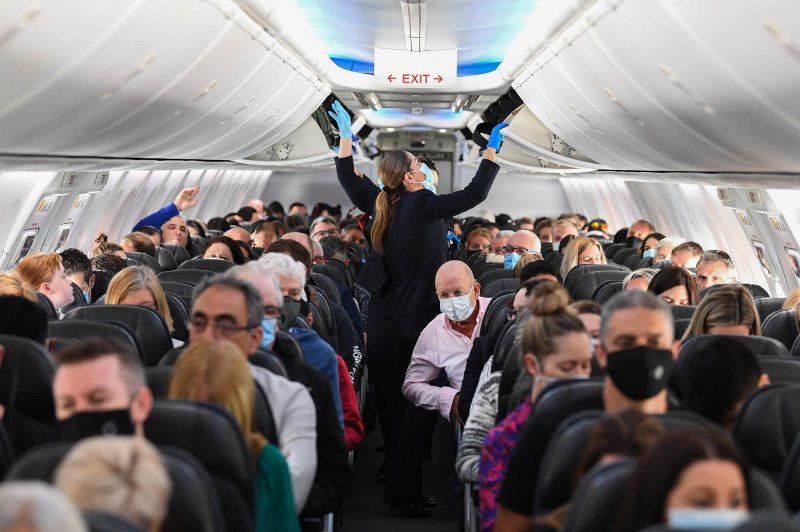
The chances of viral spread aboard planes remain very low. But papers published in medical journals suggest they may not be as low as suggested earlier in the pandemic.
“It’s still, at this point, safe to travel if you take proper precautions,” says Mark Gendreau, chief medical officer at Beverly Hospital near Boston and an expert in aviation medicine. “I do think it could be safer.”
As international travel begins opening up more, with the U.S. set to relax restrictions for vaccinated travelers from 33 countries in November, more travelers will dig into in-flight meals. A recent medical study by a group at the University of Greenwich in London finds a 59% higher risk of viral transmission during a one-hour meal service on a 12-hour trip compared with staying fully masked for the whole flight.
Recently published research has also shown that boarding and deplaning present more transmission risk than when the plane is aloft.

That’s because people cluster and breathe on top of one another, especially pulling and pushing bags in overhead bins.