
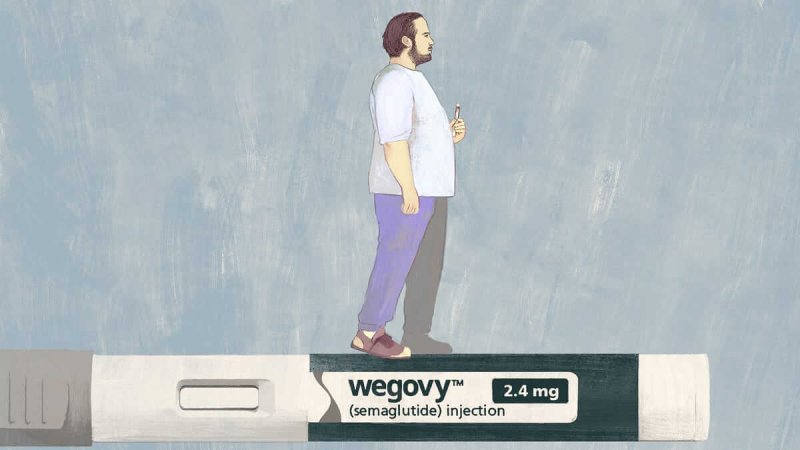
Could a new generation of weight-loss drugs make a dent in the obesity epidemic?

Credit: Angelica Alzona/Gizmodo

In a field plagued by drugs with dangerous side effects and product recalls, doctors have been hesitant to prescribe these products—and companies have been nervous about investing in developing new ones. 

The emergence of Wegovy and a handful of other drugs over the past few years coincides with a shift in the medical complex’s and pharmaceutical industry’s description of people who have obesity, a controversial word that is defined by the US Centers for Disease Control and Prevention as anyone with a body mass index (BMI) of 30 or higher. In the past, obesity was framed as a behavioral issue. 

Today, it is seen by many as a chronic disease that, because of links to other conditions like diabetes, heart disease, and high blood pressure, warrants continuous treatment.


Mis- and disinformation are distorting science and public policy. Subscribe to our Daily and Weekly Digests for incisive coverage of ‘disruptive’ innovations in AI, agricultural biotechnology, food, chemicals, nuclear energy, vaccines, and other disruptive innovations.

The financial potential of a safe and effective weight-loss drug is staggering. About 42% of people in the US meet the CDC’s definition of obesity. And people with lower BMIs who have metabolic diseases are eligible for either Wegovy or a shorter-acting version of the drug called Saxenda (liraglutide) that was approved in 2014. Chronic weight management means years, if not decades, of treatment. 

This is an excerpt. Read the original post here.

Related Articles

Infographic: Global regulatory and health research agencies on whether glyphosate causes cancer

Infographic: Global regulatory and health research agencies on whether glyphosate causes cancer

Does glyphosate—the world's most heavily-used herbicide—pose serious harm to humans? Is it carcinogenic? Those issues are of both legal and ...

Most Popular

Personalized-Cancer-mRNA-Vaccine-Vial
Personalized mRNA vaccines are poised to revolutionize cancer treatments. Here are the barriers.
Screenshot-2026-10-11-at-10.24.21-AM
Viewpoint: RFK Jr.’s new CDC head Erica Schwartz greenlights hepatitis B vaccine study critics call “unethical and designed to cast doubts on its safety”
Screenshot-2026-10-05-at-11.57.44-AM
Scaremongering or legitimate safety concerns? The political dogfight over America’s food safety system
ChatGPT-Image-Mar-10-2026-01_39_01-PM
Viewpoint—“Miracle molecule” debunked: Why acemannan supplements don’t work
Screenshot-2026-09-22-at-12.26.15-PM
‘Forever chemical’ concerns: Separating hysteria from reasonable concern in the debate over PFAS danger
Deepfake Democracy Media Mosaic
31 states have passed a patchwork of laws to limit election deepfake commercials. They’re not working very well.
Screenshot 2026-10-12 at 12.25
Tearful onions? CRISPR has a solution for that
Screenshot-2026-10-08-at-1.23.28-PM
Countries around the world are rushing to pass teenage social media bans. Could they backfire?
Eating Nuts Adds up to Longer Life x
For millions with peanut allergies, Nurtured Nuts’ CRISPR gene-edited peanuts could ease the fear of accidental exposure
AI-Force-Uniform-Insignia-Close-Up
Trump wants an AI Force like Space Force, but that could make AI’s risks harder to manage
generated-1790707585414
Facts & Fallacies podcast: America's health care system is broken. A doctor explains how to fix it
Radioactive-Americana-Collage-2
The kooky logic behind the raft of spurious cancer claims from Harvard’s T.H. Chan School of Public Health
Concerned-Farmer-at-Golden-Hour
GAHA: The corporate-created “healthier America” movement challenging what it claims is MAHA misinformation about modern farming, chemicals, and food
glp menu logo outlined

Get news on human & agricultural genetics and biotechnology delivered to your inbox.




















