
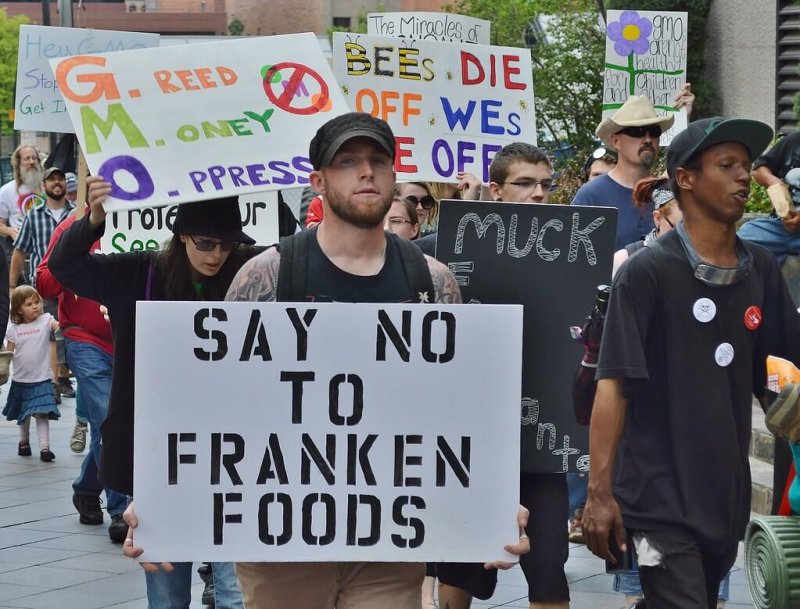
Seed Speaks Video: Despite enormous sustainability benefits, some people still view genetically engineered crops with suspicion. Here’s why

Credit: Flickr
Credit: Flickr

Why do GMOs have an image problem? It’s a question we attempted to answer on the Oct. 13 episode of Seed Speaks. 

A recent survey by the American Marketing Association found that consumers feel that GM foods are unnatural, immoral, and unsafe, despite the fact that 70% of processed foods in the United States and Canada already contain GMOs.

Follow the latest news and policy debates on sustainable agriculture, biomedicine, and other ‘disruptive’ innovations. Subscribe to our newsletter.

Why is this, and what can our industry do about it? We were joined this week by Andreas Boecker, a professor at the University of Guelph specializing in best practices in communication about novel technologies, in particular agricultural biotechnology; Kavin Senapathy, a writer, journalist, and speaker based in Madison, Wisconsin, whose writing has appeared in outlets like Slate, The Daily Beast and Forbes; and Jenn Armen, vice-president, business and corporate development for Okanagan Specialty Fruits based in North Carolina.

This is an excerpt. Read the original post here.

{{ reviewsTotal }}{{ options.labels.singularReviewCountLabel }}
{{ reviewsTotal }}{{ options.labels.pluralReviewCountLabel }}
{{ options.labels.newReviewButton }}
{{ userData.canReview.message }}
Infographic: Global regulatory and health research agencies on whether glyphosate causes cancer

Infographic: Global regulatory and health research agencies on whether glyphosate causes cancer

Does glyphosate—the world's most heavily-used herbicide—pose serious harm to humans? Is it carcinogenic? Those issues are of both legal and ...
glp menu logo outlined

Get news on human & agricultural genetics and biotechnology delivered to your inbox.








