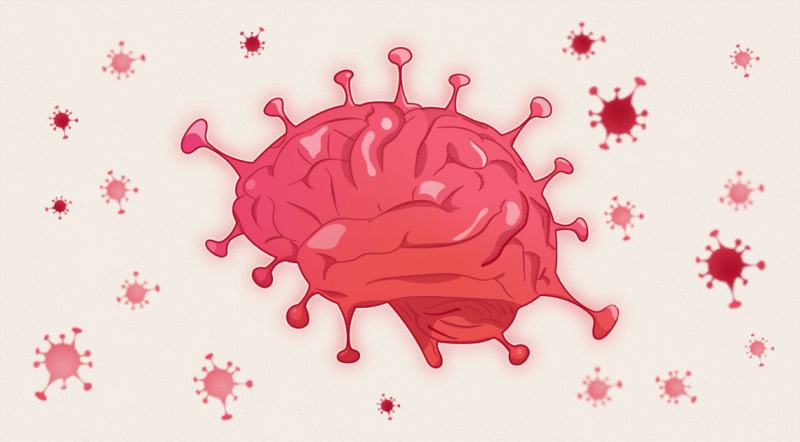
COVID’s brain-related symptoms go beyond mere mental fuzziness. They range across a spectrum that encompasses headaches, anxiety, depression, hallucinations and vivid dreams, not to mention well-known smell and taste anomalies. Strokes and seizures are also on the list. One study showed that more than 80 percent of COVID patients encountered neurological complications.
The mystery of how the virus enters and then inhabits the brain’s protected no-fly zone is under intensive investigation. At the 50th annual meeting of the Society for Neuroscience, or SFN (held in virtual form this month after a pandemic hiatus in 2020), a set of yet-to-be-published research reports chronicle aspects of the COVID-causing SARS-COV-2 virus’s full trek in the brain—from cell penetration, to dispersion among brain regions, to disruption of neural functioning.
Trying to find the virus’s port of entry into nerve cells has perplexed investigators, because the surfaces of these cells appear to lack the molecular anchor points—the ones found in lung cells, for instance—that are needed for a forced invasion into the cell interior.

The pandemic raises the prospect of growing collaborations between virologists and neuroscientists. It is a reminder that the brain, notwithstanding the blood-brain barrier, is by no means impenetrable.