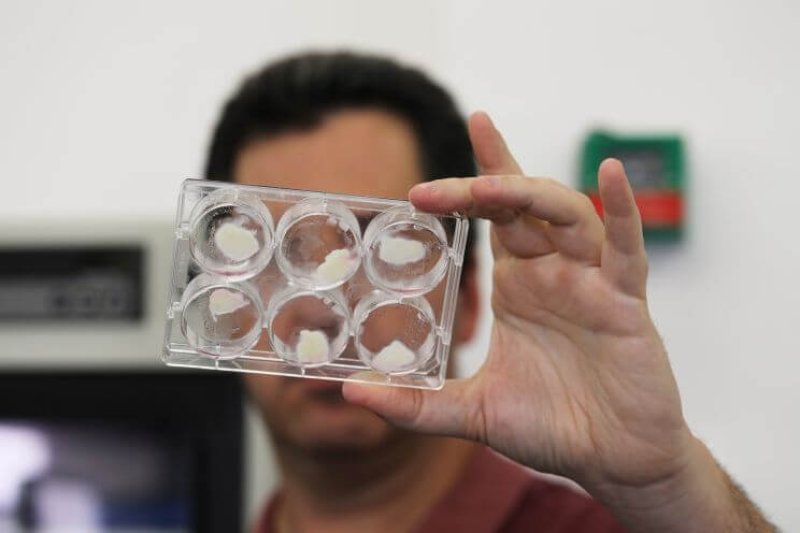
Lab-grown fats may be key ingredient in diets of the future

Credit: Reuters
Credit: Reuters

โ€œLab-grown fat.โ€ย It sounds like a nightmare for marketing teams, but for scientists,ย itโ€™s a key ingredient for the future of food.

Fats play a critical role in our enjoyment of food: think juicy burgers and chips, steaks and schnitzels, butter and cream.

But can you replicate thatย experience while avoiding animal products?

Thatโ€™s the challenge [Australian National University, or] ANU science graduate Ruth Purcell was working to solve in her role as a synthetic biology scientist at Nourish Ingredients, a cellular agriculture start-up based out of the ANU Research School of Chemistry.

Follow the latest news and policy debates on sustainable agriculture, biomedicine, and other ‘disruptive’ innovations. Subscribe to our newsletter.

Yeast isย commonlyย used in the production of wine, beer and bread.ย If you feed yeast the right kind of sugars or starches itย produces alcohols and carbon dioxide as by-products through the process of fermentation.

Itโ€™s also easy to genetically manipulate, enabling scientists to engineerย yeastย strains that produce different by-products.

โ€œYou can throw all kinds of genes atย yeastย โ€“ a lot of them will just happily take up these gene fragments and incorporate it into their own genome,โ€ says Ruth.

At Nourish Ingredients,ย yeast is engineered to produceย fat molecules that are biologically identical to their animal-based counterparts, resultingย in much better textures and aromasย forย alternative-protein foods.

This is an excerpt. Read the original post here.

{{ reviewsTotal }}{{ options.labels.singularReviewCountLabel }}
{{ reviewsTotal }}{{ options.labels.pluralReviewCountLabel }}
{{ options.labels.newReviewButton }}
{{ userData.canReview.message }}

Related Articles

Infographic: Global regulatory and health research agencies on whether glyphosate causes cancer

Infographic: Global regulatory and health research agencies on whether glyphosate causes cancer

Does glyphosateโ€”the world's most heavily-used herbicideโ€”pose serious harm to humans? Is it carcinogenic? Those issues are of both legal and ...

Most Popular

Picture1
The Orange Bowl without oranges: Can CRISPR save Florida citrus?
ChatGPT-Image-May-1-2026-11_42_59-AM-2
Viewpoint: NAD is the wellness grifters latest evidence-lite longevity fad. At least the mice are impressed.
global warming
โ€˜Implausibleโ€™: Top climate scientists reject worst-case scenarioโ€”soaring temperatures and fast-rising sea levels
vax-misinformation-main
Facts & Fallacies Podcast: Limit free speech to blunt social media misinfo?
ChatGPT Image May 26, 2026, 12_06_53 PM
Fake Ebola cure promoters already cashing in as disinformation videos flood social media
Screenshot-2026-04-22-at-12.21.32-PM
Viewpoint: Why the retracted Monsanto glyphosate study doesnโ€™t change the scienceโ€”the worldโ€™s most popular herbicide is safeย 
ChatGPT Image May 24, 2026, 03_16_36 PM
Here come the biohackers' Enhanced Gamesโ€”The Olympics for athletes doping up on steroids, hormones and peptides. Whatโ€™s wrong with that?
Screenshot 2026-05-22 at 11.31
โ€˜Realistic and durableโ€™: EPA proposes loosening restrictions on some PFAS โ€˜forever chemicals.โ€™
Screenshot-2026-05-21-at-12.15.17-PM
UK gene-editing milestone: Livestock barley that increases ruminant value and reduces methane emissions is first-approved CRISPR crop
Picture1
The FDA couldnโ€™t find a vaccine safety crisis, so it buried its own research
Screenshot-2026-05-22-at-11.59.38-AM
Is surrogacy modern-day slavery? What to know about Florida Republican effort to pass severe restrictions.
glp menu logo outlined

Get news on human & agricultural genetics and biotechnology delivered to your inbox.