Some of the timeliest data on Covid-19 outcomes by vaccination status comes from New York City and the Seattle area, and the two are telling a consistent story.
Cases for vaccinated and unvaccinated residents alike are rising:

They’re rising because vaccination often does not prevent infection from the Omicron variant. It reduces the chances substantially — as you can see above — but vaccinated people still face a meaningful chance of infection.



What vaccination does is radically reduce the chance of severe Covid illness. Look how different these charts on hospitalizations looks from the previous charts on cases:

The data on deaths from New York and Seattle underscores the relatively low risks for vaccinated people. These numbers show a starker gap between the vaccinated and the unvaccinated than the hospitalization data:
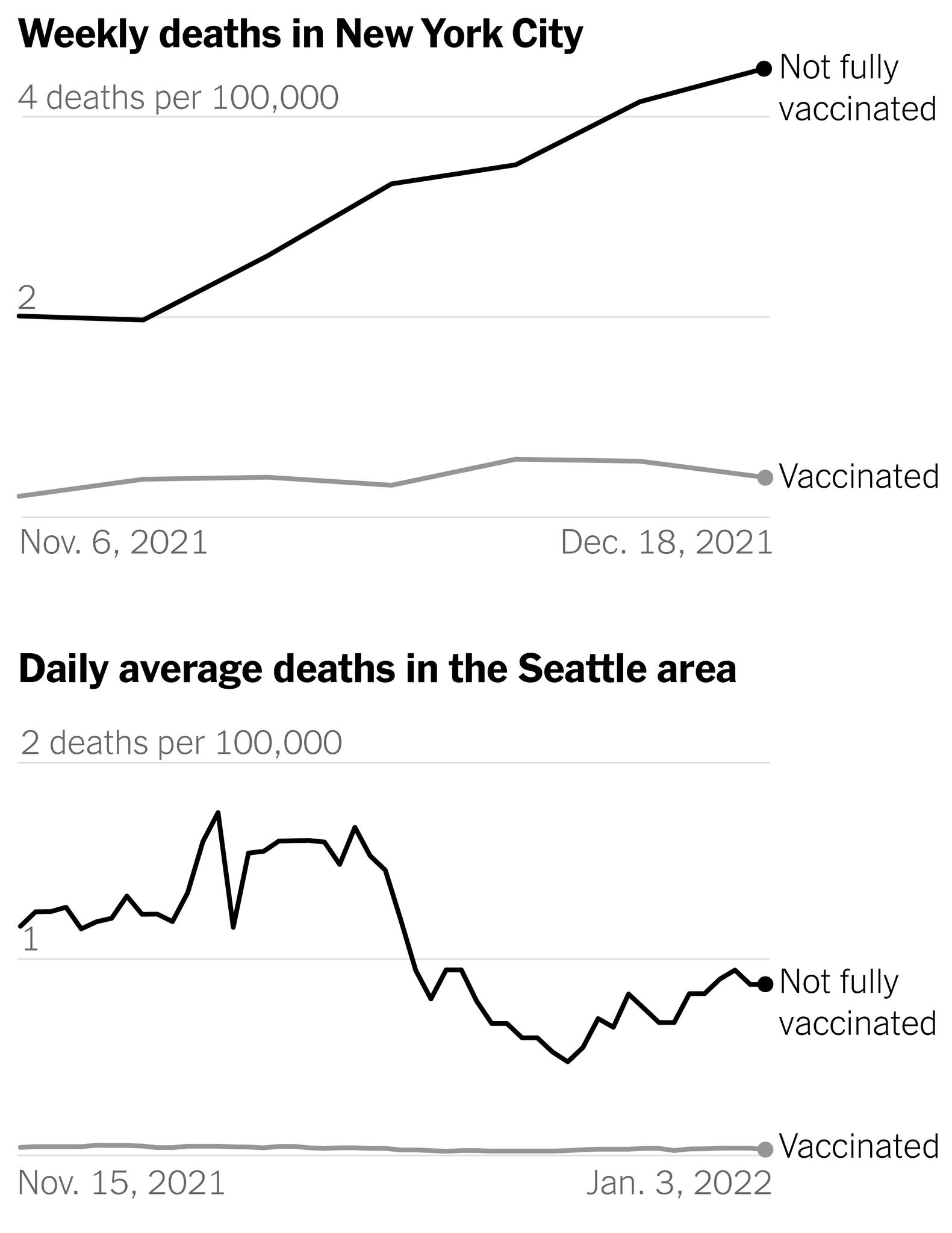
The risk is not zero, to be clear, even among people who are generally healthy. But it is very small. Every day, people live with small risks, be they from the seasonal flu and other illnesses or from riding in a vehicle, playing sports or other activities.
For the unvaccinated, the situation is very different. Omicron is still severe enough that it will lead to debilitating illness and death for many unvaccinated people. In much of the U.S., a large number of adults — including older adults — remain unvaccinated: