Here are arguments for and against getting your child immunized against COVID

Credit: KTLA
Credit: KTLA

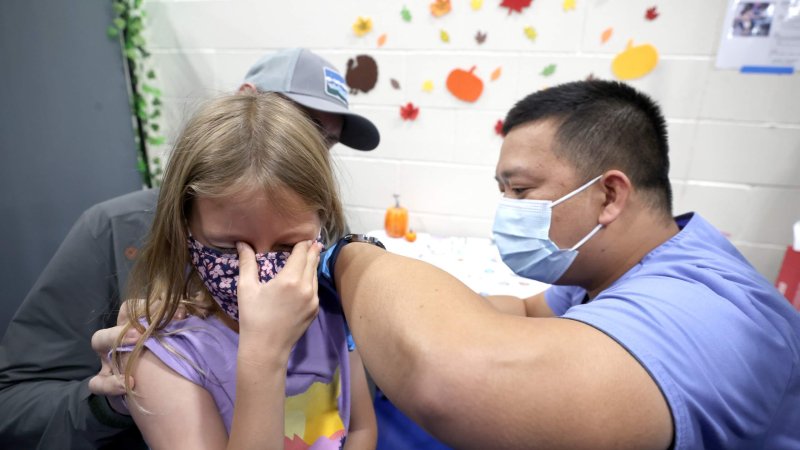
[Soon,] scientific advisers to the [FDA] will decide whether to endorse two doses of the vaccine for children 6 months through 4 years of age, before clinical trials have shown the full course — three doses — to be effective. Such an authorization would be a first for the agency, many experts say.

In fact, interim results from the trial suggested that two doses of the vaccine did not produce a strong immune response in children aged 2 through 4. Results from trials of the third dose are expected in a few weeks.

Follow the latest news and policy debates on sustainable agriculture, biomedicine, and other ‘disruptive’ innovations. Subscribe to our newsletter.

Although children generally do not become seriously ill when infected with the coronavirus, more of them have been hospitalized during the Omicron surge than at any other point in the pandemic.

But multiple studies have shown that children who are hospitalized with Covid tend to have conditions that predispose them to severe illness, including diabetes, chronic lung disease or heart problems.

Instead of authorizing the vaccine for all 18 million children aged 6 months to 4, the agency might consider recommending it only for children at high risk until more evidence becomes available, some experts said.

“On one side, parents are desperate to get their kids protected. On another side, there is extreme distrust,” said Natalie Dean, a biostatistician at Emory University in Atlanta. “The whole process will need to be approached with care and a lot of transparency.”


This is an excerpt. Read the original post here. 

{{ reviewsTotal }}{{ options.labels.singularReviewCountLabel }}
{{ reviewsTotal }}{{ options.labels.pluralReviewCountLabel }}
{{ options.labels.newReviewButton }}
{{ userData.canReview.message }}

Related Articles

Infographic: Global regulatory and health research agencies on whether glyphosate causes cancer

Infographic: Global regulatory and health research agencies on whether glyphosate causes cancer

Does glyphosate—the world's most heavily-used herbicide—pose serious harm to humans? Is it carcinogenic? Those issues are of both legal and ...

Most Popular

ChatGPT Image Jun 3, 2026, 03_54_37 PM
Viewpoint: “Turn on, tune in, drop out”—Kennedy embraces the Timothy Leary psychedelic revolution
ChatGPT-Image-Jun-11-2026-01_15_03-PM
Selective Pressure, Selective Silence
ChatGPT Image Jun 3, 2026, 03_14_43 PM
Viewpoint: How Earthjustice became the poster child for the abuse of special interest activist funding
Screenshot-2026-06-05-at-2.12.30-PM
Some plants can poison you. So how did humans figure out what is safe to eat?
ChatGPT Image Jun 1, 2026, 11_39_17 AM
Viewpoint: When food myths go viral, farmers pay the price
Screenshot-2026-06-03-at-1.24.46-PM
Challenging anti-GMO disinformation: Why genetically-tweaked crops offer bushels of benefits
ChatGPT Image May 26, 2026, 08_42_17 AM (1)
Viewpoint: Greenpeace and poison: How environmental advocacy groups rely on compliant (and often ignorant) journalists to spread disinformation and spark litigation
Screenshot 2026-05-26 at 10.15
Viewpoint: Double standard—Why does the wellness industry get a free pass while Big Healthcare is treated as morally suspect?
Screenshot-2026-05-28-at-1.36.28-PM
Viewpoint: Can mRNA research survive the Trump administration?

Sorry. No data so far.

glp menu logo outlined

Get news on human & agricultural genetics and biotechnology delivered to your inbox.