
Viewpoint: Here are cutting edge ways technology can help us increase farm outputs without using more land

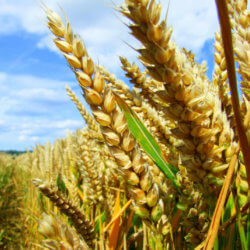
Biotech offers sustainable solutions to reduce land use. Credit: Prochlapy.cz

The world has plenty of nutrients. They circulate between air, soil, sea, living plants and animals. Neither population growth nor meat meals remove them.

The Eat-Lancet report was criticized in 2019 for its solutions, but the most important was a credible message that the planet can provide sustainable food for a growing population.

It’s tempting to waste. Even in a threatening food crisis, it is ten to a hundred times more profitable to use land for asphalt and concrete, than for photosynthesis.

At present, it is probably five to ten times more expensive to produce sustainable protein than to import from countries that deforest.

Mis- and disinformation are distorting science and public policy. Subscribe to our Daily and Weekly Digests for incisive coverage of ‘disruptive’ innovations in AI, agricultural biotechnology, food, chemicals, nuclear energy, vaccines, and other disruptive innovations.

We have possible solutions. Yield levels in normal grain production can be increased. We can choose from a nearly unlimited variety of organisms and technologies:

  • Insects can convert food waste into high-quality protein, sugar and fat.
  • We can capture and utilize CO 2 directly from the factory chimney and supply light and nutrients from air and water. It nourishes microorganisms. They carry out photosynthesis without using cultivated land, and circulate carbon, water and nutrients.
  • We can refine twigs and chips, seaweed and grass into sugar and organic matter, extract nitrogen from the air and get yeast bacteria to supply protein.

[Editor’s note: This article was originally posted in Norwegian and has been translated and edited for clarity.]


This is an excerpt. Read the original post here.

Related Articles

Infographic: Global regulatory and health research agencies on whether glyphosate causes cancer

Infographic: Global regulatory and health research agencies on whether glyphosate causes cancer

Does glyphosate—the world's most heavily-used herbicide—pose serious harm to humans? Is it carcinogenic? Those issues are of both legal and ...

Most Popular

ChatGPT-Image-Mar-10-2026-01_39_01-PM
Viewpoint—“Miracle molecule” debunked: Why acemannan supplements don’t work
ChatGPT-Image-Sep-17-2026-12_28_43-PM
Vitamin D, omega-3 fish oil and glucosamine supplements could cause brain damage 
ChatGPT-Image-Sep-17-2026-10_17_15-AM
Viewpoint: Why are the less intelligent more likely to be conservative—and smarter people more socially liberal?
Screenshot-2026-09-10-at-12.20.19-PM
'Jet fuel didn't melt the steel': 9/11 conspiracy theories debunked
ChatGPT-Image-Aug-28-2026-03_33_46-PM
Viewpoint: Bad science—Five bogus Trump administration claims about vaccines and autism
Screenshot 2026-07-29 at 10.40
The COVID vaccine turbo cancer scare is back. Science still proves it’s wrong.
Screenshot-2026-09-10-at-11.50.46-AM
Did COVID vaccines kill 2,500 service members? RFK Jr. hires an investigator who compares vaccine promoters to Nazi doctors
glp menu logo outlined

Get news on human & agricultural genetics and biotechnology delivered to your inbox.