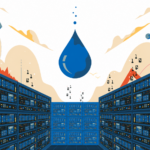
Is humanity doomed because our population is growing too fast — or too slow? Here’s the skinny on human catastrophe scenarios

Credit: Istock
Credit: Istock

Will birthrates doom humanity? Tech billionaire Elon Musk sounded an old alarm in December when he claimed that declining births are “one of the biggest risks to civilization.”

“Please look at the numbers,” he implored the Wall Street Journal’s CEO Council. “If people don’t have more children, civilization is going to crumble, mark my words.”

Such population doomsaying is not limited to billionaires. Paleontologist Henry Gee argued in November that our species is destined for extinction ― and soon. 

Follow the latest news and policy debates on sustainable agriculture, biomedicine, and other ‘disruptive’ innovations. Subscribe to our newsletter.

Other prominent figures have naturalized doomsday ― from the opposite direction. Stanford biologist Paul Ehrlich famously predicted that population growth would outpace food production in the 1970s, leading hundreds of millions to starve to death. Even today, some scientists and environmentalists fear that humans will exceed the planet’s carrying capacity and in doing so, destroy themselves.


In addition to the climate crisis, we live in a time of war, inequality, white supremacist violence, backlash against women’s rights, technological upheaval and fraying social networks. None of these dire conditions is a biological or ecological inevitability. Nor is human extinction.

To assert otherwise is to disavow responsibility for the policies and power structures that cause habitat degradation, income inequality and widespread injustice ― conditions that already threaten the lives of countless people and other beings on this planet.


This is an excerpt. Read the original post here. 

{{ reviewsTotal }}{{ options.labels.singularReviewCountLabel }}
{{ reviewsTotal }}{{ options.labels.pluralReviewCountLabel }}
{{ options.labels.newReviewButton }}
{{ userData.canReview.message }}

Related Articles

Infographic: Global regulatory and health research agencies on whether glyphosate causes cancer

Infographic: Global regulatory and health research agencies on whether glyphosate causes cancer

Does glyphosate—the world's most heavily-used herbicide—pose serious harm to humans? Is it carcinogenic? Those issues are of both legal and ...

Most Popular

ChatGPT-Image-Jun-25-2026-12_23_17-PM
No, Bill Gates did not secretly engineer ticks to promote veganism
ChatGPT-Image-Mar-10-2026-01_39_01-PM
Viewpoint—“Miracle molecule” debunked: Why acemannan supplements don’t work
ChatGPT-Image-Jun-23-2026-03_12_23-PM
Is cellular reprogramming junk science? Nearly 20 patients are getting eye injections in the first FDA-cleared cellular trial
Screenshot-2026-06-05-at-2.12.30-PM
Some plants can poison you. So how did humans figure out what is safe to eat?
ChatGPT-Image-May-18-2026-12_06_18-PM-2
Defying death: The immortality movement goes mainstream
artificial intelligence brain think illustration md
Viewpoint — Digital gods and human extinction: Will we be the first species ever to design our own descendants?

Sorry. No data so far.

glp menu logo outlined

Get news on human & agricultural genetics and biotechnology delivered to your inbox.