
A strong lobby of some corporations, technological and scientific associations is committed to exempting new genetic engineering processes from regulation under EU genetic engineering law. This would result in genetically modified organisms (GMOs) entering the seed and food market without an independent risk assessment and labeling requirement. A genetically modified tomato could then no longer be distinguished from a conventionally bred one.
For years, the approval and labeling of GMOs in the European Union has been regulated according to the precautionary principle: Only approved GMOs are allowed on the market after they have been checked for their risks. They must be identified and traceable. The European Commission now wants to soften this for new genetic engineering.
Not with us! More than 80 percent of EU citizens want to know whether their food contains genetic engineering and they want a risk assessment of GMO products. Farmers demand the right to continue to be able to produce independently without genetic engineering. Deregulation of new genetic engineering would be a frontal assault on our freedom of choice and democratic autonomy over what we breed, grow and eat.
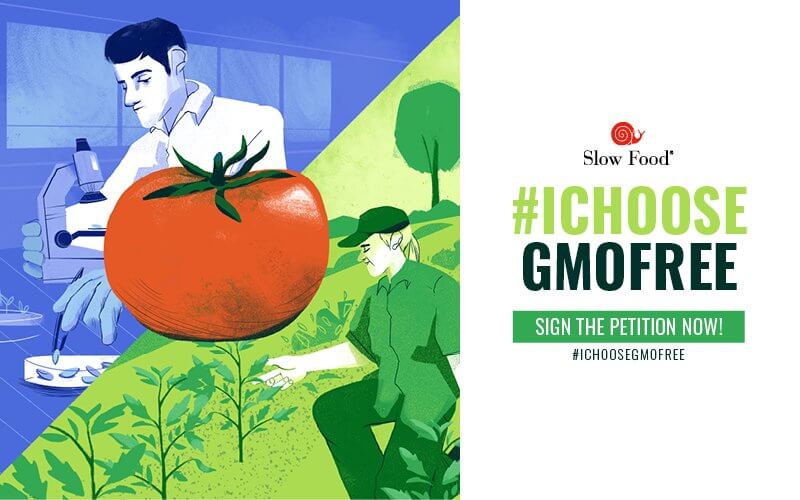
New genetic engineering methods, in particular CRISPR/Cas technology, for modifying plants, animals and microorganisms also harbor new and inestimable risks. The supreme court of justice of the EU therefore ruled in 2018: Even new genetic engineering is genetic engineering and must be regulated as such.
Now the course is being set in Brussels. We therefore call on those responsible in politics, in particular Federal Minister of Agriculture Cem Özdemir and Federal Minister for the Environment Steffi Lemke , to work towards maintaining regulation of the new genetic engineering. This includes: identification, risk assessment, approval, traceability, transparency, monitoring and liability.

We request:
- New genetically modified organisms (GMO) must also be labeled in such a way that consumers, farmers, breeders, traders and processors can recognize and avoid them at any time.
- New GMOs must also continue to be subjected to a risk assessment and assessment in accordance with the EU precautionary principle.
- Traceability and verification procedures must remain a requirement for approval for GMOs, as must the ability to be retrieved. Whoever brings GMOs onto the market must be liable for risks and consequential damage.
- The EU, federal and state governments must fund more research on the environmental, biodiversity and health risks of new GMOs, their socio-economic effects and the development of general detection methods.
- In order to promote diverse, climate-friendly and socially just ecological and rural agriculture, research and further development of proven and effective non-GMO agroecological methods should be promoted.
[Editor’s note: This article was originally published in German and has been translated and edited for clarity.]