Here’s how abortion pills mifepristone and misoprostol work

Credit: Everyday Health

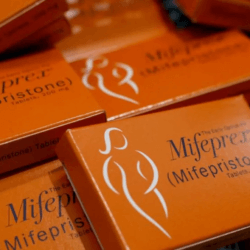
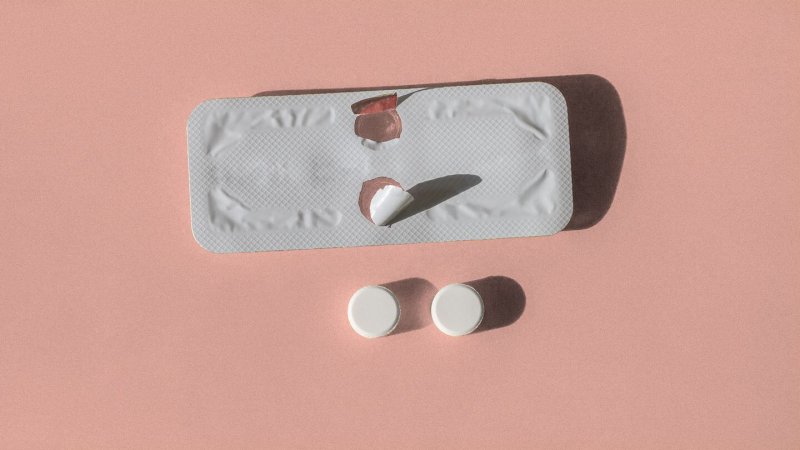
Today mifepristone is often used in combination with another drug, misoprostol, and together the pair are more than 95 percent effective at ending a pregnancy when taken during the first 50 days. While mifepristone blocks the hormone progesterone—which regulates the lining of the uterus and the maternal immune system, allowing pregnancy to take place—misoprostol stimulates the uterus to expel the pregnancy.

In the 34 years since mifepristone’s tumultuous introduction in France, more than 60 countries have approved it, including the US in 2000 and the UK in 1991 (though it didn’t legally become available in Northern Ireland until abortion was decriminalized in 2019). However, mifepristone remains subject to rules governing its use in most places.

Follow the latest news and policy debates on sustainable agriculture, biomedicine, and other ‘disruptive’ innovations. Subscribe to our newsletter.

The emergence of pills that could induce an abortion was “absolutely revolutionary,” says Clare Murphy, CEO of the British Pregnancy Advisory Service charity. Yet even now, many people do not know that abortion pills—which are completely different from emergency contraception—exist.

Medical professionals and health experts who spoke to WIRED say these drugs are extremely safe and have made the process of self-terminating a pregnancy (which is illegal but still practiced in many places) much safer than it once was.


This is an excerpt. Read the original post here

{{ reviewsTotal }}{{ options.labels.singularReviewCountLabel }}
{{ reviewsTotal }}{{ options.labels.pluralReviewCountLabel }}
{{ options.labels.newReviewButton }}
{{ userData.canReview.message }}

Related Articles

Infographic: Global regulatory and health research agencies on whether glyphosate causes cancer

Infographic: Global regulatory and health research agencies on whether glyphosate causes cancer

Does glyphosate—the world's most heavily-used herbicide—pose serious harm to humans? Is it carcinogenic? Those issues are of both legal and ...

Most Popular

ChatGPT Image May 26, 2026, 08_42_17 AM (1)
Viewpoint: Greenpeace and poison: How environmental advocacy groups rely on compliant (and often ignorant) journalists to spread disinformation and spark litigation
Screenshot 2025-07-30 at 10.48
Can gene editing eliminate Down syndrome? Scientists have done it in lab-grown cells
Screenshot-2026-05-28-at-1.36.28-PM
Viewpoint: Can mRNA research survive the Trump administration?
ChatGPT-Image-May-26-2026-07_51_21-AM-2
Viewpoint: There are more than 1,000 chemicals in a cup of coffee—including many substances that can cause cancer. Why isn’t it banned?
Screenshot 2025-11-18 at 3.45
Viewpoint—GMOs and sustainability: Why buying organic foods is the least environmentally-sensitive food choice—without offering any health benefits
ChatGPT-Image-Jun-2-2026-11_39_58-AM
Viewpoint: Who is RFK, Jr.’s newly-appointed CDC senior counselor, Sara Brenner — Vaccine skeptic and self-proclaimed “MAHA mom”
Screenshot-2026-06-02-at-11.59.11-AM
Magnifica Humanitas: Pope’s encyclical broadside against AI naivete and overreach
Picture1
Sounds we can’t hear — the hidden planetary signals behind science, fear, and misinformation
ChatGPT Image May 28, 2026, 08_16_38 PM
Viewpoint: Why the EPA mismeasures cancer risk of chemicals and what should be done to fix it
Screenshot-2026-04-14-at-11.11.06-AM
‘Turbo cancer’ or mRNA cancer cure? Strategies to counter misinformation
tick-DNA
GLP podcast: Spread meat allergy with gene-edited ticks? Bioethicists pose vile ‘thought experiment’
glp menu logo outlined

Get news on human & agricultural genetics and biotechnology delivered to your inbox.